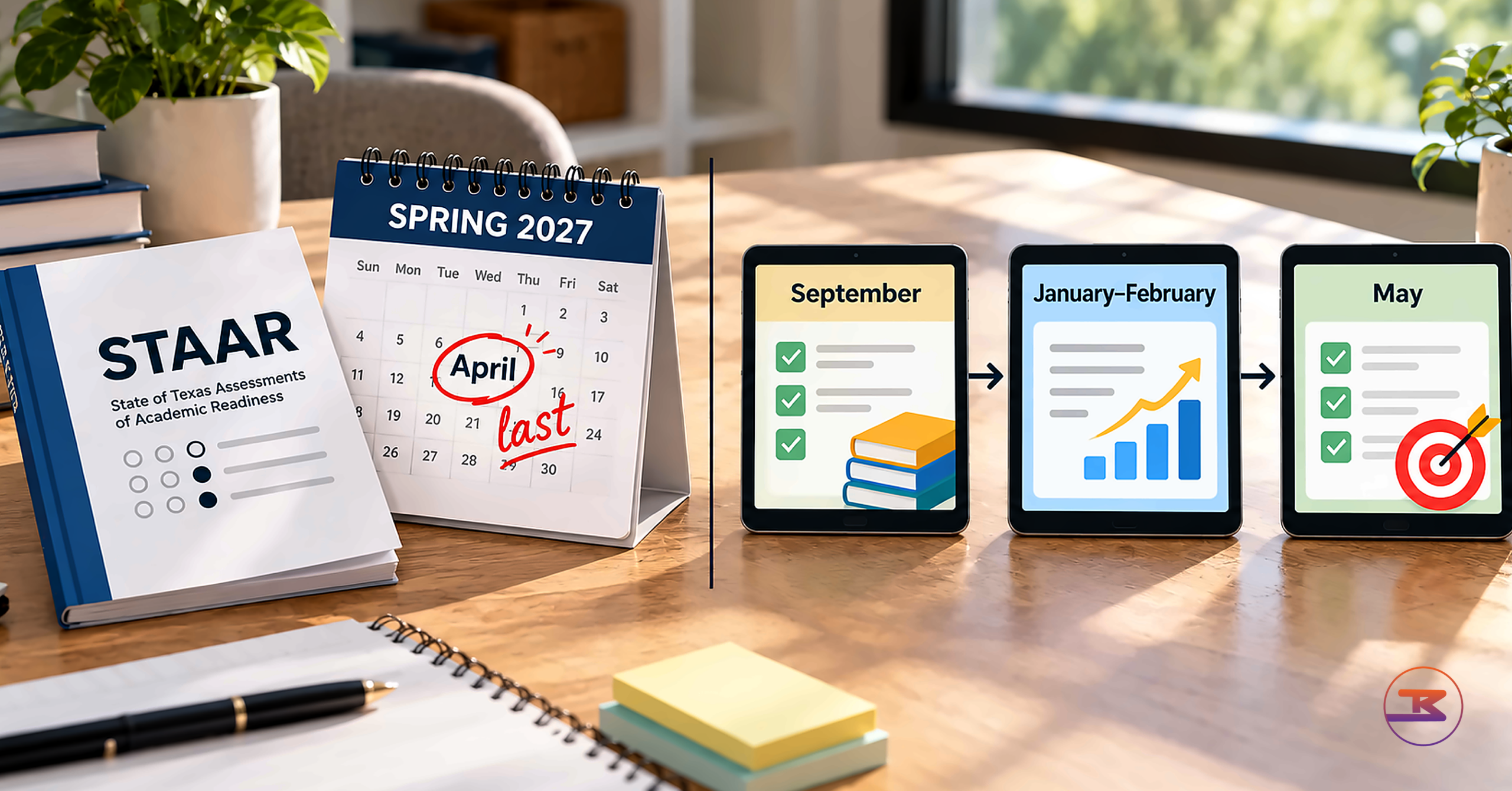
College readiness skills are six habits a student needs to pass first-year college courses: grade-level foundations, steady study habits, persistence, planning, explaining reasoning, and teamwork. The years to build them are grades 3 through 8, because ACT’s research on the middle grades found that a student’s level by eighth grade shapes college readiness more than any other single factor it studied.
That makes this a middle-years job, not a junior-year scramble. Each habit below gets a plain definition, a grade-level example, and something to try at home this month.
What are college readiness skills?
College readiness skills are the abilities a student needs to get into college and pass entry-level courses. ACT defines college readiness as a high likelihood of earning a C or better in first-year college courses. A Stanford research center’s college readiness framework sorts these skills into three groups: academic preparedness, academic tenacity, and college knowledge.
Academic preparedness is knowledge plus thinking strategies such as problem solving and analysis. Academic tenacity is engagement and persistence through setbacks. College knowledge covers practical skills outside course content, such as note-taking and time management. Grades sit inside the first group. The other two groups never appear on a report card, which is why a report card shows only part of the picture.
That split matters at home. A straight-A seventh grader can still freeze on a three-week project with no daily checklist. A B student can be the one who stays calm when a science-fair model collapses the night before. Each child is ready in some ways and not yet in others. Our guide to student readiness covers what report cards leave out more broadly.
Why do college readiness skills start before high school?
College readiness skills start before high school because the gap is hard to close once ninth grade begins. ACT followed about 216,000 students from eighth grade through graduation. Eighth-grade achievement predicted college readiness better than any other single factor ACT studied, including high school courses and high school grades.
Of three groups ACT tracked, only the group on target in eighth grade reached college readiness by junior or senior year. Few students were on target to begin with: only 16% of the graduates ACT studied had met its eighth-grade benchmarks in all four subjects, English, math, reading, and science. The same study named two middle-school behaviors with the biggest effect on eighth-grade course failure and ninth-grade GPA: academic discipline, meaning steady work and study habits, and orderly conduct in class. Neither one is a test score. Both are habits, built by years of repetition.
The ACT study dates from 2008 and measured test benchmarks across a large group. It describes a pattern across many students, not a forecast for one child. Our college readiness roadmap picks up at grade 8 and walks through high school. This guide covers the years before it.
Which college readiness skills can a child build in grades 3–8?
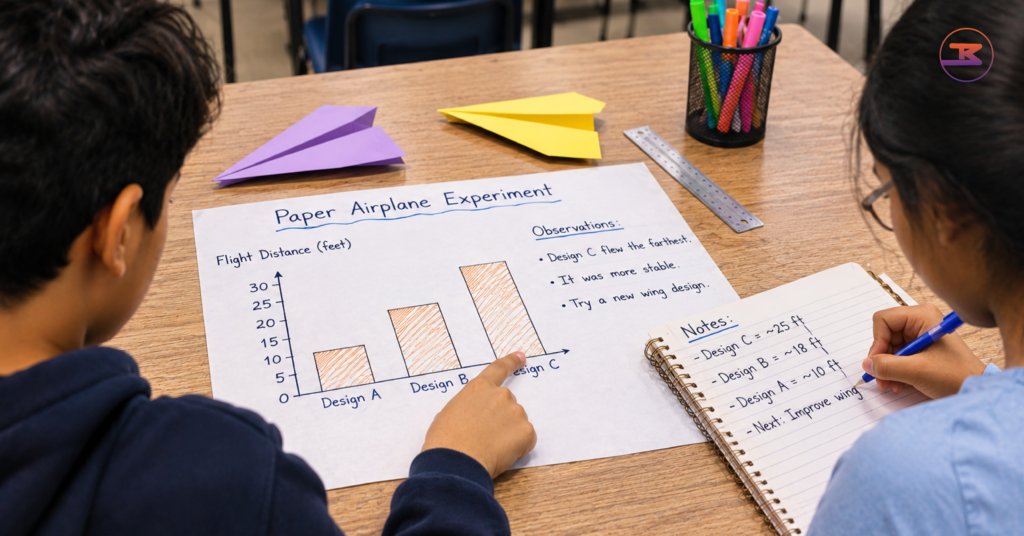
Six college readiness skills can be built in grades 3–8: grade-level foundations, study habits, persistence, project planning, explaining reasoning, and teamwork. Each one shows up in ordinary schoolwork and weekend projects, so each one gets practice every week. Here is what each looks like at this age.
What do grade-level foundations look like?
Grade-level foundations are reading, writing, and math at grade level by the end of eighth grade. ACT’s benchmarks cover English, math, reading, and science. A sixth grader who reads a one-page science article and restates its main claim in two sentences is practicing academic preparedness.
What do steady study habits look like?
ACT calls this habit academic discipline: doing the work on time, every time. In grade 4, it looks like a 20-minute homework block at the same time each school night. In grade 7, it looks like checking a planner before packing a backpack, without a reminder.
What does persistence look like?
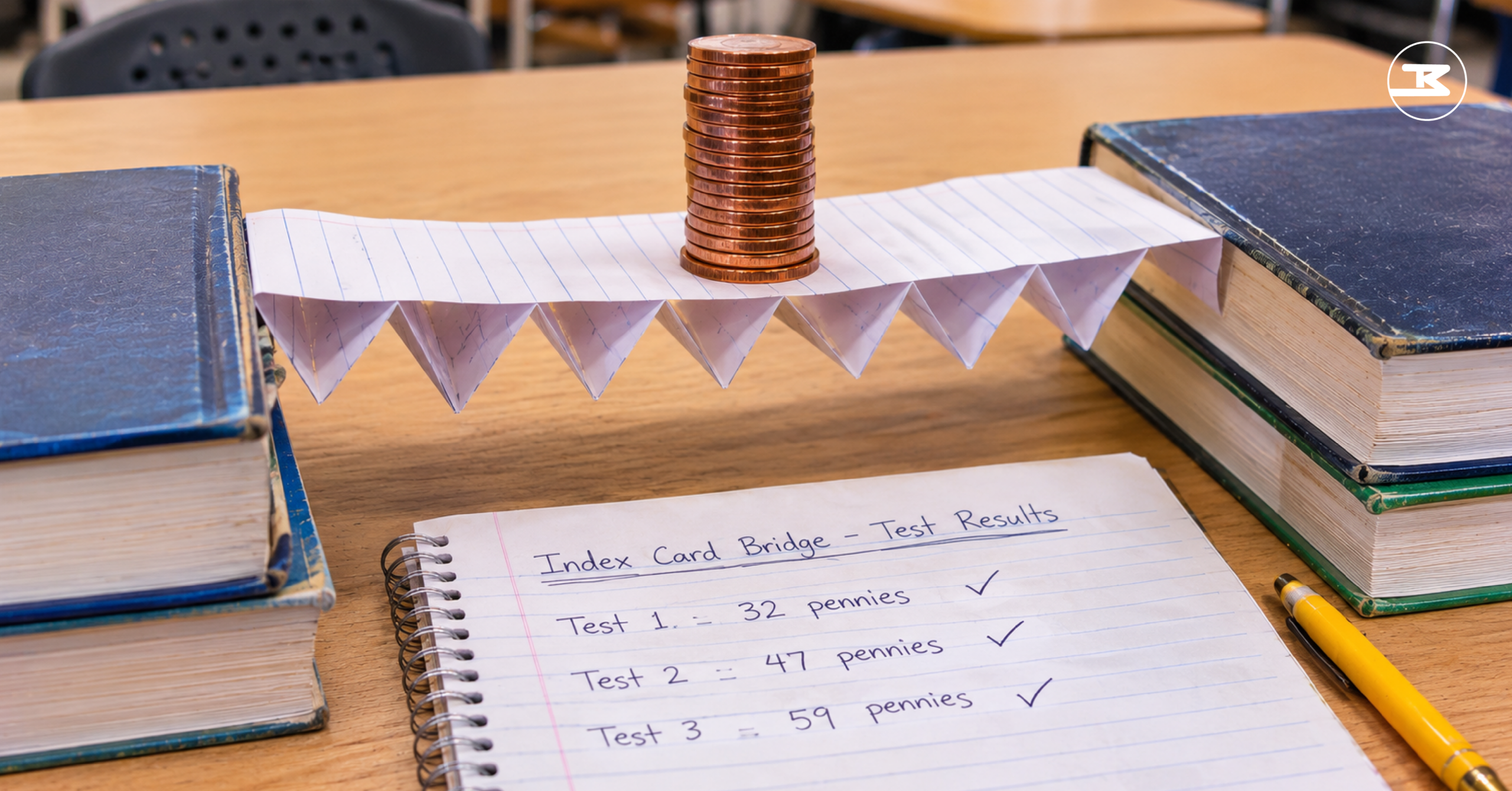
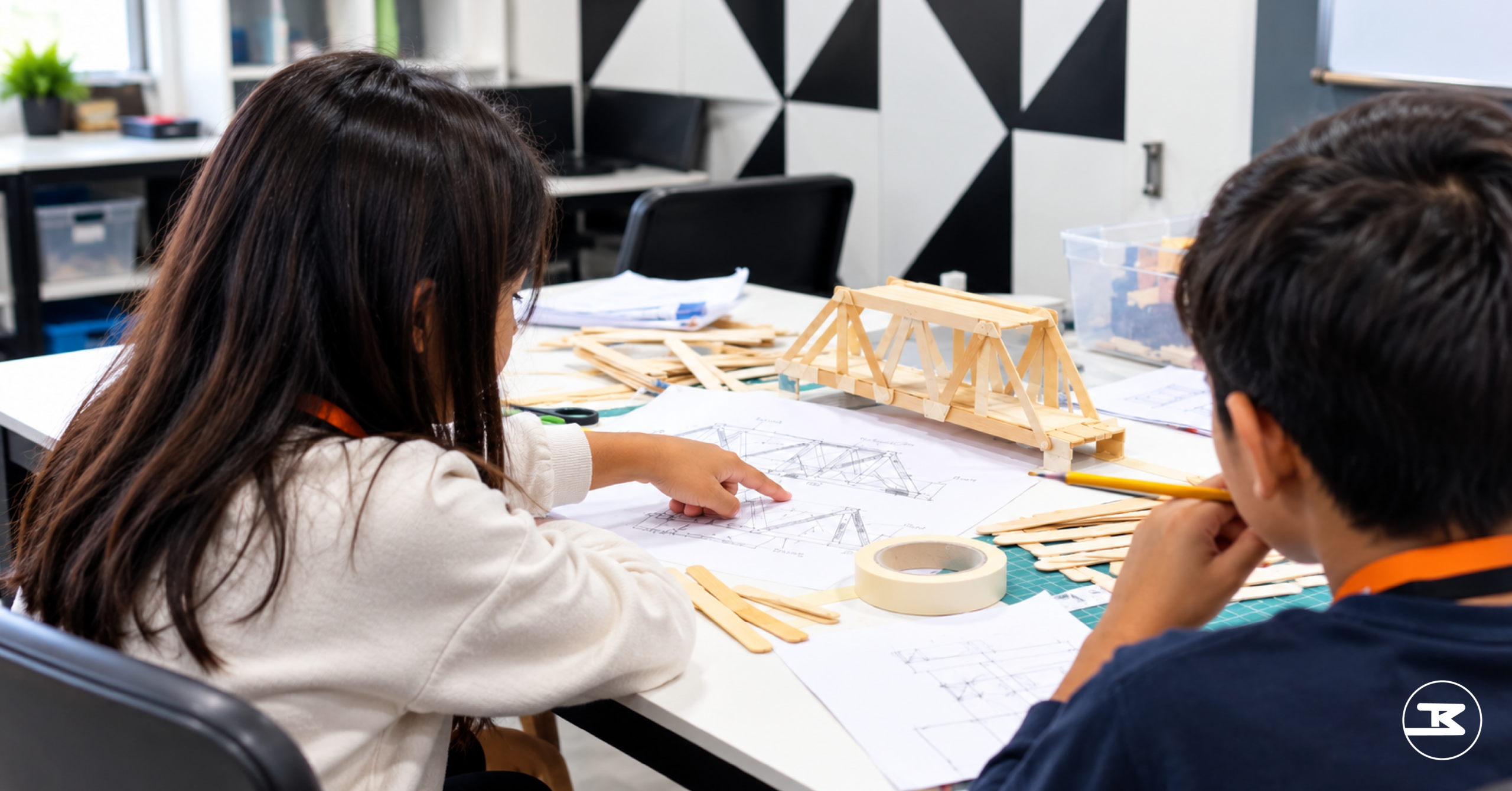
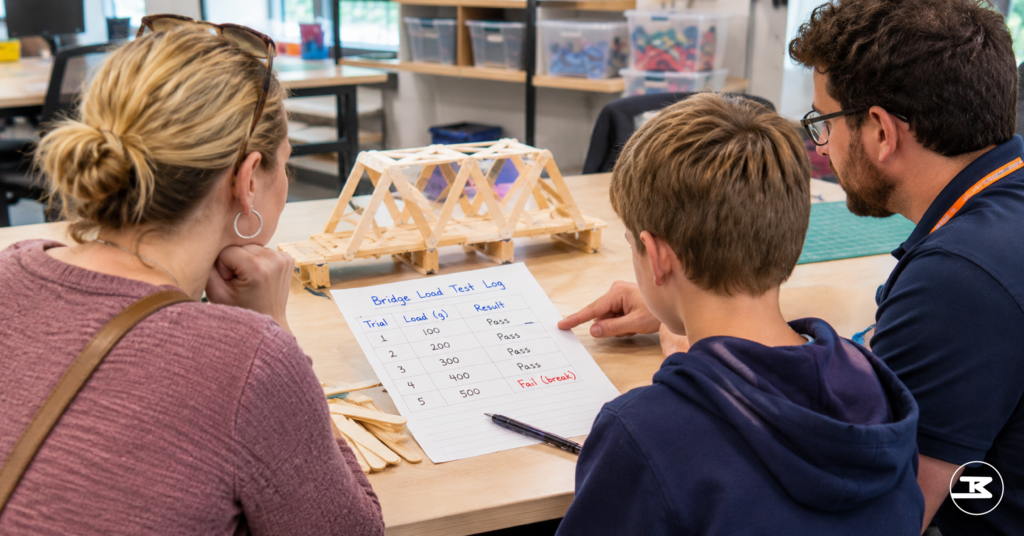
Persistence is staying with a task after it goes wrong. A fourth grader whose popsicle-stick bridge snaps at 300 grams rebuilds it with triangles and tests it again. That second test teaches more than a first test that worked.
What does project planning look like?
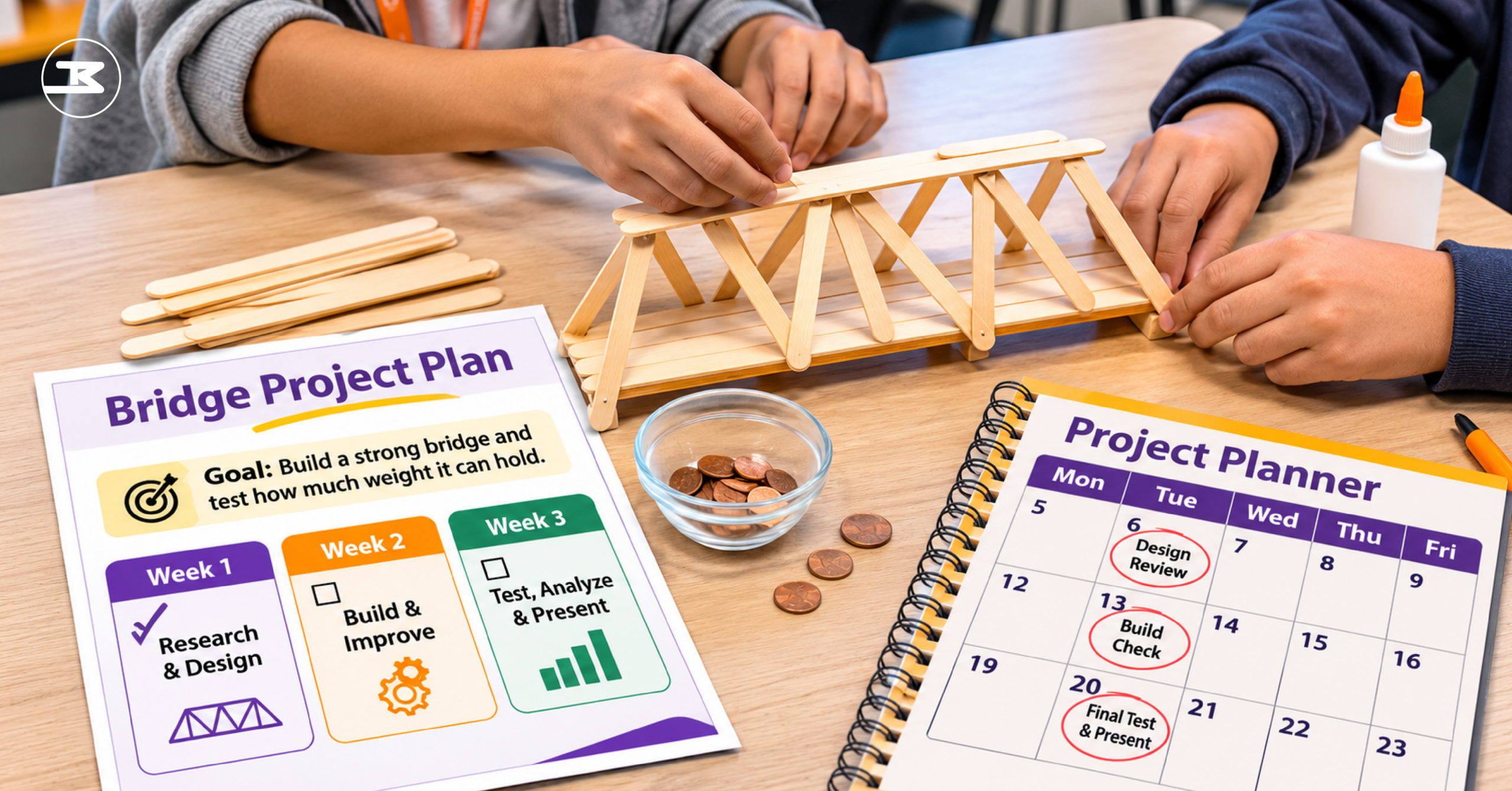
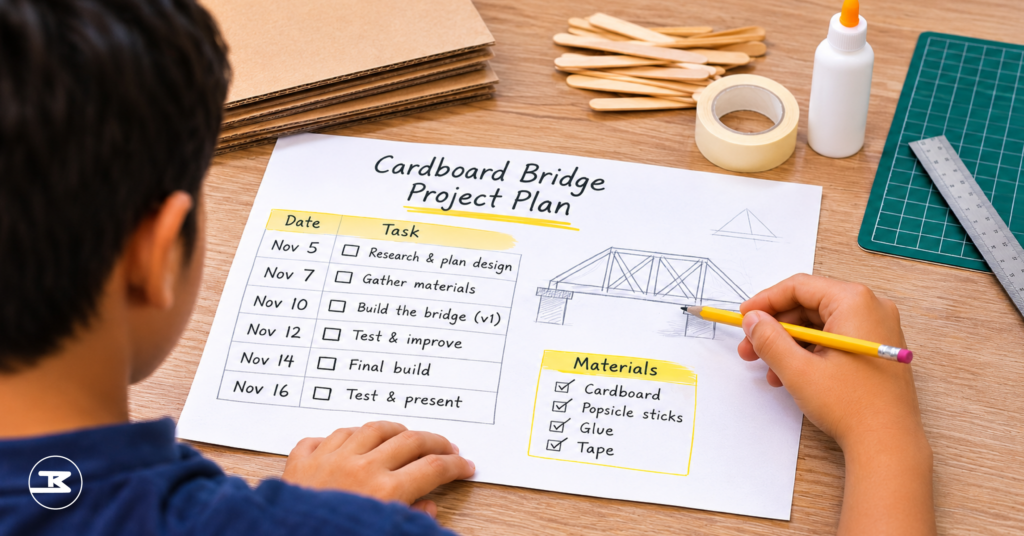
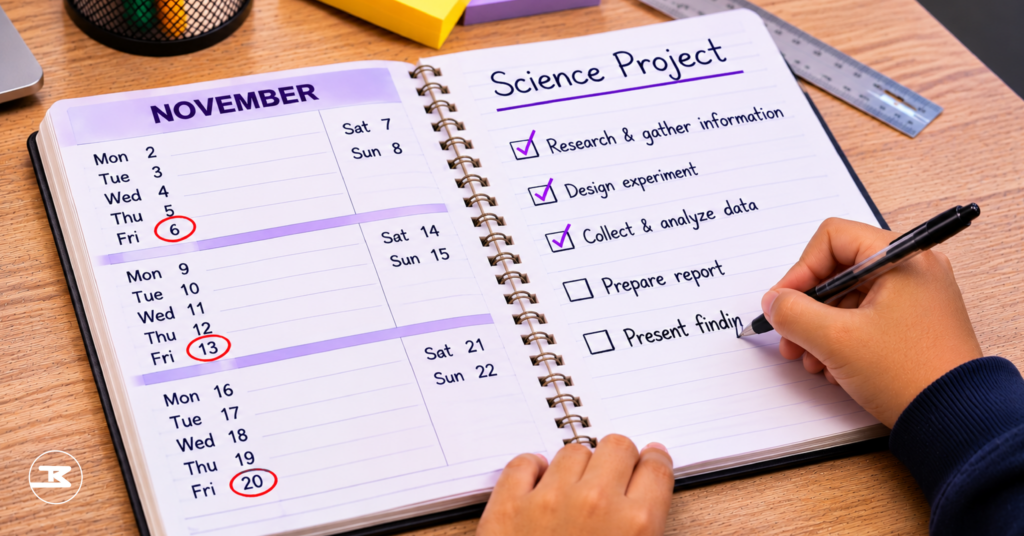
College courses hand out a syllabus and expect students to run their own schedule. The Stanford framework lists independent study skills, such as note-taking and time management, under college knowledge. A fifth grader who splits a three-week science-fair project into weekly checkpoints on one sheet of paper is rehearsing a college syllabus.
What does explaining reasoning look like?
Explaining reasoning means saying why, not only what. Employers in NACE’s Job Outlook 2026 Spring Update named teamwork, problem-solving, and communication as skills they especially want to see, and they want examples, not a list. A third grader who explains in three sentences why her marble ramp needs a steeper first drop, to an adult who did not watch her build it, is practicing that.
What does teamwork look like?
Teamwork in college labs means splitting tasks and keeping promises to classmates. In grades 3–8, a two-person build with set roles practices the same thing. One child builds and the other tests, then they swap.
How do college readiness skills change from grade 3 to grade 8?
College readiness skills change from short, adult-guided tasks in grades 3–5 to longer, self-run work in grades 6–8. The habit stays the same. What grows is how long a child keeps it going and how little help they need: a ten-day project with a parent checking in becomes a four-week project the child schedules alone.
| Skill | Grades 3–5 | Grades 6–8 |
|---|---|---|
| Grade-level foundations | Retells a chapter book’s plot in order; explains how they solved a two-step word problem | States the main claim of a one-page science article; sets up and solves a multi-step ratio problem |
| Study habits | 15–20 minute work block with an adult nearby | 30–45 minute work block, planner checked without a reminder |
| Persistence | Retests a model once after it fails | Logs three or more test runs and changes one variable each time |
| Project planning | Follows a one-page plan an adult helped write, over 1–2 weeks | Writes their own plan with weekly checkpoints, over 3–4 weeks |
| Explaining reasoning | Explains a build in three sentences to a family member | Presents a project for two minutes and answers two questions from someone new |
| Teamwork | Works with one partner in fixed roles | Works in a group of three or four, splits the tasks, and reports back on their share |
Grades 6–8 add the third group from the Stanford framework, college knowledge. The framework’s list of supports includes beginning college planning in middle school and taking college visits. For an 11- to 13-year-old, that means walking a college campus once, hearing what a syllabus and a credit hour are, and knowing that high school grades go onto a transcript that colleges read.
Use the table as a direction, not a checklist. A seventh grader can sit in the grades 6–8 column for persistence and the grades 3–5 column for planning at the same time. That mixed profile tells you which project to run next.
How do you build college readiness skills at home this year?
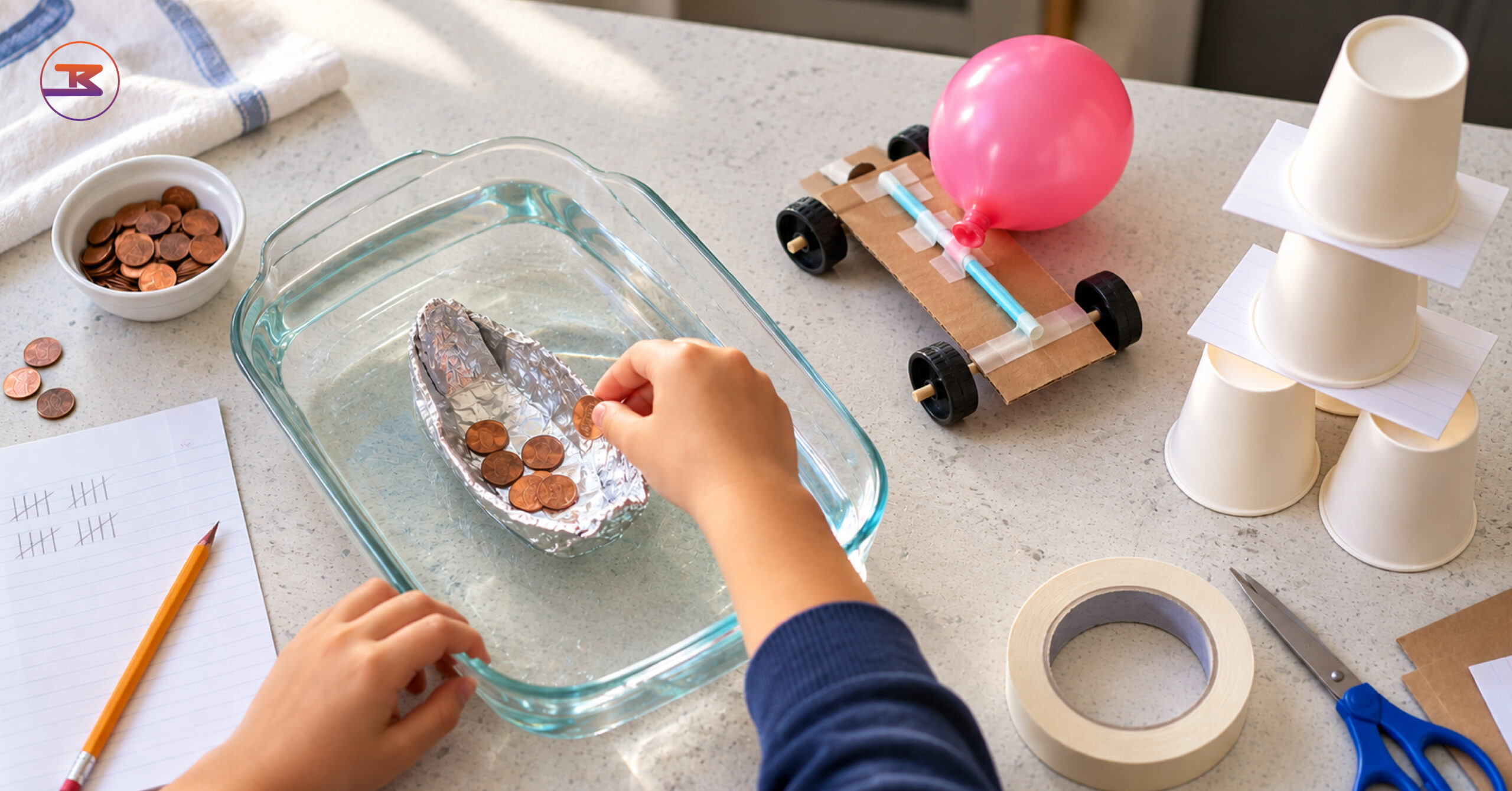
Build college readiness skills at home with real projects that run for two or more weeks and carry a plan, a deadline, and room to fail. One project trains planning, persistence, and explaining together, which a worksheet does not. Keep the cost of a mistake at zero: a collapsed tower is data, not a grade.
Doing beats listening even in college classrooms. A meta-analysis of 225 studies in undergraduate science and math courses found exam scores rose about 6% under active learning, and students in lecture-only sections were 1.5 times more likely to fail. A child who has spent grades 3 through 8 building, testing, and explaining walks into that kind of class already practiced at it.
Five habits to start this month:
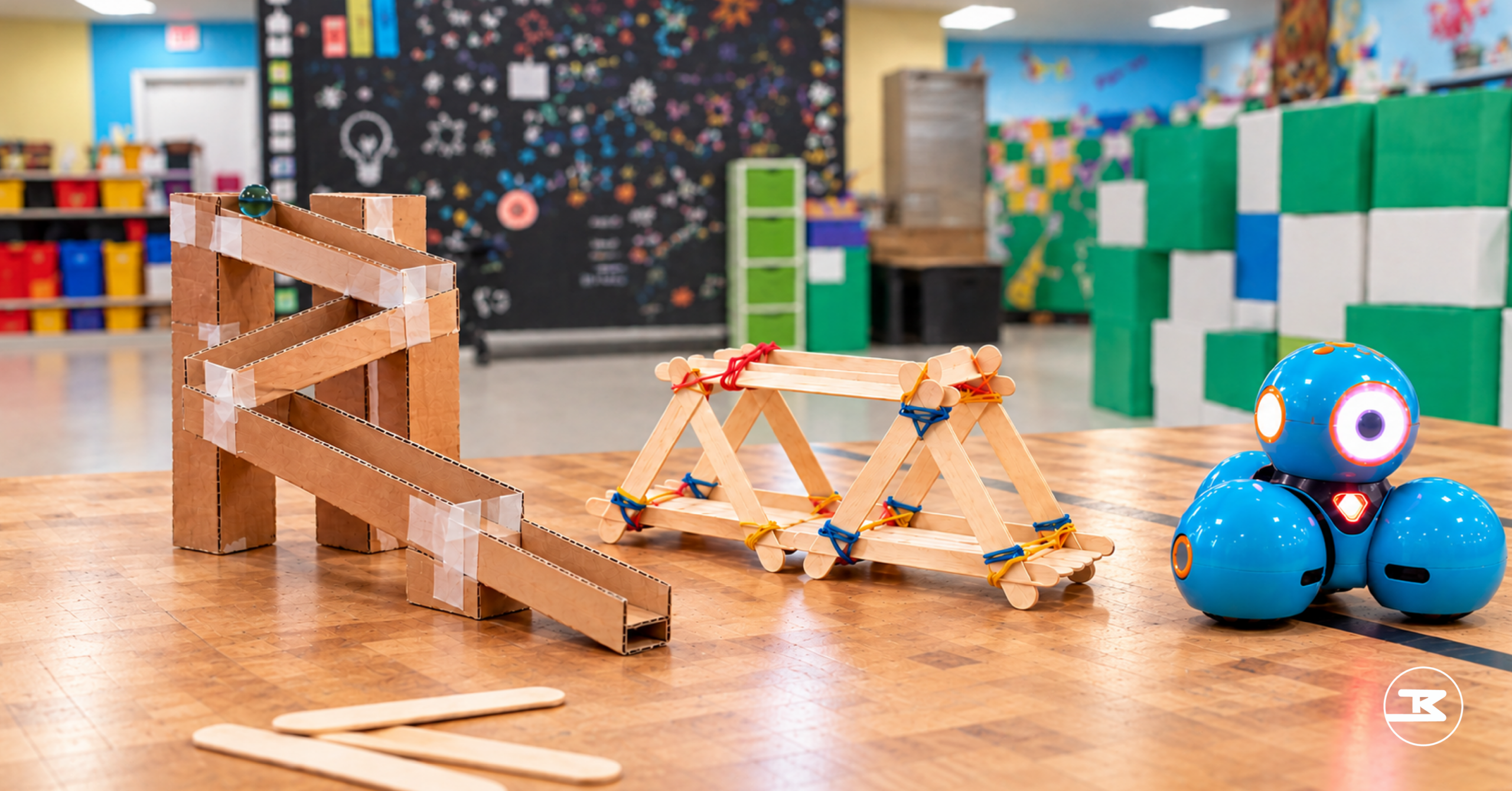
- Run one two-week build per month, such as a cardboard marble run or a paper bridge tested with pennies, from a one-page plan your child writes.
- Ask “What did you notice?” before “Did it work?” after every test, and let your child answer in three sentences.
- Keep a fixed 20–30 minute work block on school nights, at the same time and in the same place.
- Hand over the planner in grade 5. Your child, not you, writes the due dates.
- Trade roles on shared projects, builder first and tester second, so teamwork includes both leading and following.
What gets in the way of college readiness skills?
Three habits get in the way of college readiness skills: doing the work for your child, praising before the skill is real, and reading one number as the whole story. Each one feels supportive in the moment. Each one takes away the practice the skill needs.
What happens when a parent finishes the project?
A tri-fold board a parent finishes at 11 p.m. earns a grade and teaches the child nothing about planning. Set one rule before the project starts: your child holds the scissors and the schedule, and you ask questions. A rough board your child made carries more practice than a polished one they watched you make.
Why doesn’t praise build the skill?
A landmark 2003 review in Psychological Science in the Public Interest found only modest links between self-esteem and school performance. High self-esteem turned out to be partly a result of good performance, not its cause, and efforts to boost pupils’ self-esteem did not raise their academic performance. The authors recommended praise as a reward for real effort and self-improvement.
So praise the specific thing your child did: the second bridge test, the planner they kept up on their own, the clearer explanation. Competence comes first. Confidence that rests on it holds up when the next project breaks.
Why is one number not enough?
A report card grade, a test score, and a single assessment result each cover one marker. A child with an A in math and no habit of planning is missing a piece the grade cannot show. Read any one number next to the work you see at home.
How do you know your child’s college readiness skills are growing?
You know college readiness skills are growing when you can point to evidence across several markers, not one. Grades show academic preparedness. A finished three-week project shows planning, a rebuilt model shows persistence, and a clear explanation to a stranger shows communication.
That multi-marker view is how Big Brainbox in Frisco approaches readiness. Grades, test results, and observed project work all count, and none of them stands in for the others. Big Brainbox works alongside your child’s school, never in place of it.
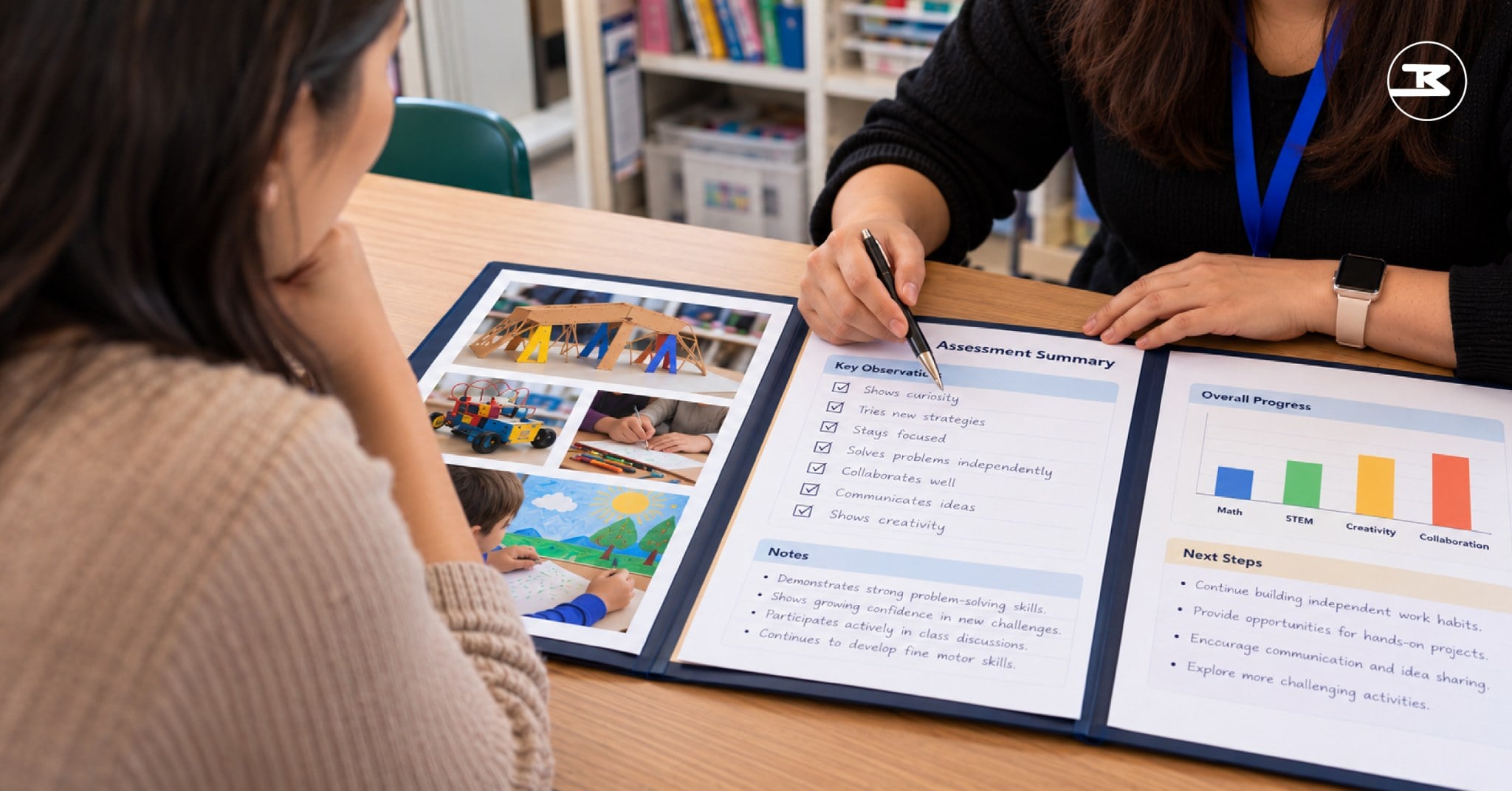
If you want an outside starting point, the Big Brainbox skills assessment covers one subject you choose and ends with a written report and a parent consultation, at no cost and with no enrollment required (as of 02-Nov-2026). It has no pass or fail. Treat it as one marker in the profile, next to the report card and the projects you see at home. For the workplace side of the same skills, read our post on career readiness for kids.
What can nobody promise you about college readiness skills?
Nobody can promise that strong college readiness skills in eighth grade lead to a particular college or career. ACT’s finding describes a pattern across about 216,000 students, not a prediction for one child. How well an early profile at age 10 or 12 predicts later results is still an open research question.
That open question cuts both ways. A sixth grader who is behind on planning or persistence is not sorted for life; grades 7 and 8 are still two full school years of projects, deadlines, and second tests. The point of looking early is time to build, not an early label.
What these skills do is widen the field. A ready student has more doors in front of them: engineering, nursing, teaching, founding a company, a skilled trade. The student chooses the door.
So the useful question for your family this year is not “Will my child get in?” It is “Which of the six college readiness skills is growing, and which one needs a project this month?”
Sources
- ACT, Inc. (2008, December 10). Preparation by eighth grade critical to college/career readiness [Press release on the report The Forgotten Middle: Ensuring That All Students Are on Target for College and Career Readiness before High School]. Iowa City, IA: ACT. Archived release
- John W. Gardner Center for Youth and Their Communities, Stanford University. (2014). Menu of college readiness indicators and supports. College Readiness Indicator Systems Resource Series. Seattle, WA: Bill & Melinda Gates Foundation. PDF
- Freeman, S., Eddy, S. L., McDonough, M., Smith, M. K., Okoroafor, N., Jordt, H., & Wenderoth, M. P. (2014). Active learning increases student performance in science, engineering, and mathematics. Proceedings of the National Academy of Sciences, 111(23), 8410–8415. doi:10.1073/pnas.1319030111. Article
- National Association of Colleges and Employers. (2026, April 23). The high-impact skills college students should showcase on their resumes [Press release on Job Outlook 2026 Spring Update]. Bethlehem, PA: NACE. Release
- Baumeister, R. F., Campbell, J. D., Krueger, J. I., & Vohs, K. D. (2003). Does high self-esteem cause better performance, interpersonal success, happiness, or healthier lifestyles? Psychological Science in the Public Interest, 4(1), 1–44. doi:10.1111/1529-1006.01431. Article