Home » STEM Enrichment » Robotics
A mastery-based robotics program where students progress through 9 structured levels – designing, programming, and engineering real systems with purpose and rigor.
One-on-one tutoring sessions
Customized learning plans
Progress tracking dashboard
Certified expert tutors
State Standards
Approved Curriculum

NGSS Aligned
Standards-Based Learning

CSTA Inspired
Modern STEM Framework

ISD-Experienced Educators
District-Experienced Instruction
Award-Winning Curriculum Tailored for K-12
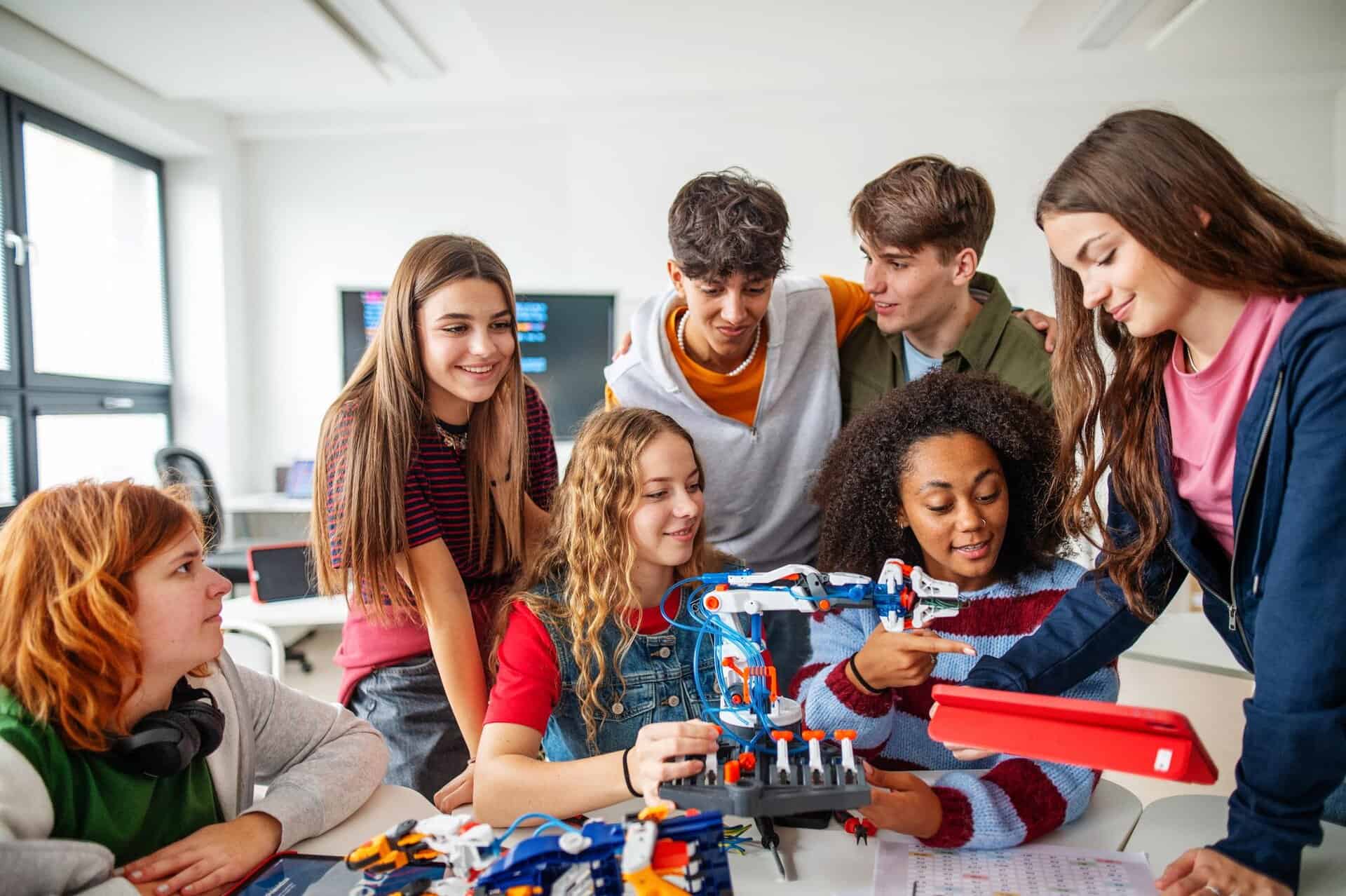
We don’t just introduce robotics – we build understanding.
With a structured approach to robotics classes, students develop real skills through hands-on problem solving, system design, and applied learning. Big Brainbox is trusted by families looking for meaningful progress, not just participation.
Systems Thinking Through Robotics
Concept-Based Engineering Learning
Applied Programming & Electronics Skills
Critical Thinking Through Real-World Challenges
Big Brainbox combines applied learning, inclusive design, and flexible pathways to create an education experience that adapts to students and prepares them for real‑world success.
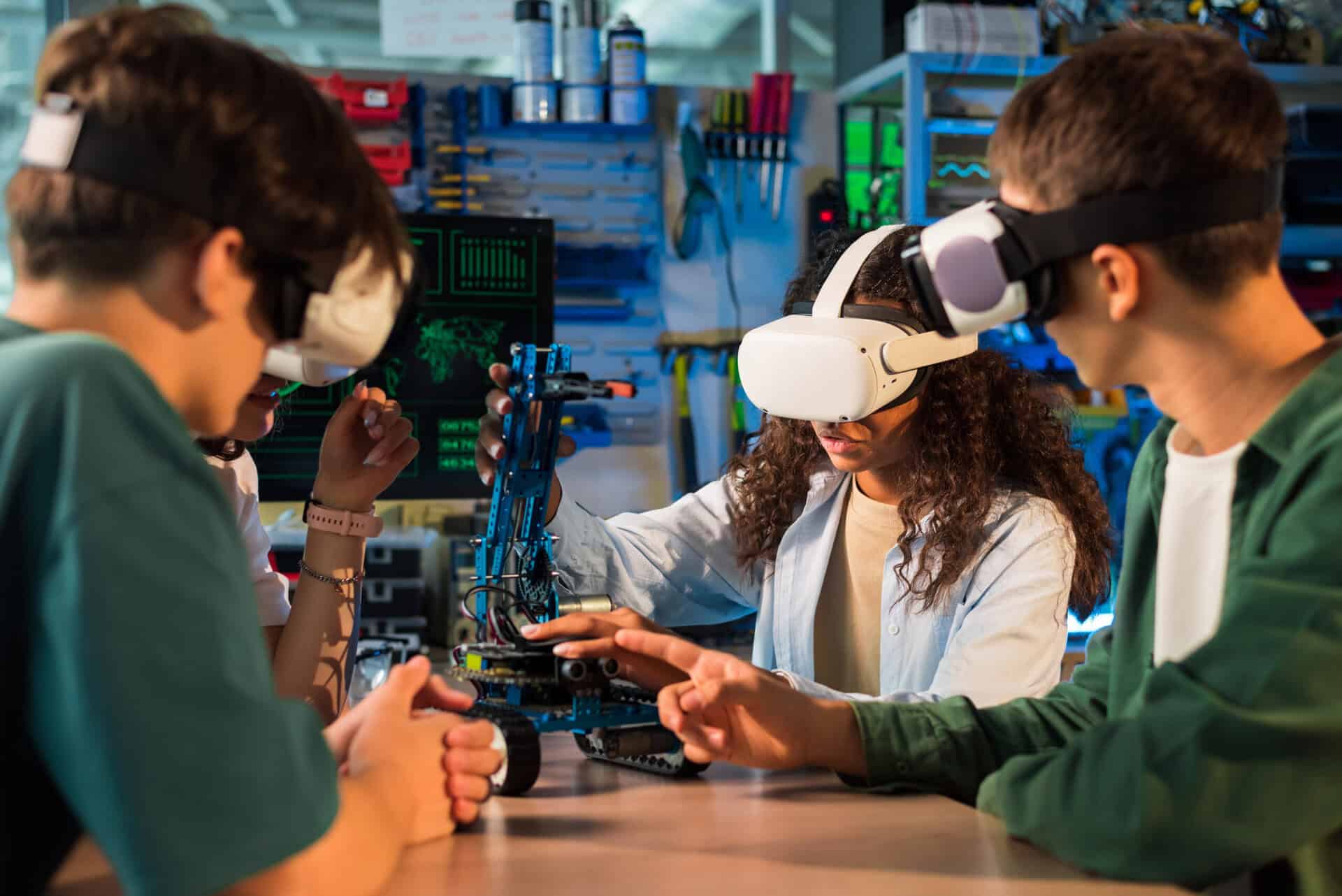
Students engage in hands-on, project-based learning with multi-sensory experiences that make concepts easier to understand and remember.
Hands-on projects
Multi-sensory learning
Micro-learning modules
Real-world application
Learn by doing
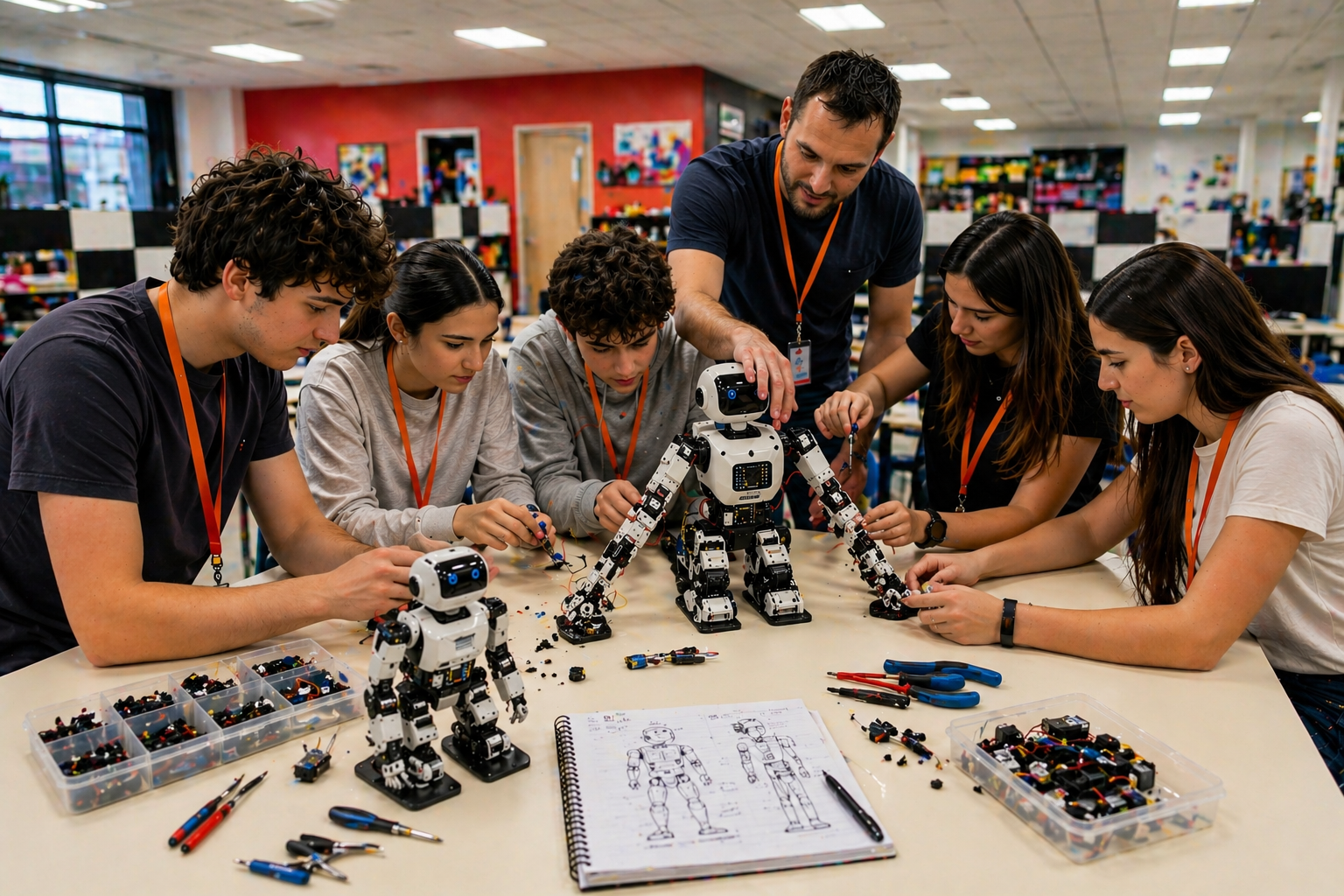
Students apply math, science, and logic to real-world areas like coding and robotics-while building leadership and thinking skills.
Integrated STEM learning
Coding & robotics application
Critical thinking skills
Leadership development
Teamwork & collaboration
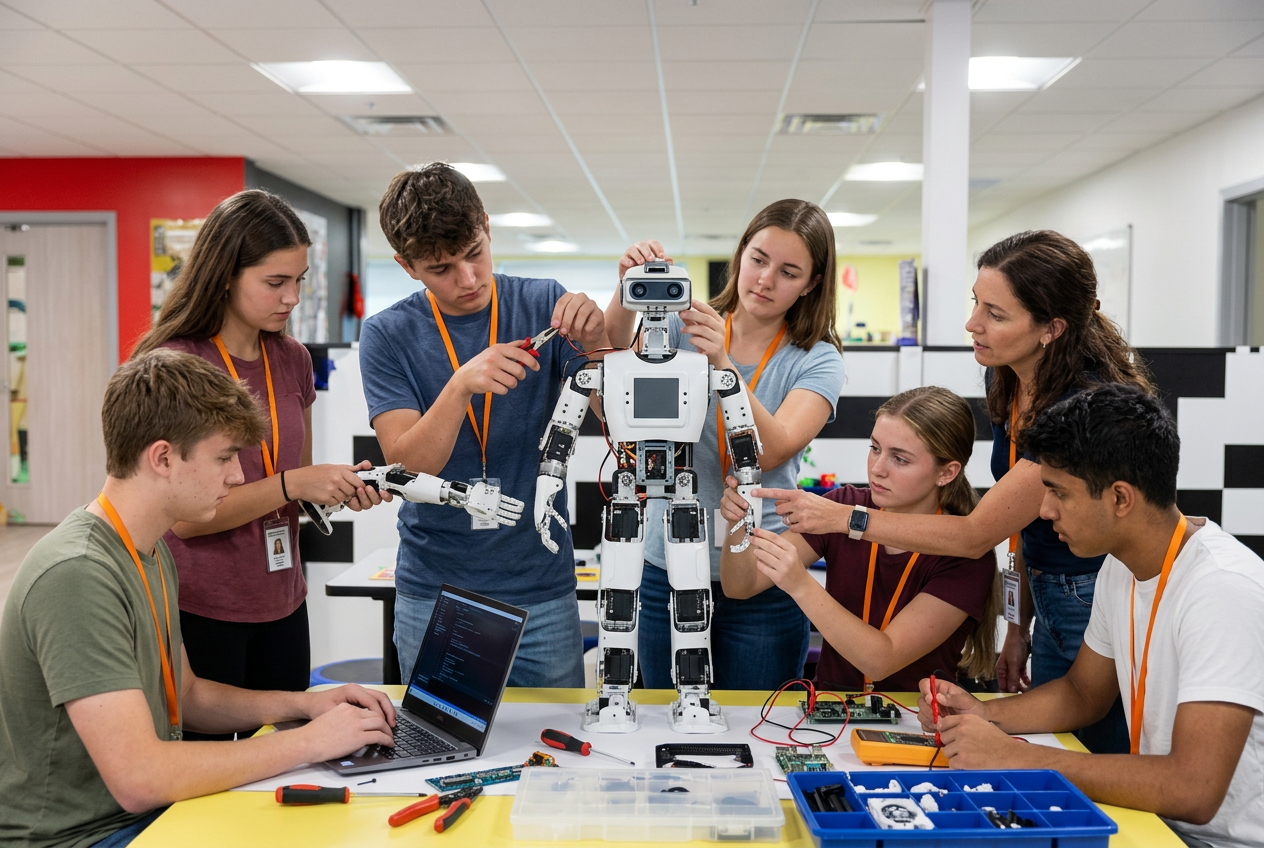
We identify individual strengths and help students turn them into real-world skills and confident capabilities.
Identify unique strengths
Personalized growth
Build real-world skills
Boost confidence
Encourage creativity
9 Levels. 45 Projects. Real-World Skills. Students progress through increasing complexity, mastering core robotics concepts and building real systems at each stage – developing understanding step by step.
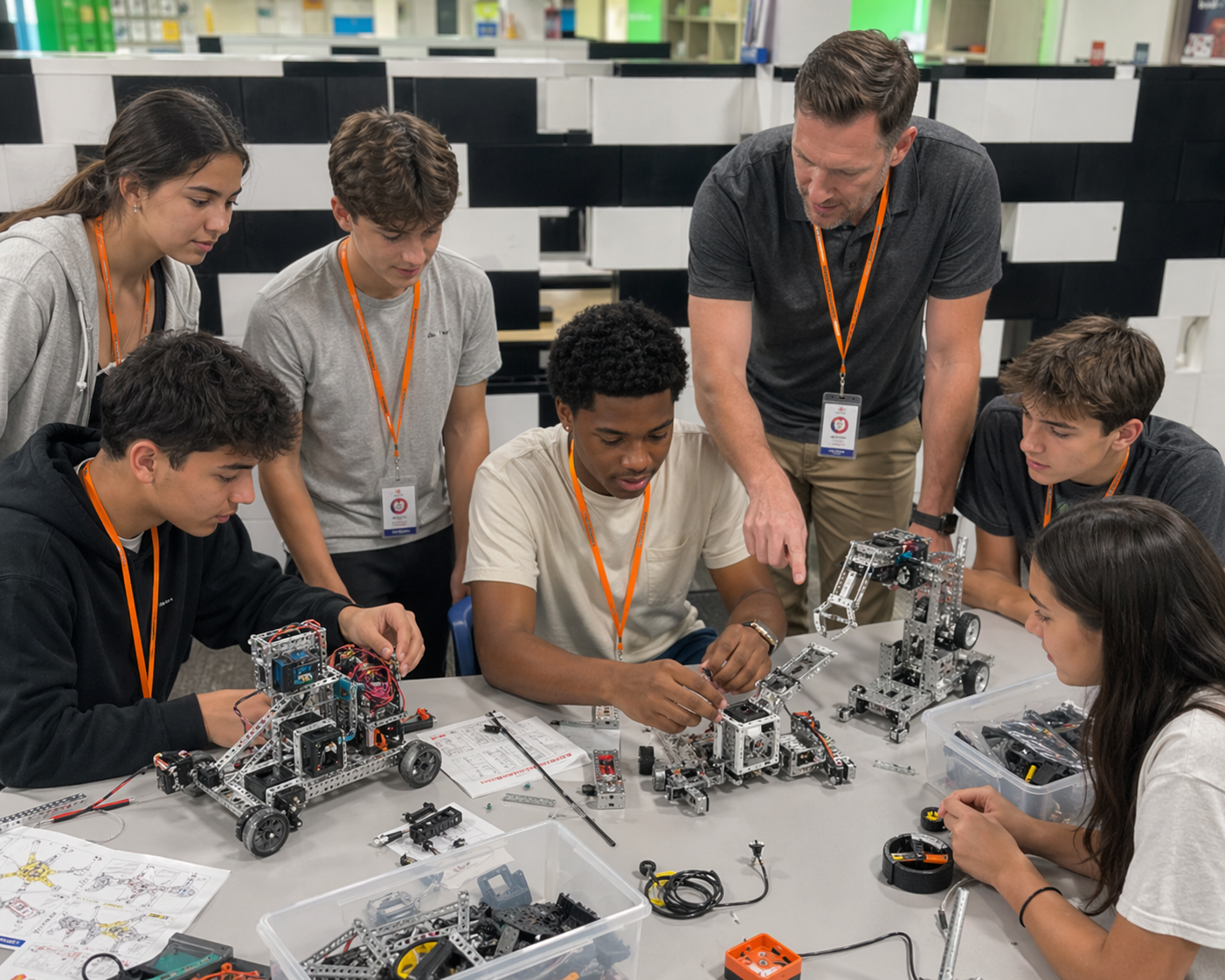
Levels 1–3
Age 7-16
Building confidence, mechanical intuition, and cause‑and‑effect thinking.
Build simple robots to perform controlled movement
Program directional logic using visual blocks
Explore balance, speed, and stability through design changes
Use basic sensors to trigger actions
Test, observe, and iterate mechanical structures
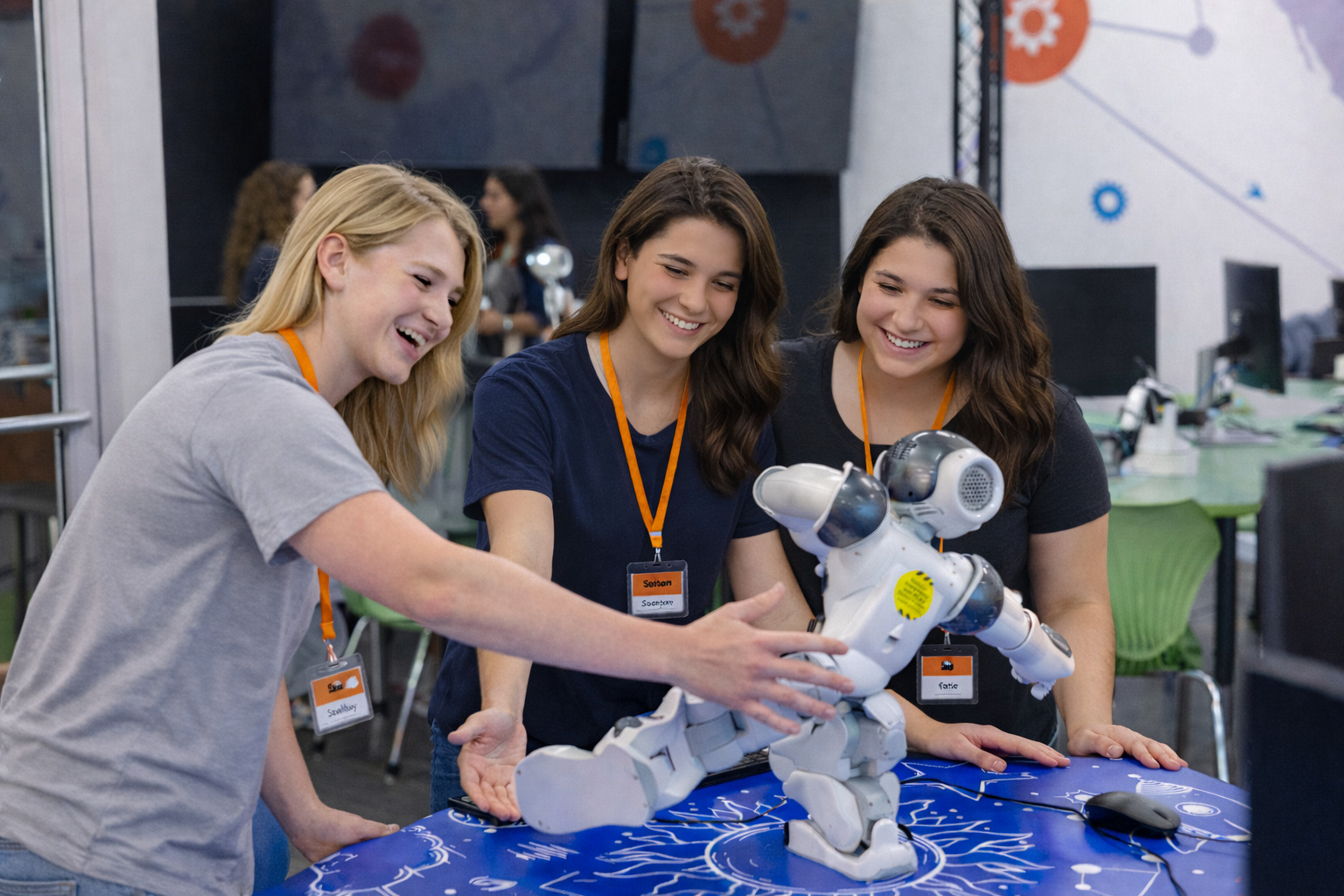
Levels 4–6
Age 10-16
Transitioning from building robots to thinking like an engineer.
Design robots that respond to environmental input
Create sensor‑based navigation systems
Build multi‑step logic with conditions and loops
Investigate power, energy usage, and efficiency
Debug complex behaviors and refine performance
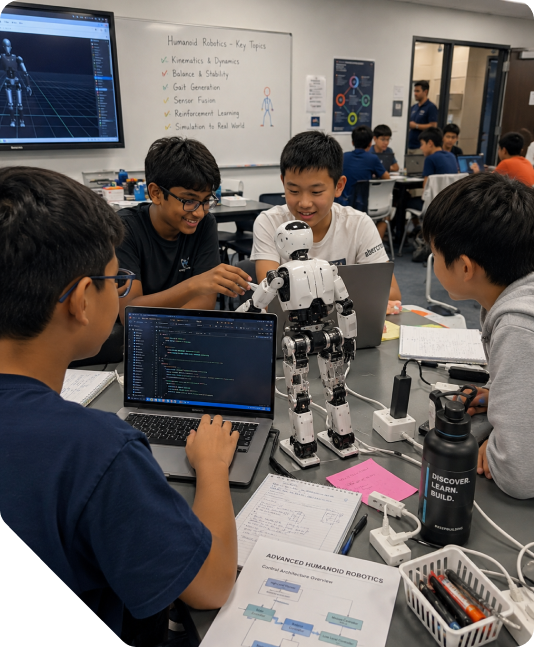
Levels 7–9
Age 13-16
Independent engineering, systems optimization, and strategic design.
Engineer autonomous robots with minimal guidance
Optimize designs for accuracy, reliability, and efficiency
Integrate mechanics, logic, and sensor feedback systems
Model real‑world automation and robotics scenarios
Build a working spectroscope
Level Completion Rate
Students Enrolled
Capstone Projects
Structured Levels
Recognized Globally for Excellence
Applied Education
Standards Aligned
National Accrediation
Award Winner
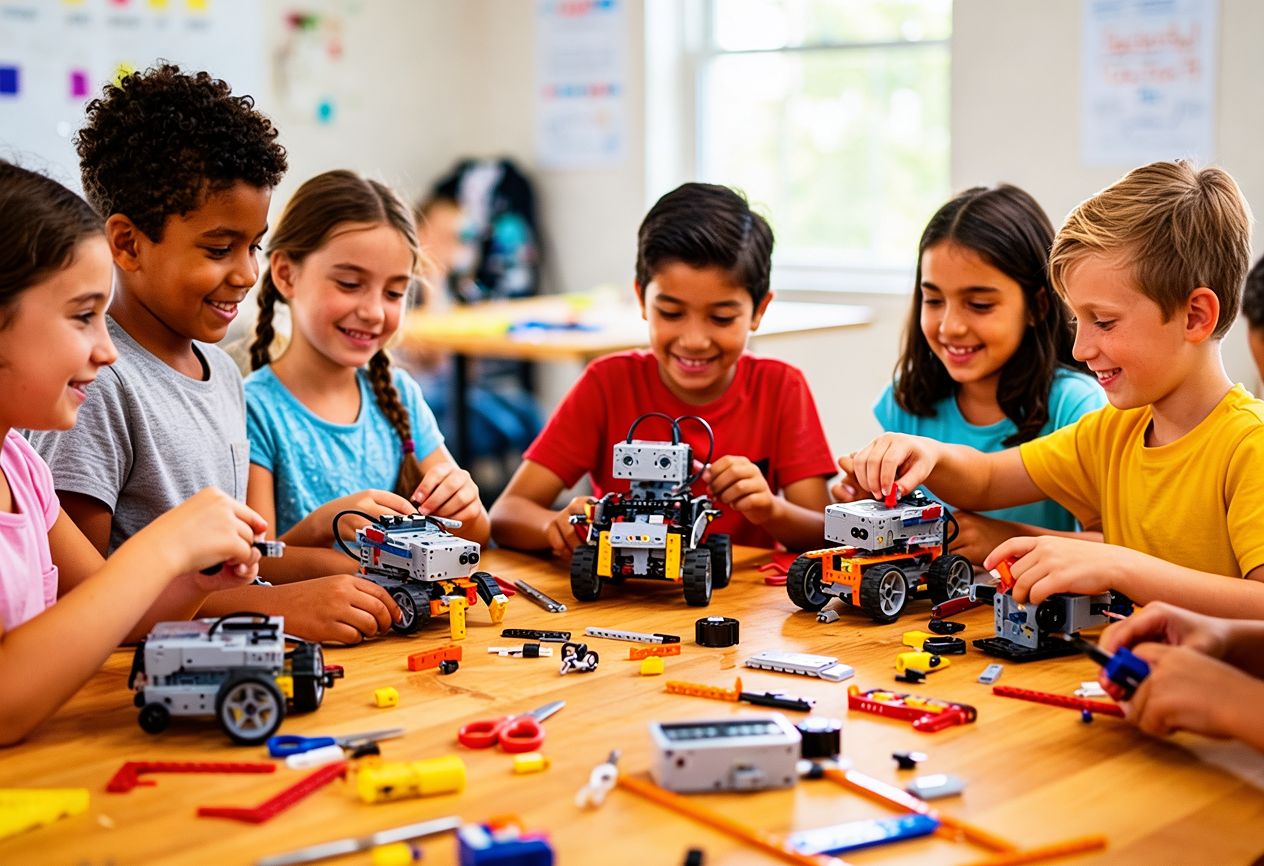
Give your child the opportunity to understand how systems work, not just how to use them. These robotics classes are designed to develop independent thinking, problem-solving ability, and confidence through hands-on learning.
Book Readiness AssessmentA structured approach to learning that builds real-world thinking and problem-solving over time.
STARTING FROM
$245/Month1X Weekly
Complementary Skill Assessment
1x Weekly
Choice of subject
Digital Notebook
Parental check-in monthly
No Contracts
2X Weekly
Complementary Assessment
1x Academic + 1x STEM
2x Academic Option
2x STEM Option
Choice of Academic Subject
Choice of STEM discipline
Digital Notebook
Parental check-in monthly
24x7 Email access to Educator
Re-assessment every 6 months
No Contracts
3X Weekly
Complementary Assessment
2x Academic + 1x STEM
3x Academic Option
3x STEM Option
Choice of Academic Subject
Choice of STEM discipline
Digital Notebook
Parental check-in monthly
24x7 Email access to Educator
Phone call access to Educator
Re-assessment every 6 months
No Contracts
We built a robotics program for parents who refuse to settle for shallow, kit-based experiences. Every element of our approach is designed with intention, rigor, and respect for your child’s potential.
Every concept connects to a real engineering problem. Theory is always in service of building something that works.
Our robotics classes accommodate diverse learning styles from the ground up - not as an afterthought. Every learner has a place here.
Students create guided learning paths across robotics, coding, and applied sciences - building cross-disciplinary understanding.
Advancement is based on competency and readiness, not age or seat time. Students move forward when they've truly earned it.
Weight limits, power budgets, sensor interference. Students solve the same types of problems professionals face - scaled for their level.
Every student builds a portfolio of documented projects that demonstrates growth, thinking process, and technical skill.
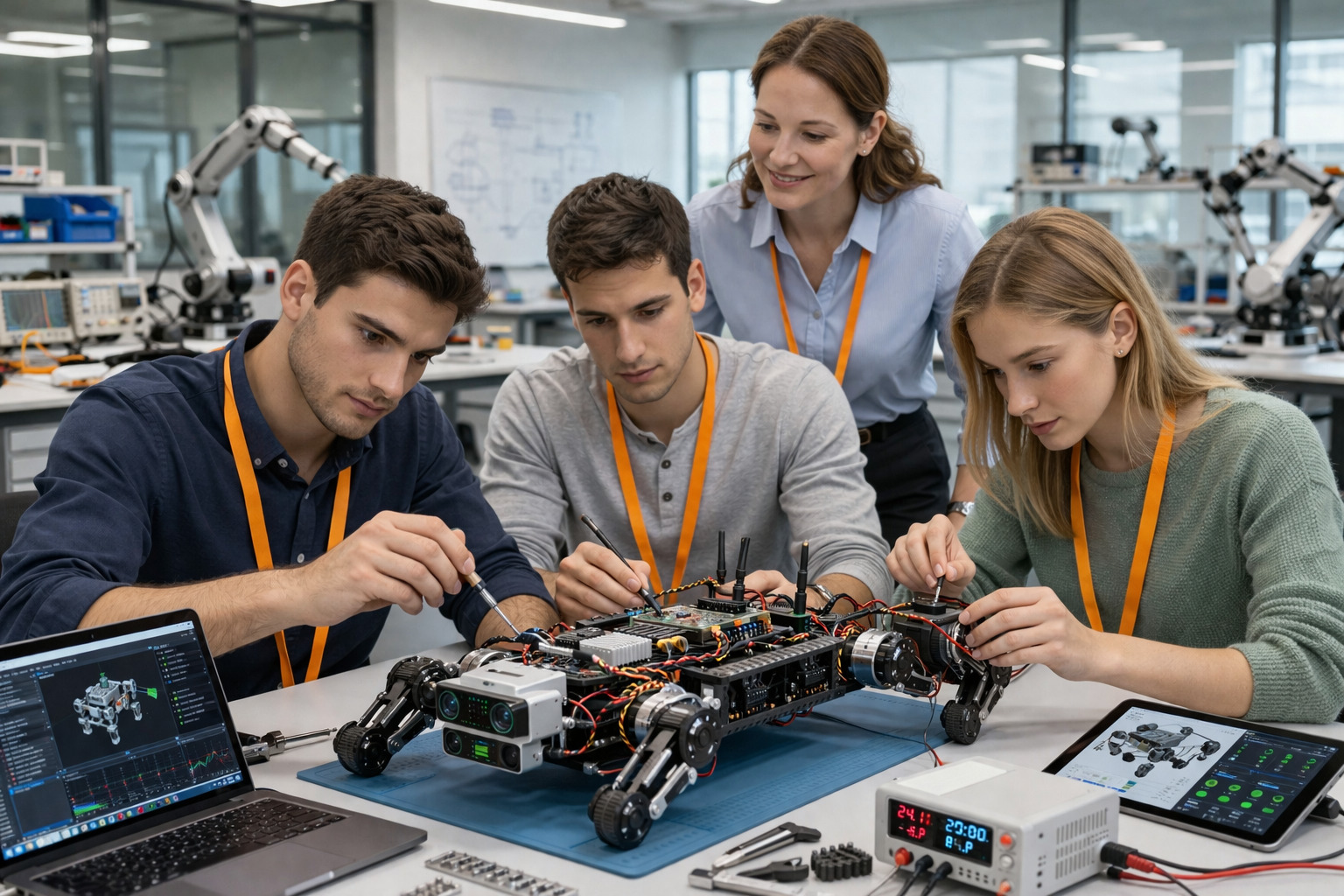
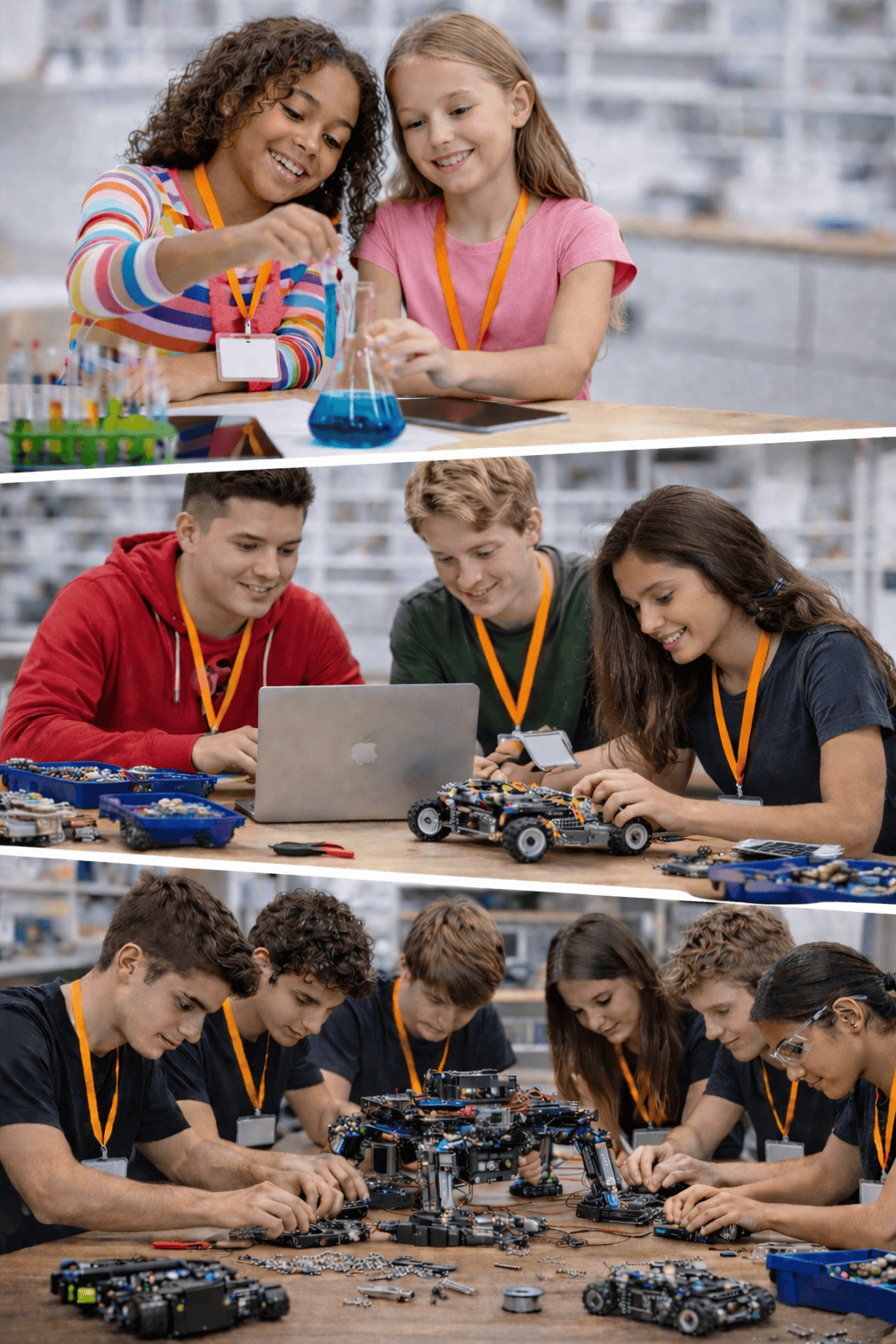
Our educational robotics curriculum covers the same core domains that university-level engineering programs introduce – scaled appropriately for K–12 learners. Every level layers new complexity onto a solid foundation.
LEGO Spike Prime & Mindstorms (Levels 1–4)
Arduino-based custom builds (Levels 5–7)
Raspberry Pi & advanced microcontrollers (Levels 8–9)
Block-based coding → Python → C/C++
Algorithm design and optimization
Version control and collaborative coding from Level 6
Ultrasonic, infrared, gyroscope, and color sensors
Servo motors, DC motors, stepper motors
Circuit design and soldering (Levels 7+)
Weight limits, power budgets, and material constraints
Time-boxed design sprints
Iterative prototyping and failure analysis
Subsystem integration and debugging
Input → Processing → Output modeling
Cross-disciplinary problem decomposition
Join thousands of satisfied families who’ve helped their children succeed on the STAAR test with Big Brainbox.
4.9/5
“My son tried three different robotics programs before Big Brainbox. This is the first one where he’s actually learning to think through problems instead of just following a manual.”
- Priya M.
Parent of a Level 6 student
“The mastery-based approach changed everything. My daughter was bored in age-grouped classes. Here she’s challenged at her level and genuinely proud of what she builds.”
- Michael R.
Parent of a Level 5 student
“What impressed me most was the placement process. They didn’t just slot my child into a group – they actually listened to how she learns best.”
- James L.
Parent of a Level 5 student
“Robotics has made STEM much more exciting for my son. He enjoys creating projects and showing us how they work, while also developing logical thinking, creativity, and teamwork.”
- Fatima R.
Parent of a Level 8 student
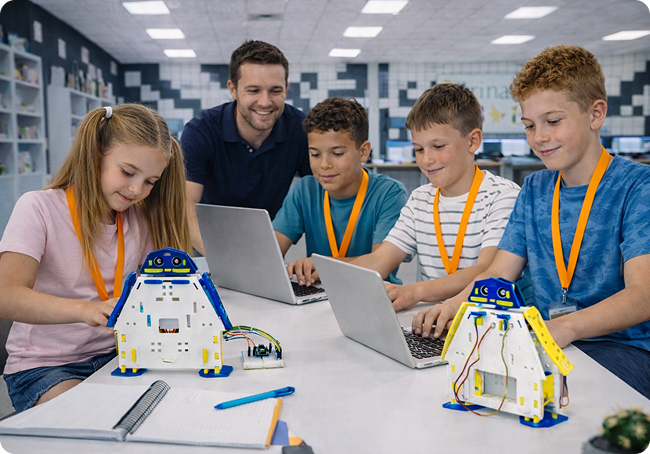
If you’re looking for a program that develops how your child thinks – not just what they learn – this is where that journey begins.
Book Readiness AssessmentQuick, clear answers to help you understand how the program works and what your child can expect.
Unlike typical robotics classes that follow kit-based assembly, Big Brainbox’s Applied Robotics Program focuses on systems thinking, real-world constraints, and mastery-based progression across 9 structured levels. Students don’t just build – they understand why systems work.
Absolutely. The program starts at foundational levels and progresses based on demonstrated mastery. Every student begins where they need to, regardless of prior experience, and advances at their own pace.
Progress is tracked through project-based assessments at each level. Students must demonstrate comprehension and application of concepts – not just completion – before advancing to the next level.
Our multisensory approach integrates visual, kinesthetic, and auditory learning. Combined with flexible pacing and two distinct learning tracks (Collaborative and Focused), the program naturally adapts to how each student processes information.
Students develop computational thinking, electronics literacy, coding proficiency (from block-based to text-based), systems design, iterative problem-solving, and the confidence to tackle complex engineering challenges.
Coding classes focus primarily on software. Our applied robotics program integrates coding with physical electronics, mechanical systems, and sensor logic – giving students a holistic engineering mindset rather than isolated programming skills.