Career Readiness for Students: 3 Essential Skills for Future Success
Reviewed By: Dr. Jill Hollander
10 minutes
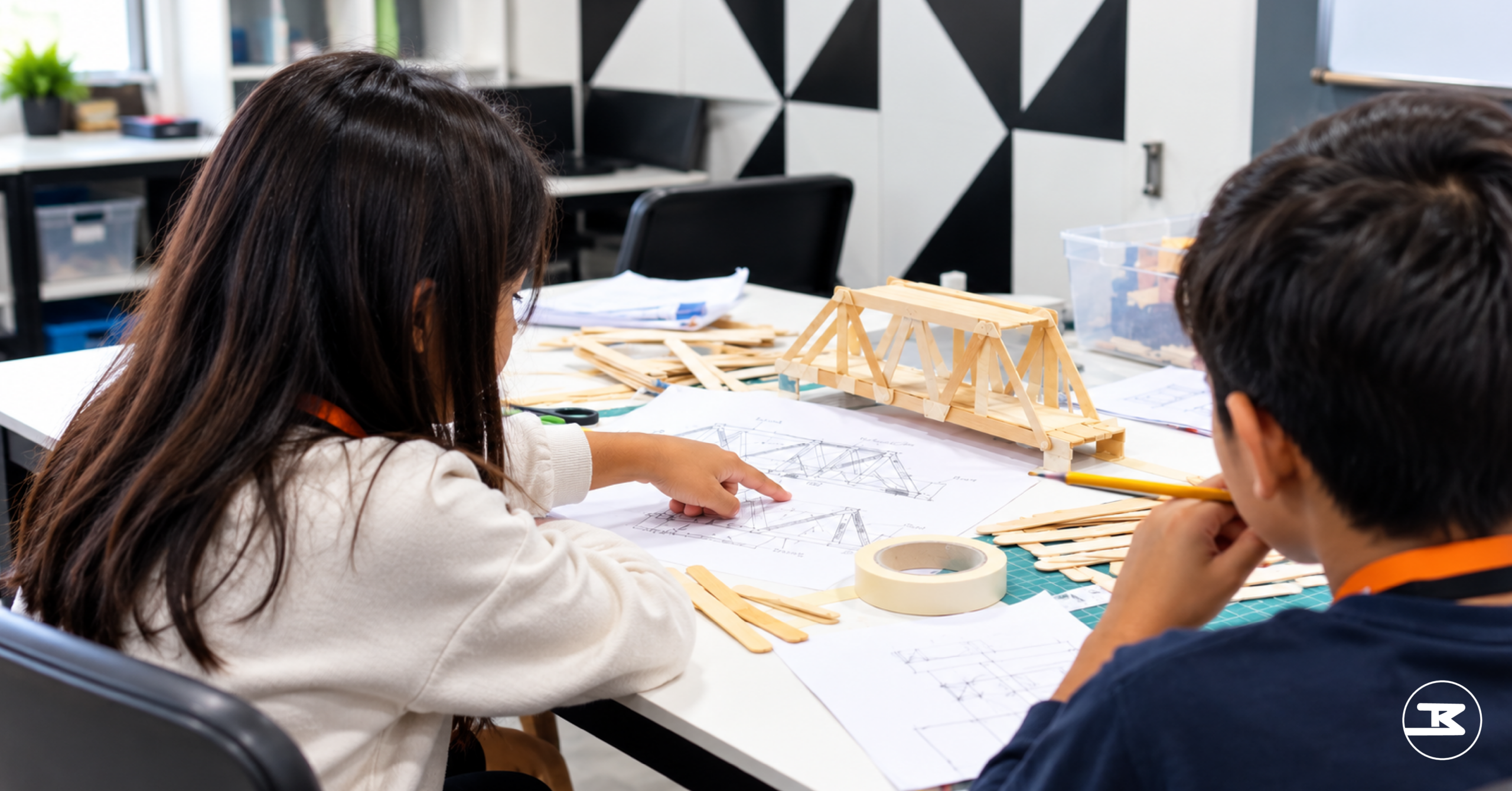
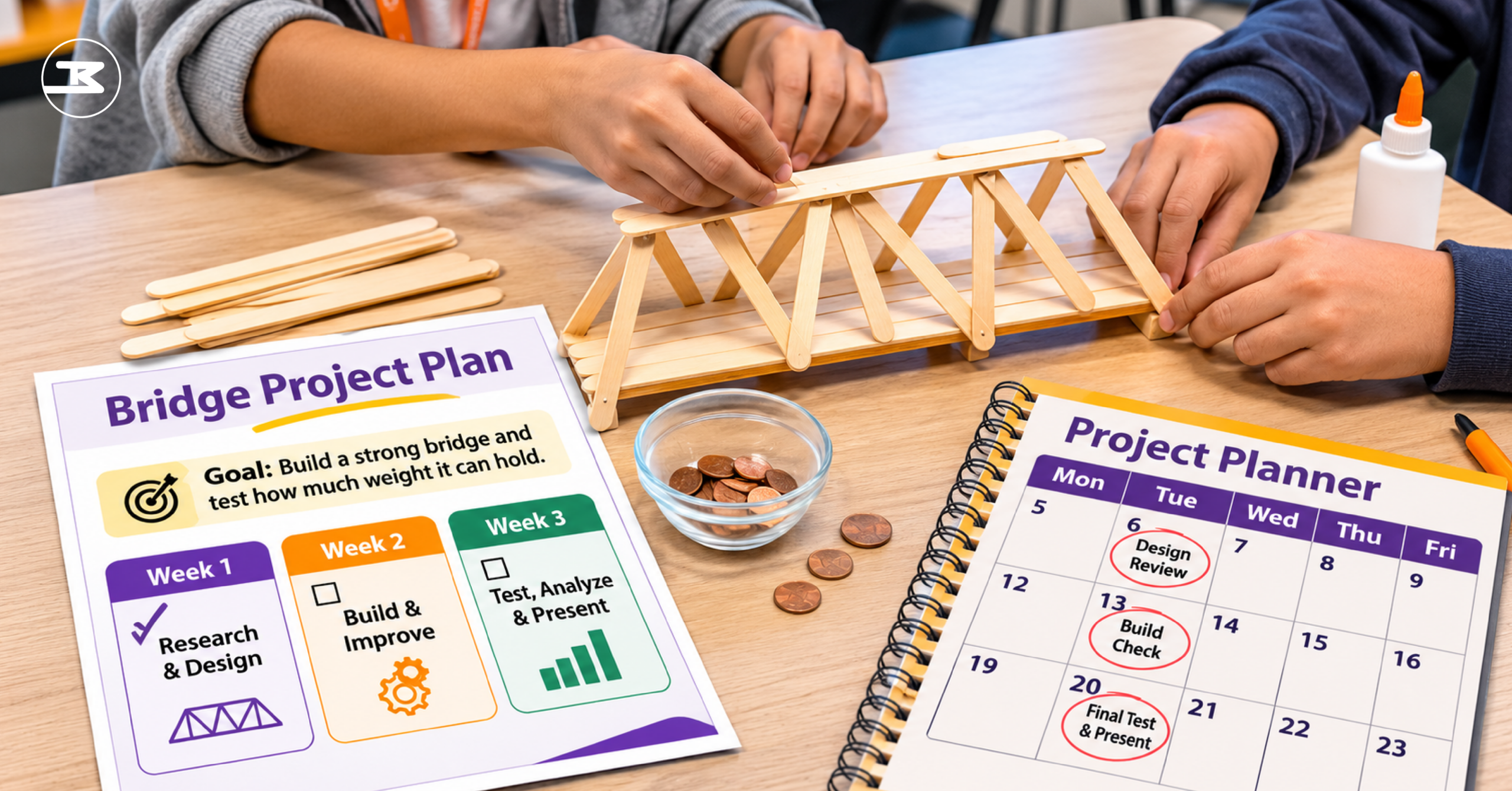
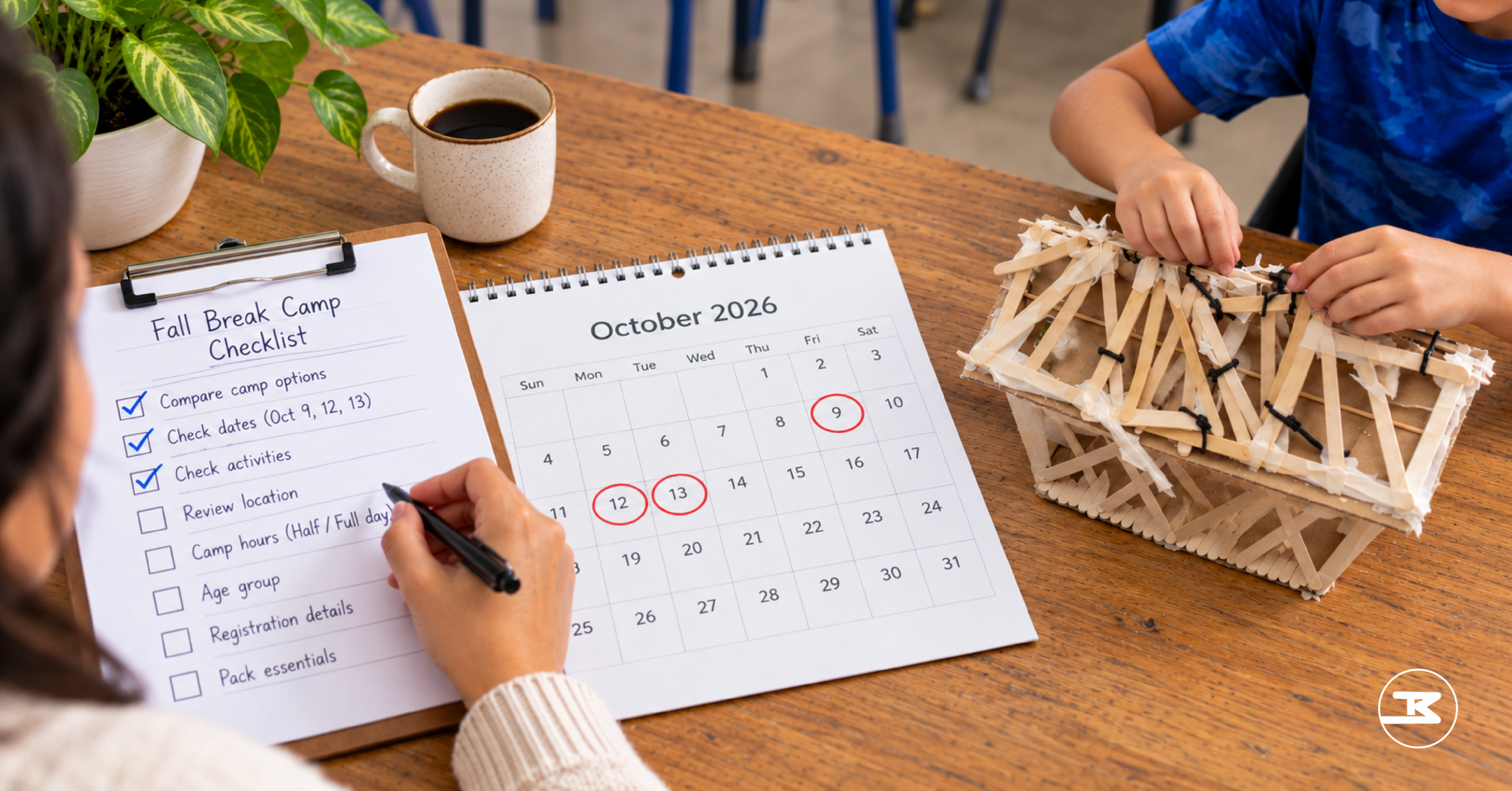
Two children plan a craft-stick bridge together, an everyday start to career readiness for kids
Employers hire for problem-solving, communication and teamwork, and they ask for proof. This guide explains what those skills look like at ages 8 to 14, why grades miss them, and how practice where mistakes cost nothing builds them before the stakes rise.
Table of Contents
Career readiness for students means building the three skills employers hire for most: solving problems, communicating clearly and working on a team. Report cards record what a child knows on a test. They say little about how that child explains an idea, shares a job with a partner, or recovers when a plan fails, so a student can bring home straight A’s and still meet all three demands for the first time at a job interview.
This guide covers what career readiness for students means, which skills employers ask for, what those skills look like in grades 3 through 8, why cheap mistakes matter, and what nobody can honestly promise a parent.
What is career readiness for students?
Career readiness is the set of skills a person can show, not just claim, on the first day of work. The National Association of Colleges and Employers (NACE) defines it as “a foundation from which to demonstrate requisite core competencies,” and names eight of them, including communication, critical thinking, teamwork and leadership. Career readiness for students is the early version of that same list: habits a child practices long before anyone calls them job skills.
NACE wrote its list for new college graduates, but the competencies do not switch on at twenty-two. A child who explains why a cardboard bridge sagged practices critical thinking and communication in the same minute. A child who splits a project into jobs and checks a teammate’s part practices teamwork and leadership. Repeated often enough, that practice becomes ordinary, and ordinary is the goal of career readiness for students.
The phrase names no profession. Parents who hear career readiness for students sometimes picture an early job track, and the opposite is true: the skills on NACE’s list appear in every field, so building them keeps every door open rather than choosing one.
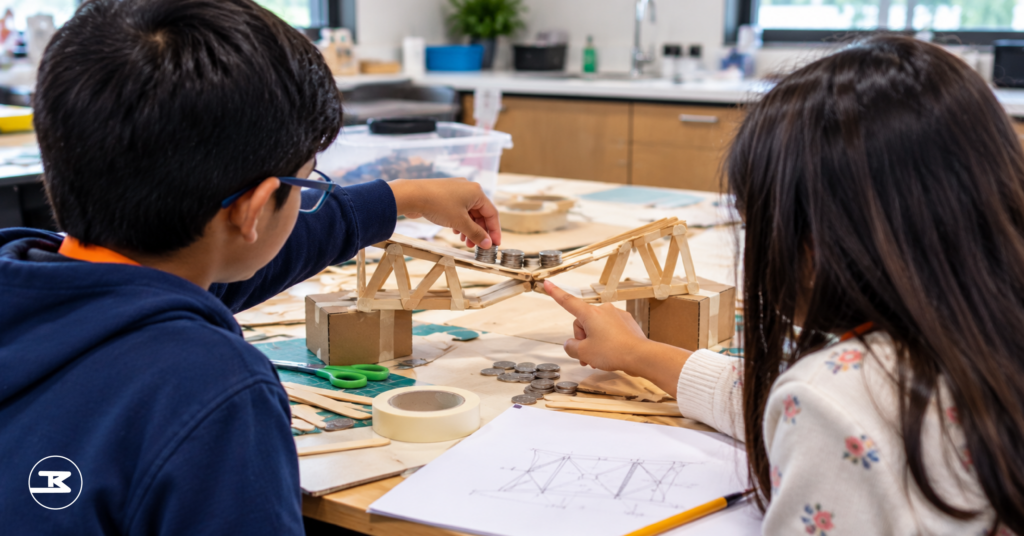
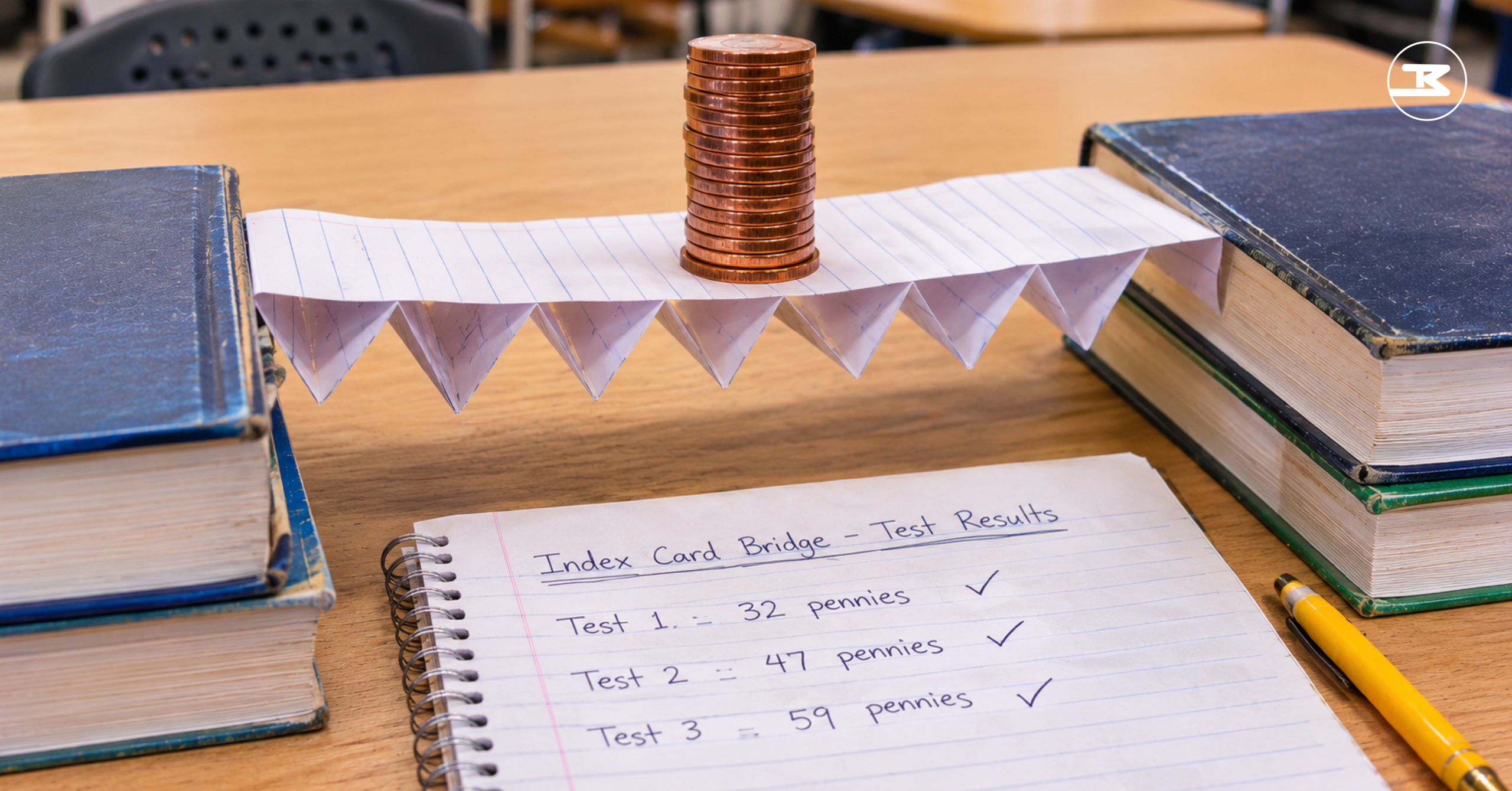
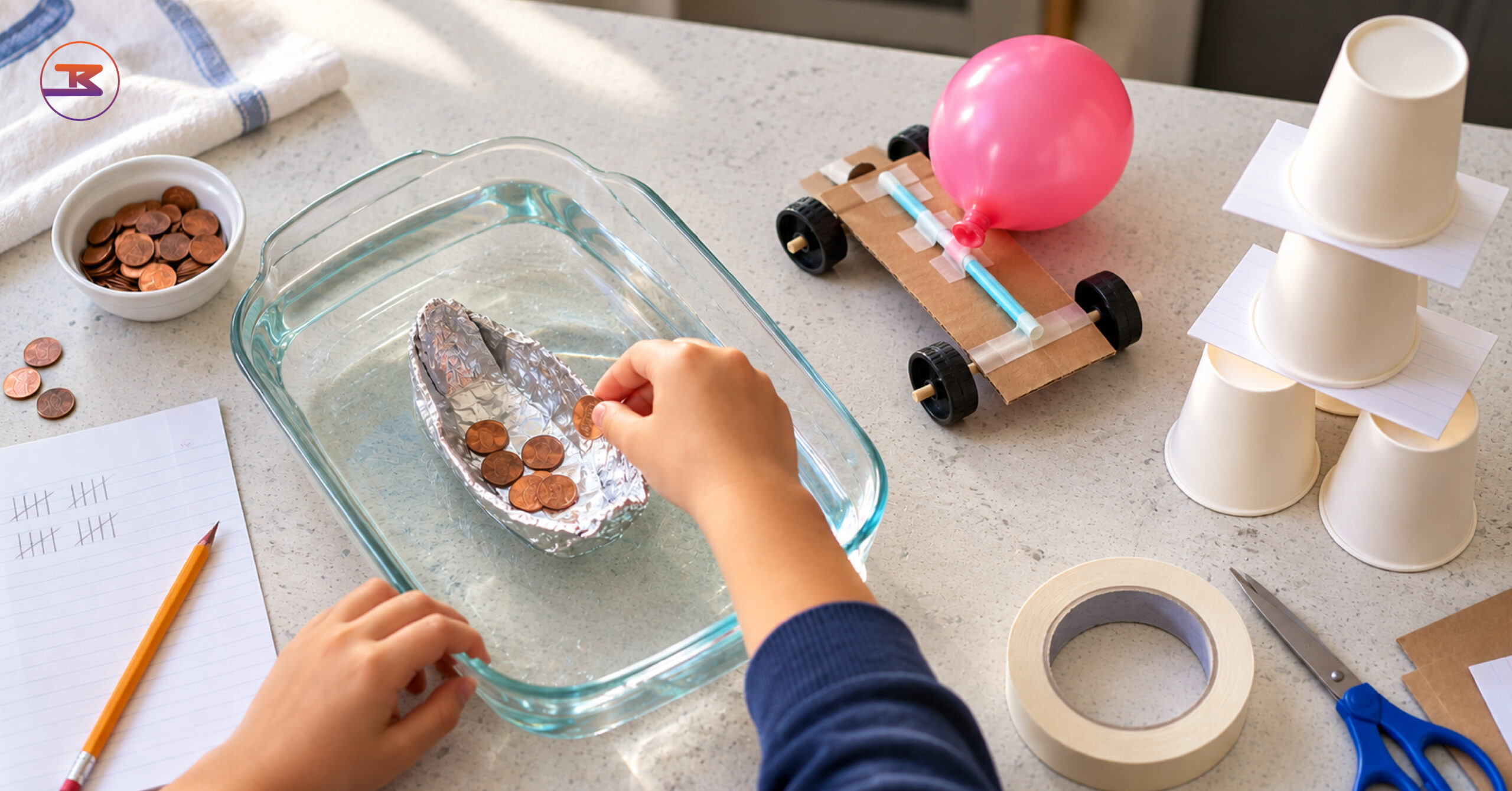
Two children load coins onto a cardboard bridge and point at the joint that sagged
Which skills do employers actually hire for?
Employers hire first for problem-solving, communication and teamwork. In NACE’s Job Outlook 2026 survey, 70% of employers reported using skills-based hiring, up from 65% the year before, and NACE named those three skills as the ones employers seek alongside job-specific know-how. Employers also want candidates to give examples of each skill in use, not a list of skill names.
A hiring manager’s real question is simple: tell me about a time you solved a problem with other people. A student answers it from stories, and the stories come from years of projects, teams and setbacks. Seen from the hiring desk, career readiness for students is the slow collection of those stories, starting in elementary school and growing with every team a child joins.
For parents weighing career readiness for students against grades, the two do not compete. Grades show what a child learned. Stories show what a child can do with it, and employers now ask for both.
One more point matters here. Career readiness for students does not mean drilling interview answers at age nine. It means giving a child enough real projects that the answers exist when someone finally asks.
Why don’t grades show career readiness for students?
Grades measure what a student produces on assignments and tests, usually alone and usually on paper. Teamwork, spoken explanation and recovery after a failed attempt leave little trace on that record. A grade reports one channel of a child’s ability, so it under-reports any strength that runs on another.
Grades still matter. Schools set the standard every child is owed, and a transcript remains the credential that colleges and employers read first. That is a limit of the measuring tool, not a failing of the school or the child: one score cannot show how a student behaves when a plan collapses an hour before a deadline. Career readiness for students needs a second kind of evidence alongside grades, gathered by watching real work.
Praise does not fill that gap either. A 2003 review in Psychological Science in the Public Interest reviewed the research on self-esteem and found that high self-esteem is partly the result of good school performance rather than a cause of it. Parents get a simple order from that finding: build the skill, and confidence follows the skill. Career readiness for students rests on the same order, competence first and confidence after.
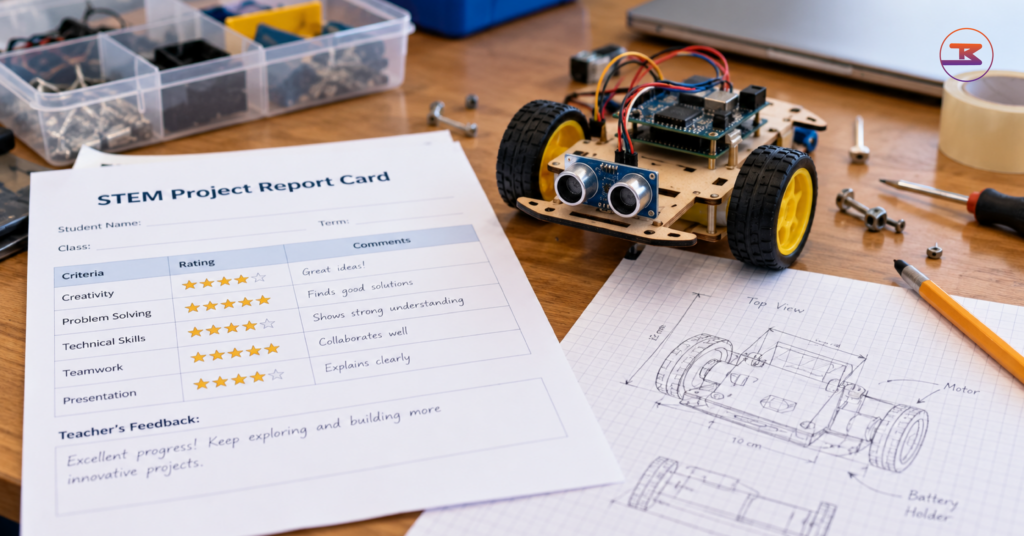
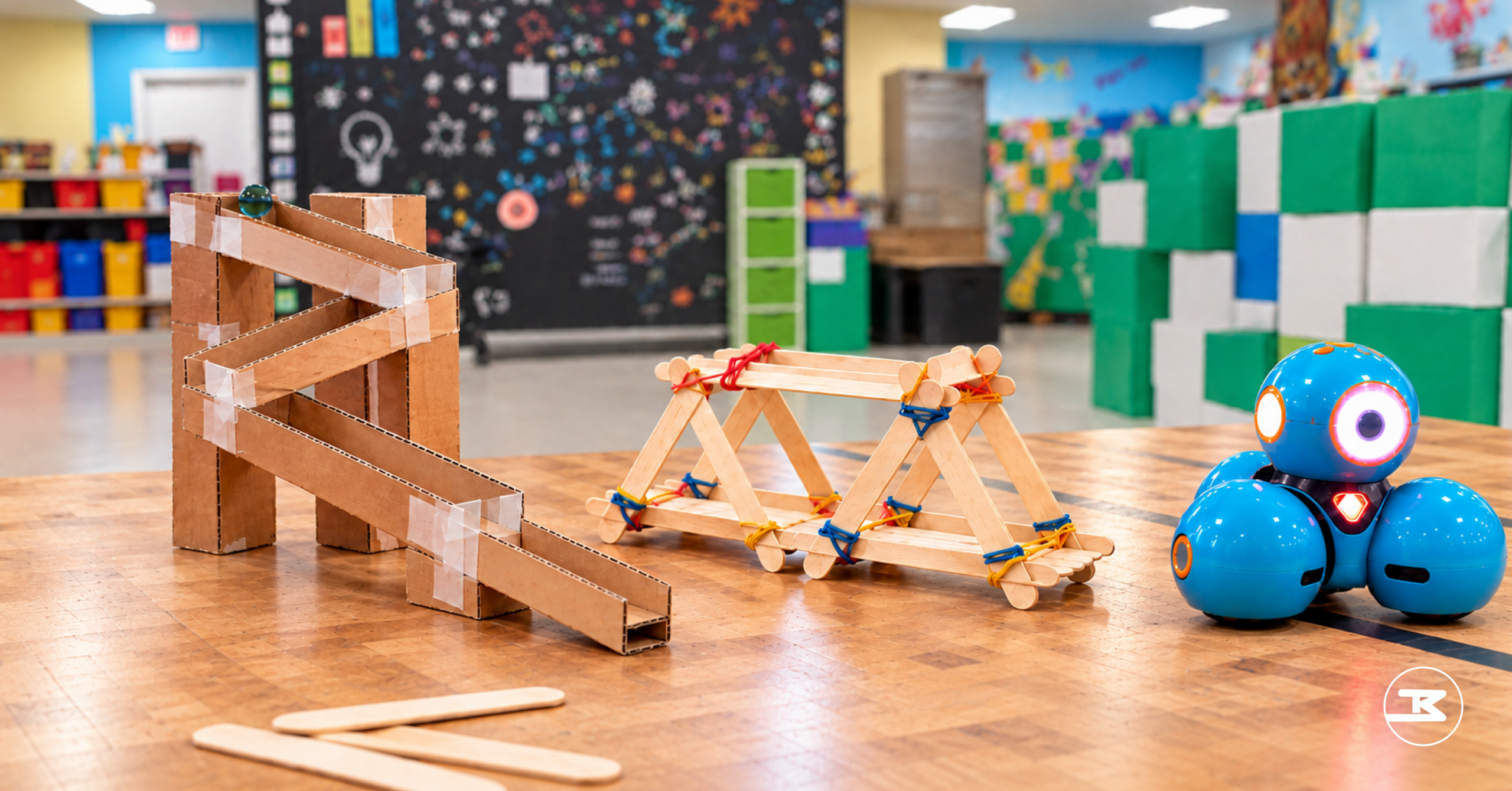
A report card on a desk beside a half-built robot and a hand-drawn plan on graph paper
What does career readiness look like at ages 8 to 14?
At ages 8 to 14, career readiness shows up as small, observable actions during real projects. A child explains out loud why a design failed, divides a task among teammates, and tries a second version without being told. Each action maps to a competency employers name: problem-solving, communication or teamwork.
What does it look like in grades 3 to 5?
In grades 3 to 5, one afternoon project carries all three skills. Give a team of three children 20 craft sticks, a roll of masking tape and 45 minutes to build a bridge that holds a cup of 50 pennies. Then watch three things: who explains the plan, how the team splits the work, and what happens after the first collapse.
A child who says “the joints slipped, so let’s add triangles” is doing exactly what employers describe. Career readiness for students at this age looks that ordinary. Here is what each skill sounds like at the table:
Problem-solving: the child names why the bridge failed and changes one thing before the next try.
Communication: the child explains the plan clearly enough that a teammate can repeat it back.
Teamwork: the child hands off a job, then checks back on it before the 45 minutes run out.
What does it look like in grades 6 to 8?
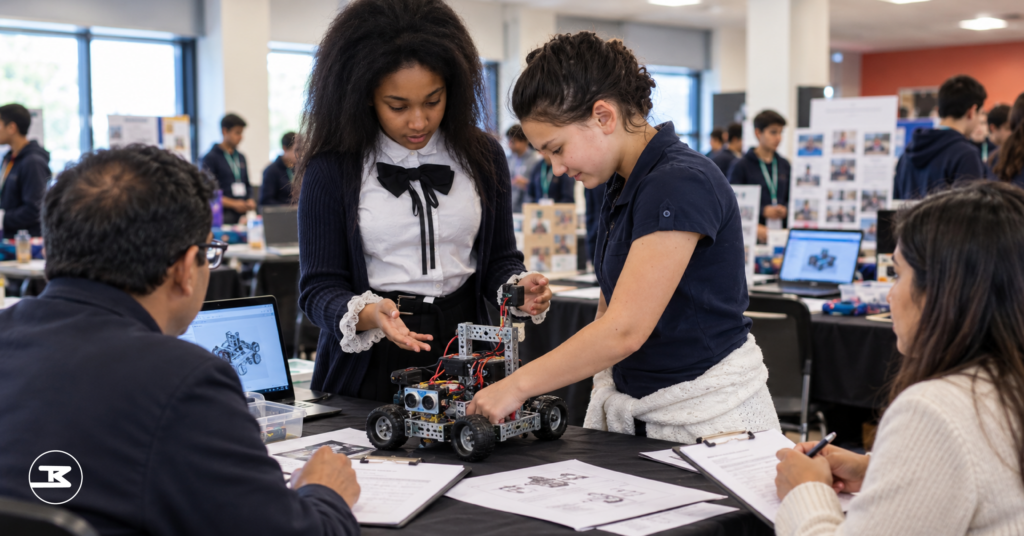
By grades 6 to 8, projects run longer and the stakes feel real. A season of FIRST LEGO League asks a team to program a robot for timed missions, research a real-world problem, and present both to judges who ask follow-up questions. Across a season, a student practices every competency on NACE’s list and fails in front of teammates many times before any of it counts.
That season is career readiness for students in its most complete form: a deadline, a team, a judge, and a second chance after every miss. A middle schooler who has defended a robot design to a stranger walks into a later interview with a true story to tell.
Middle school students explain their robot design to judges, a practical example of career readiness for students
Why does practice where mistakes cost nothing build lasting skill?
Skills hold up under pressure when a person has already practiced them where an error was cheap. Teen drivers show the pattern: in a study led by the National Institutes of Health, teens were eight times more likely to crash or nearly crash in their first three months of driving alone than in the previous three months on a learner’s permit. The license certified the skill, and the road tested it for the first time.
Classrooms show a milder version of the same pattern. A 2014 analysis of 225 studies of college science, engineering and math courses found that students in lecture-only classes were 1.5 times more likely to fail than students in classes built around active work. That research covered undergraduates, not children. It still points the same way: a person learns to use a skill by using it, which is why career readiness for students depends on doing rather than hearing.
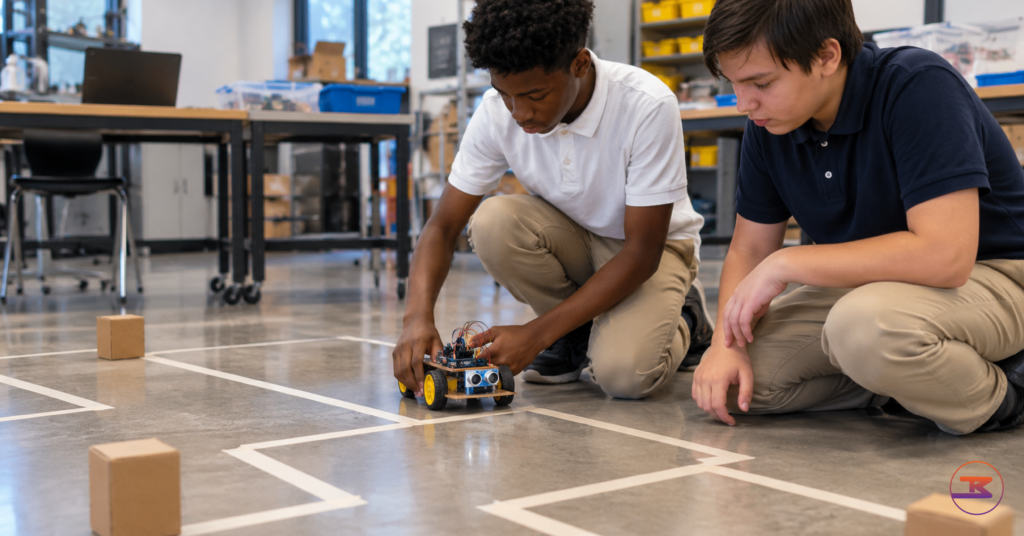
For a ten-year-old, a cheap mistake looks like a bridge that collapses on the kitchen table or a robot that turns left instead of right during practice. Each one costs an afternoon. The same mistake at nineteen, in an internship or a first job, costs a reference or a paycheck. Career readiness for students moves the first failures into the years when they cost nothing.
Protect that space at home. Let a project fail without stepping in, then ask one question: what would you change next time? Career readiness for students grows from the second attempt, not the first.
A child resets a small robot at the start of a masking-tape course after it veered off the line
How can you see where your child stands right now?
Start with observation across more than one kind of task, not a single score. Watch your child explain an idea aloud, write it down, and solve something by hand, then compare what each one shows. A picture drawn from several tasks, read alongside grades, shows strengths and gaps that one number hides.
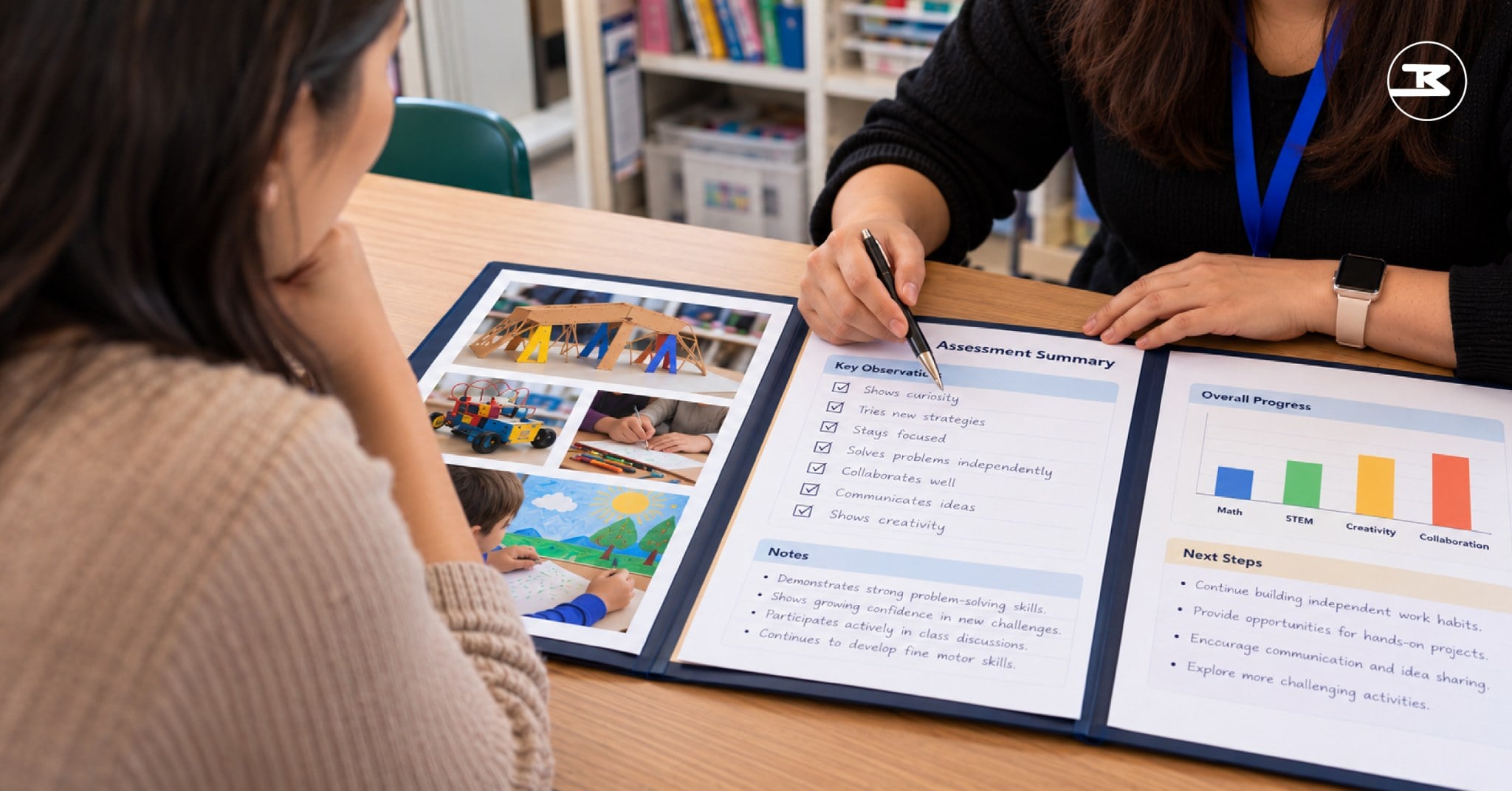
At Big Brainbox in Frisco, the Skill-Based Learning Assessment gives families one starting point. As of 26-Oct, 2026, its booking page describes spoken explanation, written problem-solving and hands-on tasks in one subject the family chooses, followed by a written report and a parent consultation, at no cost. It records where a child stands today, with no pass and no fail.
The assessment does not measure career readiness for students by itself. It gives you a baseline, and the evidence keeps building every time your child works on a team, presents a project or rebuilds something that broke. That ongoing record, not a single test, is what career readiness for students looks like on paper.
For a fuller look at readiness beyond the report card, read Student Readiness, Explained. If your child is heading toward high school, the College Readiness Roadmap lays out what to build in each grade. Both pair with career readiness for students, because the same skills carry a student through college admissions and through a first job.
What can no one promise about your child’s career?
No program, test or report can predict which career a child will choose or reach. Researchers have not yet established how strongly a skills profile at age 10 predicts outcomes at 25. What a child carries forward is a record of skills practiced and observed, and that record widens the options open later.
Career readiness for students is preparation, not a forecast. Engineers, nurses, founders, teachers and skilled tradespeople all draw on the same three competencies. Your child chooses the direction. Career readiness for students means that whichever door they pick, they arrive having already practiced what the people on the other side will ask of them.
That leaves the question every parent ends on: what is your child already good at that no report card has recorded yet?
Sources
National Association of Colleges and Employers. (n.d.). Career readiness defined. naceweb.org
National Association of Colleges and Employers. (2026, April 10). How new grad job seekers can stand out with potential employers [Press release, Job Outlook 2026]. naceweb.org
National Association of Colleges and Employers. (2026, April 23). The high-impact skills college students should showcase on their resumes [Press release, Job Outlook 2026 Spring Update]. naceweb.org
Gray, K. (2025). Hiring projections level off for the college Class of 2025 [Job Outlook 2025 Spring Update]. National Association of Colleges and Employers. naceweb.org
Baumeister, R. F., Campbell, J. D., Krueger, J. I., & Vohs, K. (2003). Does high self-esteem cause better performance, interpersonal success, happiness, or healthier lifestyles? Psychological Science in the Public Interest, 4(1), 1–44. psychologicalscience.org
Gershon, P., Ehsani, J. P., Zhu, C., Klauer, S., Dingus, T., & Simons-Morton, B. (2018). Crash risk and risky driving behavior among adolescents during learner and independent driving periods. Journal of Adolescent Health, 63(5), 568–574. Reported in NIH Record, 27 July 2018. nihrecord.nih.gov
Freeman, S., Eddy, S. L., McDonough, M., Smith, M. K., Okoroafor, N., Jordt, H., & Wenderoth, M. P. (2014). Active learning increases student performance in science, engineering, and mathematics. Proceedings of the National Academy of Sciences, 111(23), 8410–8415. pmc.ncbi.nlm.nih.gov
About Big Brainbox
Big Brainbox is a readiness education center in Frisco, Texas, working with students from K through 12th grade. Our instructors and curriculum team write these posts from what happens in the room: what a child builds, where a child stalls, and what changes when the work is real. We publish what we observe and cite what we borrow.