
Gifted and talented readiness is the set of working skills a child uses after GT placement: thinking deeply, steering long projects, researching, presenting, working with others, and keeping up with faster pacing. A strong CogAT score shows that a child reasons well with words, numbers, and shapes, but Texas GT services then ask that child to produce real work for real audiences.
This guide covers how Texas identifies students for GT services, what the state expects those services to produce, and a two-week home check for the six skills behind gifted and talented readiness. It ends with the honest limits of measuring gifted and talented readiness: what any check can tell you, and what nobody knows yet.
What is gifted and talented readiness?
A child shows gifted and talented readiness when they can do the kind of work GT services ask for, not only pass the test that leads to them. Gifted and talented readiness is a child’s ability to use advanced reasoning in long, self-directed work: researching a question, building a product over several weeks, and explaining it to an audience. A test score shows reasoning on one morning. Readiness shows up in what the child makes afterward.
Every GT story has two separate moments. The first is identification, when a school district decides whether a student needs GT services. The second is the service itself: years of projects, research, and faster-paced work. The first moment is easy to focus on, because it comes with a test date and a score report. The second moment is the real home of gifted and talented readiness, and it lasts much longer.
Two students with similar scores can have very different first years in a GT class. One student has spent hours building, testing, and explaining things. The other has spent those hours on practice questions. Both reasoned well enough to qualify, but only one has already done the daily work the class will ask for. The difference between them is gifted and talented readiness.
How does a child qualify for GT services in Texas?
A Texas child qualifies for GT services when a committee of trained educators reviews at least three measures and decides that GT services are the best way to meet that child’s needs. Since 1987, the Texas Legislature has required every school district to identify and serve gifted and talented students at all grade levels.
In Texas, GT identification never rests on one test score. For grades 1 to 12, districts collect qualitative and quantitative data through at least three measures. A placement committee of at least three trained educators makes the final decision. Qualitative measures include observations, student products, and performances.
State law defines a gifted and talented student as a child who performs, or shows the potential to perform, at a remarkably high level compared with others of the same age, experience, or environment. That performance can show up in an intellectual, creative, or artistic area, in leadership, or in one academic field such as math. The same Texas State Plan for the Education of Gifted/Talented Students requires that every kindergartner is automatically considered for GT identification, using at least three criteria.
Three details in the state rules matter for gifted and talented readiness. First, student products and performances already count during identification, so a child’s gifted and talented readiness starts showing before placement. Second, the State Plan names twice-exceptional learners, meaning students who are gifted and also have a disability, and it expects educators to adapt instruction for them. Third, each district writes its own board-approved identification policy. Test names, testing grades, and referral dates differ from district to district, so your campus GT teacher has the current calendar for your child’s school.
What does a GT program ask a child to do after placement?
A Texas GT program asks a child to show self-directed learning, thinking, research, and communication through products and performances that are advanced for their age. That sentence comes almost directly from the state goal for gifted/talented services. The same goal says high school graduates who received GT services will have produced work of professional quality. That goal is the clearest public description of gifted and talented readiness in Texas.
State rules turn that goal into specific expectations. Districts must give GT students chances to work as a group, with other students, and on their own. They must offer a continuum of learning experiences that leads to advanced-level products and performances, and opportunities to accelerate in areas of strength. Texas also built the Texas Performance Standards Project, a statewide standards and assessment system for GT work. The State Plan names it as the primary tool for assessing whether GT services work.
Put together, the state goal and the rules describe six working skills. Each one below comes with a sign you can see at home, a grade band, and the materials involved. None of the six requires a high score. All six describe gifted and talented readiness as daily behavior.
Can your child stay with one question longer than the worksheet asks?
Texas districts serve GT students by changing the depth, complexity, and pacing of ordinary schoolwork. In the State Plan’s own definitions, depth means going beyond facts into patterns, principles, and unanswered questions, and complexity means linking ideas across subjects and points of view. A GT class gives a child one big question and expects them to keep digging after the first answer.
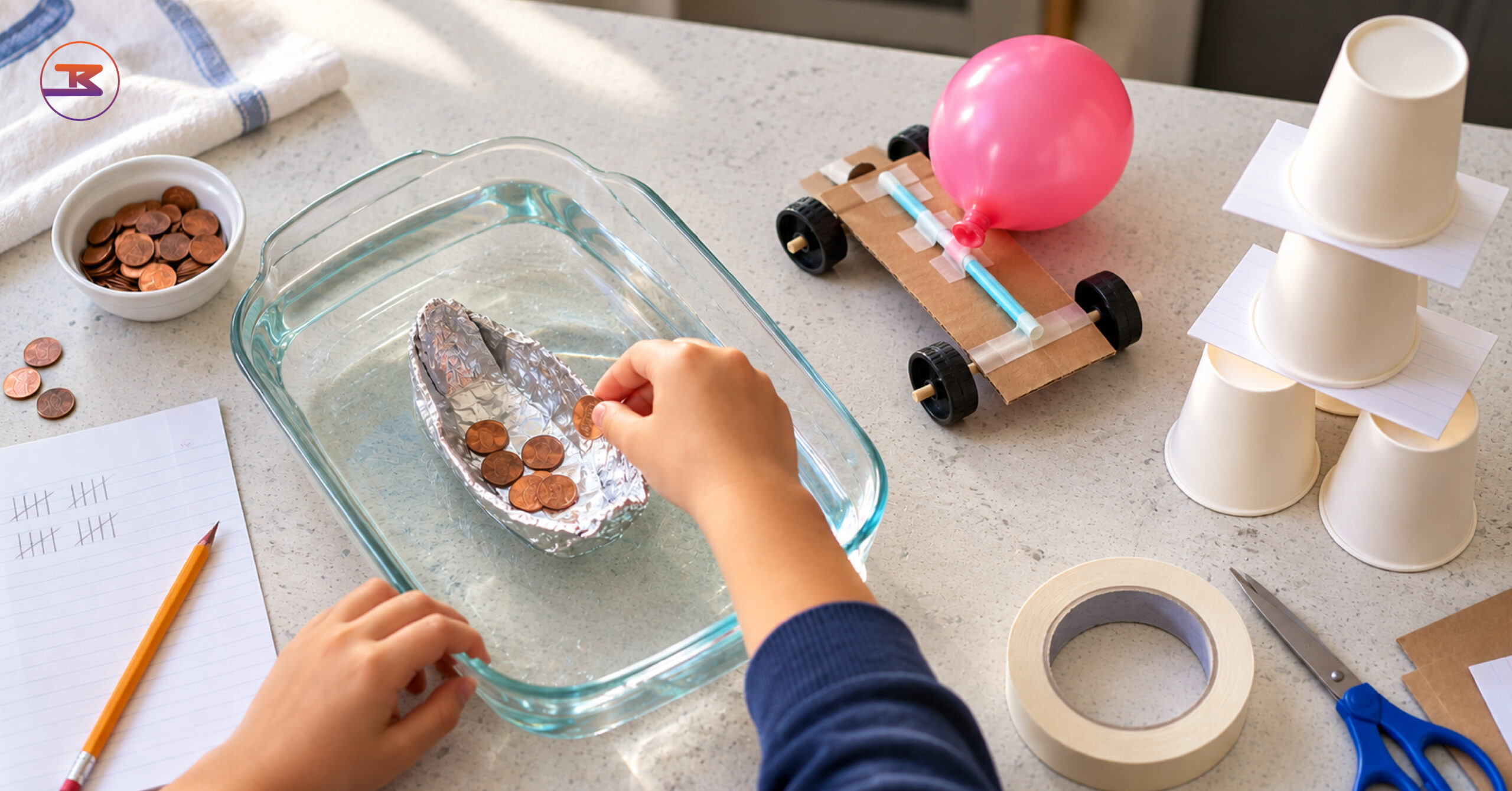
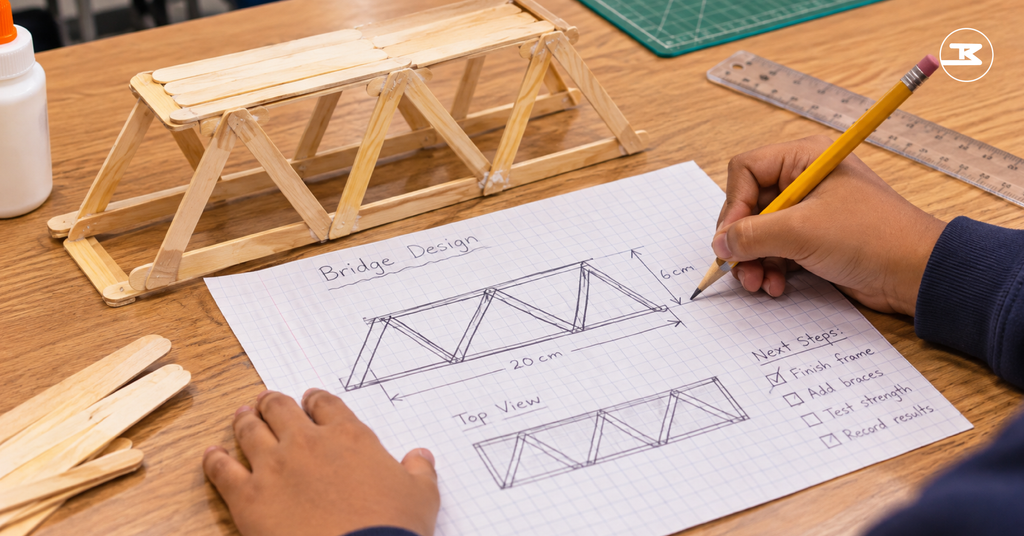
The home sign looks like this. A 3rd grader builds a paper bridge from an index card, sees it hold a few pennies, and then asks why folding the card into a zigzag lets it hold many more. Over the next hour the child tests three folds and writes down each result. A child who stops at “it held some” has answered the question. A child who keeps testing has started the kind of thinking that gifted and talented readiness depends on.
Can they steer a project without daily direction?
Self-directed learning is the first skill in the Texas state goal. The State Plan defines independent study as work where the teacher acts as a guide while the student designs and manages their own learning. In practice, a GT student picks a topic, plans the steps, and keeps the project moving between check-ins.
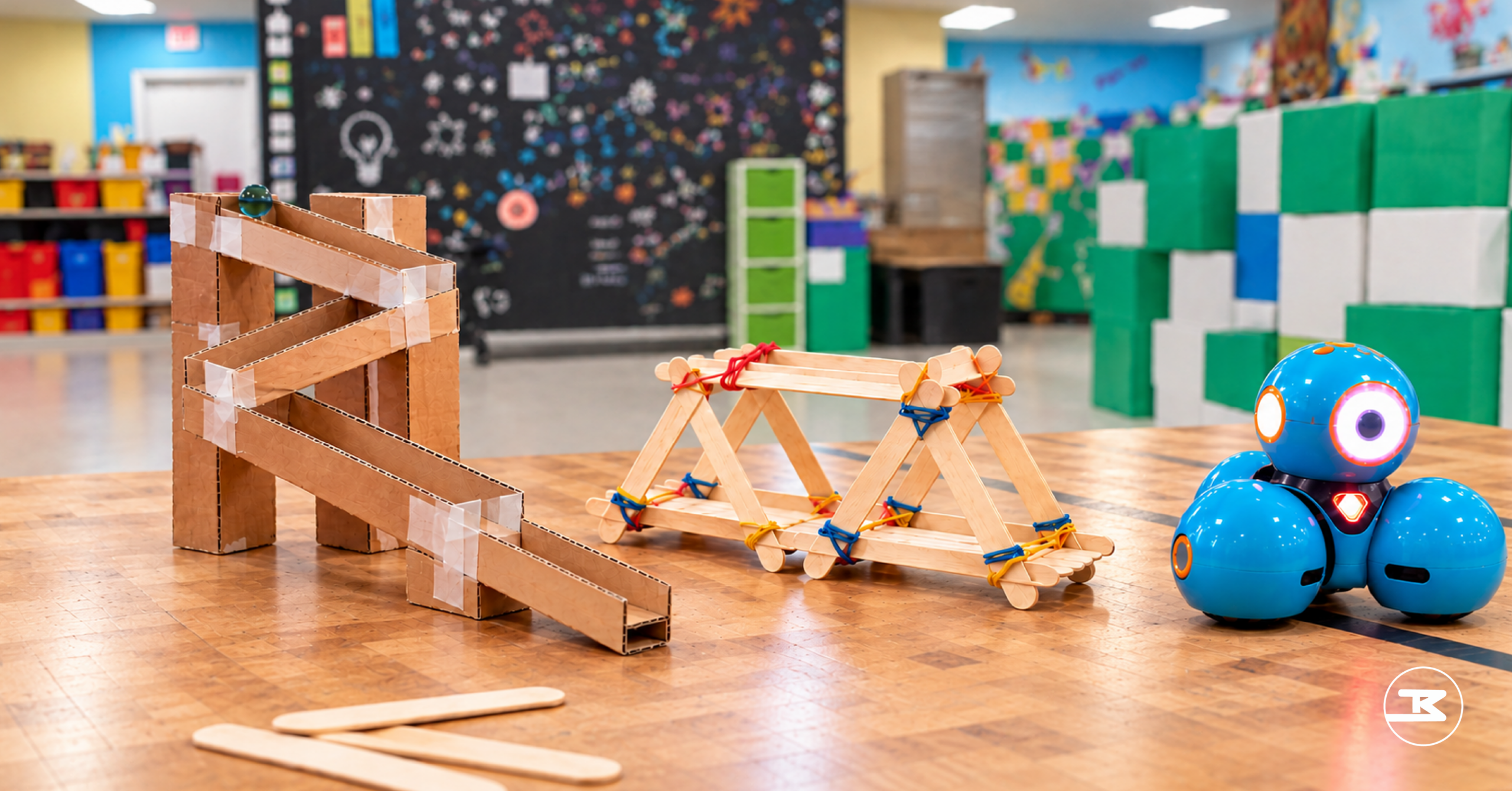
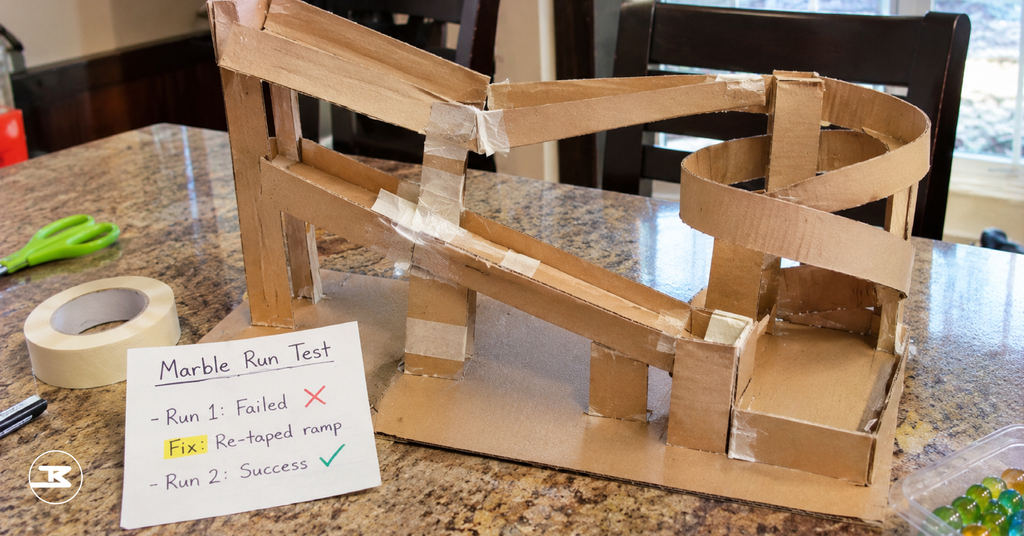
At home, watch a 4th or 5th grader take on a two-weekend project, such as a cardboard marble run with a working loop. A ready child sketches a plan, lists materials (cardboard tubes, masking tape, a marble), and returns to the build on day two without a reminder. When the loop fails, they change the ramp angle instead of asking you to fix it. Gifted and talented readiness at this age looks less like brilliance and more like follow-through.
Can they find out what nobody handed them?
Research is the third skill in the state goal, and the State Plan calls for chances to pursue interests through both guided and independent research. A GT student is expected to find sources, compare them, and decide what they believe.
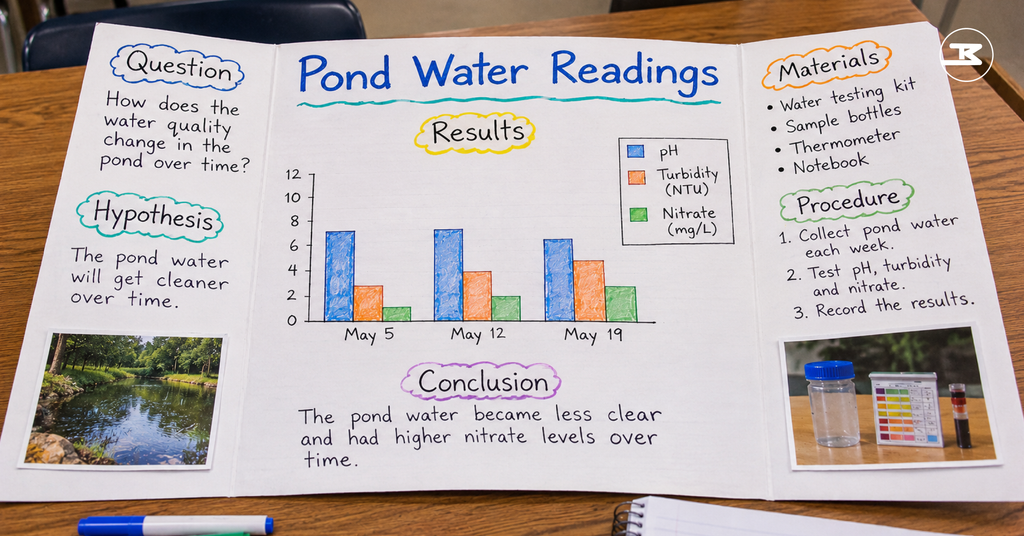
The home sign is a question your child asks that you cannot answer on the spot. A 5th grader wonders why a neighborhood pond turns green every August. A ready child checks a library book on algae, reads a city or county page about the pond, and compares a jar of August water with a jar from May. The research does not need to be correct. Checking more than one place is a core gifted and talented readiness skill.
Can they explain their work to a real audience?
Communication completes the state goal, and Texas aims GT work at audiences beyond the teacher. The State Plan calls for products and performances targeted to an audience outside the classroom, and shared with the community. In districts that meet the plan’s exemplary standard, students served for a year or more have their products judged by outside evaluators who know the product’s field.
At home, ask your child to explain a finished build to a grandparent or neighbor in about three minutes, then take two questions. A ready 2nd grader names what they built, what went wrong, and what they changed. A ready 7th grader adds why the change worked. A child who can only say “it’s cool, look” has the idea but not yet the explanation. For gifted and talented readiness, the explanation matters as much as the build.
Can they work in a group, with a partner, and alone?
Texas rules require GT services to let identified students work together as a group, work with other students, and work independently. The State Plan expects all three across the school day and the whole school year, so a child needs all three.
The home sign shows up in a team build, such as three cousins making a spaghetti-and-marshmallow tower. A ready child takes a clear job, lets another child’s design win when it holds more weight, and then builds their own section alone. Watch for the hard moment: their idea loses. A child who can keep working after losing that argument is ready for a room full of other strong thinkers. That moment, as much as the tower, is gifted and talented readiness.
Can they keep up when the work speeds up?
Acceleration and flexible pacing are part of Texas GT services, which means a child moves forward as soon as they master content. In the State Plan’s definitions, acceleration matches the level, complexity, and pace of the curriculum to the readiness and motivation of the student.
At home, hand a 6th to 8th grader a new tool with written instructions, such as a free block-coding app or a basic spreadsheet. A ready child reads the instructions, tries, gets stuck, rereads, and has something working within an hour. A child who waits to be shown every step needs more practice with written instructions first. That self-teaching habit, one piece of gifted and talented readiness, matters most when the pace speeds up.
Why does the score matter less once services begin?
Once services begin, Texas measures a GT student by how they perform in the services, not by the score that got them in. That rule is why gifted and talented readiness matters more after placement than before it. The State Plan requires districts to periodically assess each GT student’s progress against standards and to report the results to parents.
Texas GT placement is not permanent proof of anything. Districts assess each GT student’s performance in response to services, and a committee can exit a student from services using multiple criteria, including that performance. The decision comes after the committee consults with the parents and the student.
The CogAT explains part of this gap. An Ohio Department of Education listing for the test describes it as a measure of fluid reasoning across verbal, quantitative, and nonverbal tasks. A Poudre School District parent overview adds that the CogAT does not measure effort, attention, motivation, or work habits. Those four traits sit underneath the six skills above. The test was never built to see them, so the child’s work, not the test, is where to read gifted and talented readiness.
Confidence follows the same pattern. A major 2003 research review in Psychological Science in the Public Interest looked at this question. It found that the modest link between self-esteem and school performance does not show that self-esteem causes good performance. Instead, high self-esteem is partly a result of doing well in school. Praise for a high score is not a shortcut to gifted and talented readiness. Practice with real projects builds the skills, and confidence follows that competence.
How can you tell at home whether your child is ready?
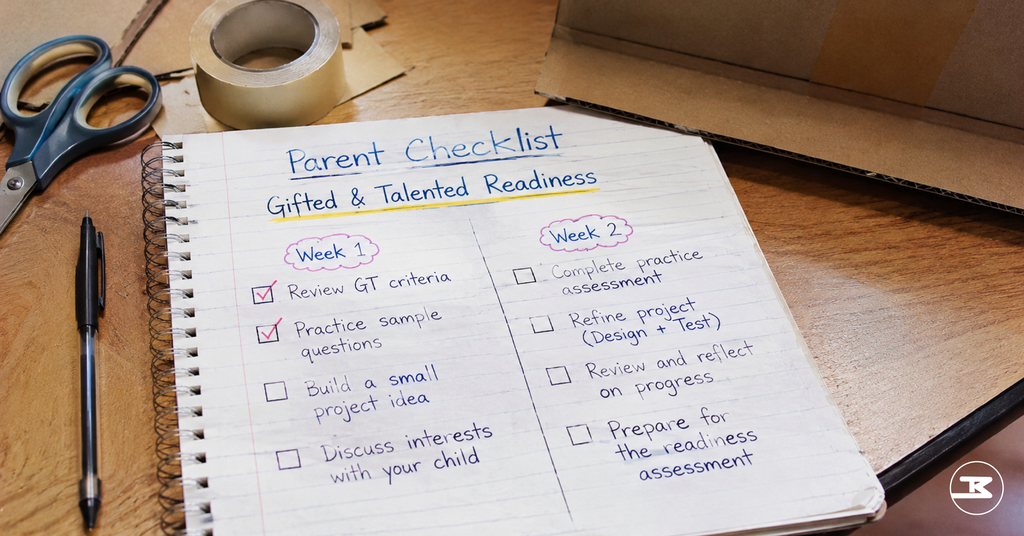
Give your child one open-ended project, watch how they work on it for two weeks, and note which of the six skills appear without prompting. Gifted and talented readiness shows up best in a project that has no single right answer and no worksheet to finish. The goal is a clear picture of how your child works today, not a verdict.
Pick a gifted and talented readiness project that fits your child’s grade band:
- Kindergarten to grade 2: a cardboard ramp that rolls a toy car farther than the first try, with distances marked in masking tape on the floor.
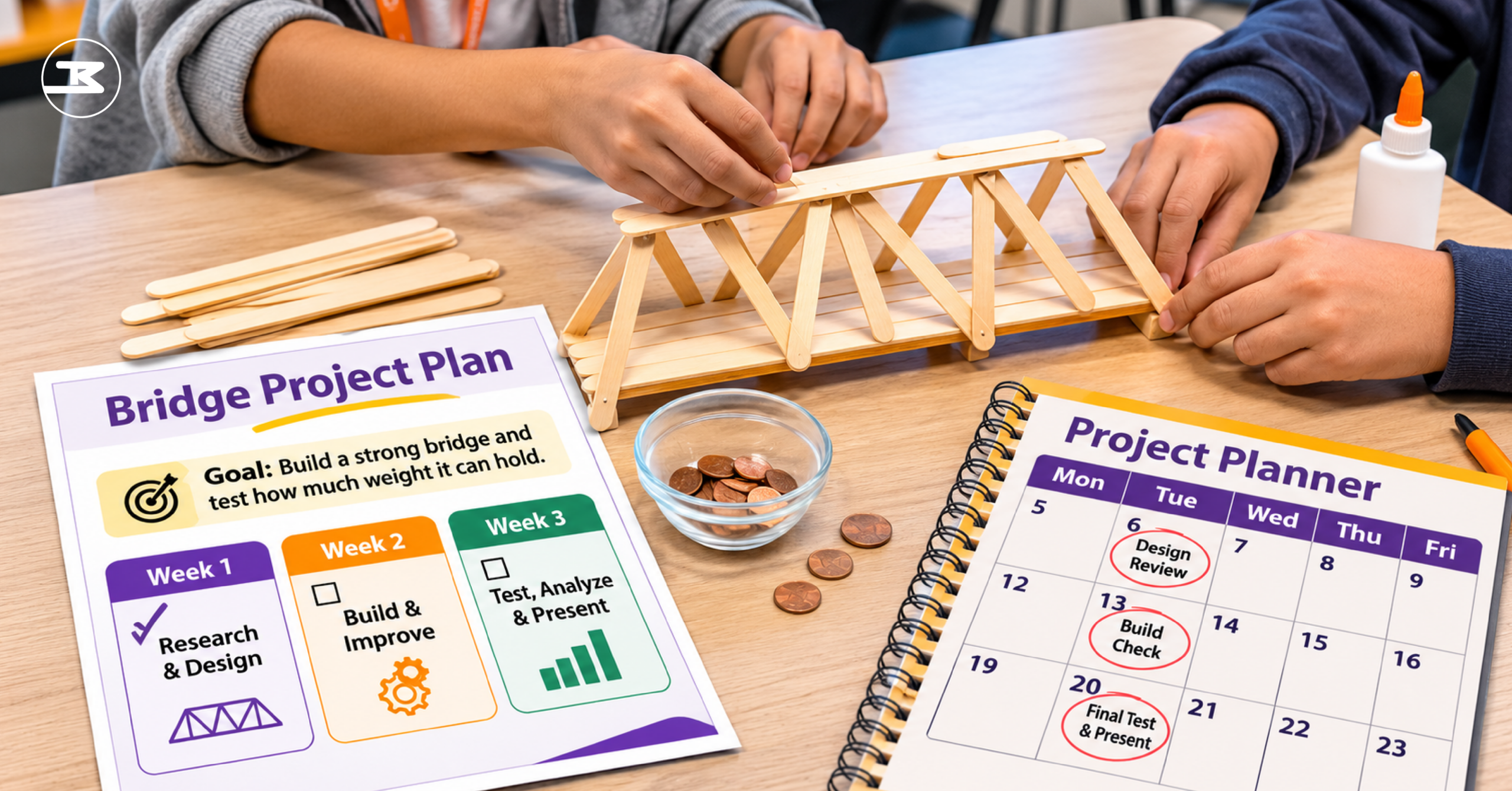
- Grades 3 to 5: an index-card bridge that holds as many pennies as possible, tested at least three times with the count written down each time.
- Grades 6 to 8: a short research question about something local, such as traffic at the school pickup line, answered with a week of counts and a one-page chart.
Keep a notebook beside the project and write one line each day. Note whether your child went deeper than the first answer, came back without a reminder, looked something up, explained it to someone, worked with others, and learned a new step alone. After two weeks, count which of the six skills showed up more than once. A skill that appears on its own is part of your child’s gifted and talented readiness today. A skill that never appears is the one to build next, through more projects, not more test practice.
At Big Brainbox in Frisco, project work follows the same pattern as this home check. As of 09-Nov, 2026, the Big Brainbox homepage describes STEM coaching in robotics, AI and coding, and applied sciences in which kids build real projects, test them, and present how they work. If your child’s CogAT testing is still ahead, CogAT test prep at Big Brainbox is the natural next step for the test itself. If you want an outside look at how your child works before you decide anything, the lower-commitment option is the Big Brainbox Readiness Assessment. As of 09-Nov, 2026, its page describes subject-specific sessions followed by a parent consultation, and there is nothing to pass or fail.
What can’t a readiness check tell you yet?
A gifted and talented readiness check shows which skills your child uses today. It does not predict whether your child will be identified for GT services or how they will do once served. GT placement in Texas belongs to a district committee working from at least three measures, and no outside check replaces that decision.
The research has a gap too. Tools for observing skills such as communication or self-direction come from settings with older students. Nobody has yet established how well those tools hold for 6- to 11-year-olds, or how strongly a profile taken at eight predicts what a child does at eighteen. Any program that claims to know is guessing.
What a parent can know is narrower and more useful. Your child either kept digging into the bridge question or stopped. They either came back to the marble run on day two or did not. Gifted and talented readiness lives in those small observed facts, and it grows the same way: one finished project at a time, with your child choosing where it leads.
Sources
- Texas Education Agency. (2026). Texas State Plan for the Education of Gifted/Talented Students (Revised July 2026). Austin, TX: Texas Education Agency.
- Baumeister, R. F., Campbell, J. D., Krueger, J. I., & Vohs, K. D. (2003). Does high self-esteem cause better performance, interpersonal success, happiness, or healthier lifestyles? Psychological Science in the Public Interest, 4(1), 1–44. doi:10.1111/1529-1006.01431
- Ohio Department of Education. (2024). Assessment Information Form 2024–2025: Cognitive Abilities Test (CogAT), vendor Riverside Insights.
- Poudre School District. (n.d.). An Overview of the Cognitive Abilities Test (CogAT) [parent one-pager].