The College Readiness Roadmap
Applications reveal what a student has done. A roadmap reveals what a student is being prepared to do next.
Many families believe the college process begins junior year. Suddenly there are test prep for, essays to write, activity lists to assemble, and deadlines stacking up all at once. It feels like everything has to happen in a single frantic stretch.
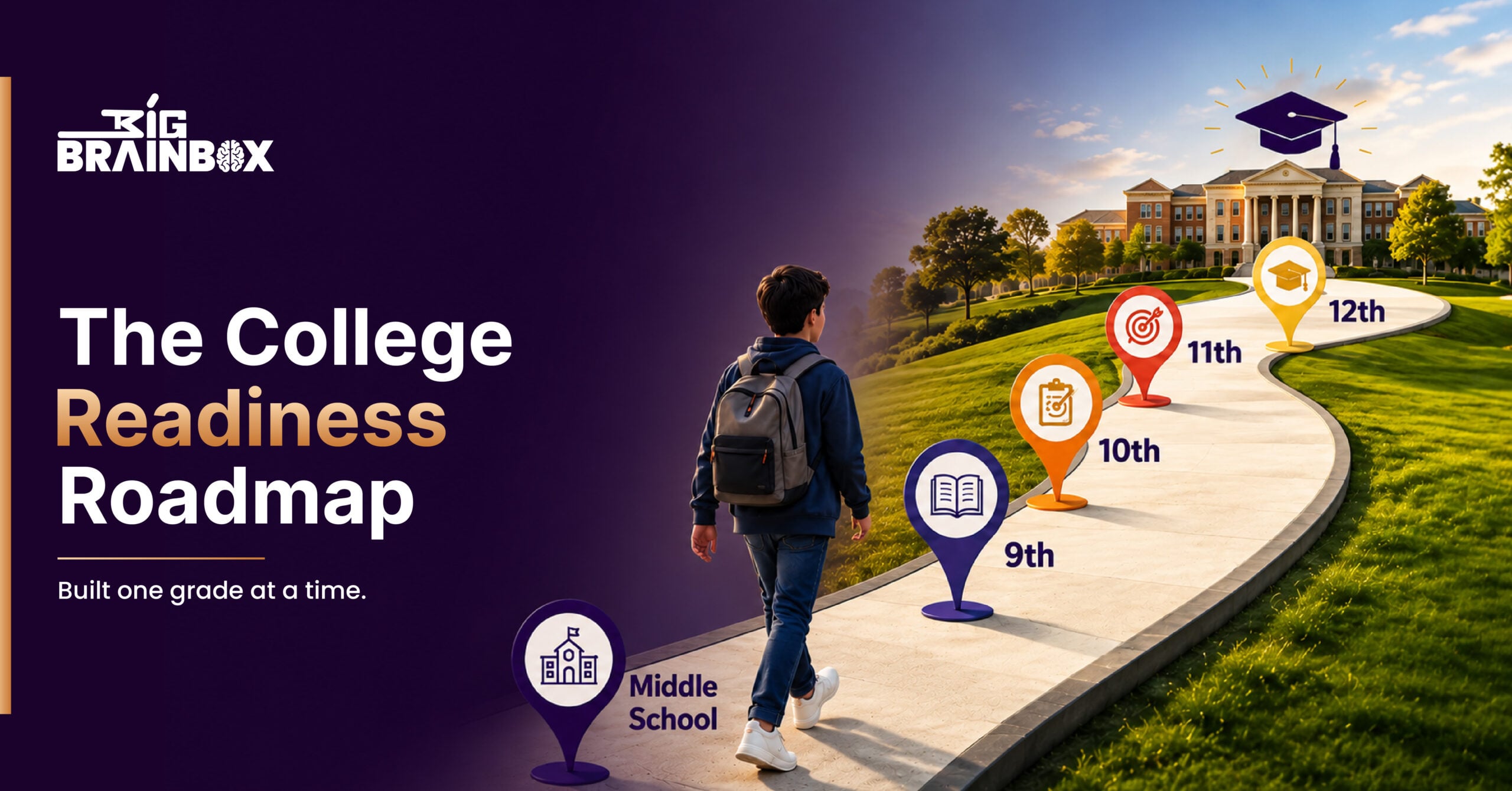
The truth is that college readiness is not a sprint at the end of high school. It is a series of small, well-timed steps built one grade at a time.
The students who move through senior year calmly are rarely the ones who worked hardest at the finish line. They are the ones who built the right skills in the right years, so most of the work was already done.
So what should your child be building right now?
Here is a grade-by-grade roadmap that matters far more than any last-minute scramble.
Why a College Readiness Roadmap Matters
Imagine two students.
The first waits until junior year to think about college, then rushes to raise a shaky GPA, cram for tests, and invent a story out of scattered activities.
The second built strong habits early, deepened a few genuine interests, and kept a steady transcript, so senior year became about execution rather than panic.
Over time, the second student almost always has a smoother process, stronger applications, and more options because the foundation was already in place.
College readiness is not about doing everything at once. It is about doing the next right thing for the grade your child is in.
Middle School (6th to 8th Grade): Build the Foundation
Colleges never see middle school grades, but this is where the machinery of a strong student gets built.
Focus on the habits that make everything later easier:
- Learning how to study, not just earning easy A’s
- Reading for pleasure to build stamina and vocabulary
- Staying on track in math, since gaps here compound for years
- Committing to one or two real interests, not a resume
At this stage you are building the athlete, not training for the game. Character, curiosity, and habits are the entire assignment.
Freshman Year (9th Grade): Start Strong on the Record
Ninth grade is when grades begin landing on the transcript colleges will read.
The goal is a steady, confident start, not perfection.
Build these first:
- A strong GPA from day one, since it is easier to maintain than to rescue
- Course rigor that challenges without overwhelming
- Deeper commitment to two or three activities instead of a long, shallow list
- A relationship with at least one teacher or coach who knows your child well
A solid freshman year is one of the best gifts a student can give their future self.
Sophomore Year (10th Grade): Add Depth and Direction
Tenth grade is the quiet middle. No major deadlines loom, which makes it the most underrated year to get ahead.
Use the calm to build a lead:
- Move from member to leader in an activity
- Take the PSAT as low-pressure practice
- Add honors or advanced courses in areas of real strength
- Notice the interests that could become a college story later
The work done in this low-stakes year pays off enormously in the high-stakes one ahead.
Junior Year (11th Grade): The Pivotal Year
If any year is the year, this is it. Junior grades are the last full year colleges see before applications.
This is when the pieces come together:
- Aim for peak academic performance in your most rigorous courseload
- Finish SAT or ACT testing with time to spare
- Show real leadership and impact in your core activities
- Begin researching schools and building a college list
- Stay engaged with the teachers who will write recommendation letters
Everything built in earlier years gets demonstrated now. Consistency is everything.
Senior Year (12th Grade): Execute the Plan
Here is the secret calm families know. Senior year should be about executing a plan, not building one from scratch.
If the earlier years were used well, the fall is busy but manageable:
- Finalize a balanced list of reach, target, and likely schools
- Write authentic essays that sound like a real person
- Track every deadline, recommendation, and financial aid form
- Keep grades strong, since offers can be pulled for serious slides
Senior fall is the performance, not the rehearsal. Trust the roadmap.
What If Your Child Is Already in High School and Behind?
This is more common than parents fear, and it is rarely too late.
A student who missed early steps can still:
- Strengthen study habits and organization now
- Improve the current year’s grades, which carry real weight
- Deepen one meaningful activity instead of chasing many
- Focus test prep into a single, well-planned effort
Colleges look closely at growth. An upward trend tells a powerful story.
What If Your Child Is Young and You Feel Ahead of Schedule?
This is encouraging, but resist the urge to rush.
A young child does not need a college list. They need to:
- Fall in love with reading
- Build curiosity and confidence
- Develop focus and independence
- Learn to recover from mistakes
Push too hard too early and you risk burnout. Build the foundation, and the rest follows naturally.
How Parents Can Support College Readiness at Home
You can strengthen readiness through everyday habits, no matter the grade.
Match the Effort to the Grade
Do the next right thing for where your child is, not for where you wish they were.
Protect Real Interests
Give genuine hobbies room to grow instead of manufacturing a resume.
Encourage Independence
Let your child own their schedule, materials, and follow-through.
Value Rigor Over Perfection
A challenging course with a B often means more than an easy course with an A.
Stay Calm About the Process
Your steadiness helps your child approach college with confidence rather than fear.
Readiness Is Built One Grade at a Time
An application is a snapshot of a single moment. College readiness reveals something much bigger: your child’s steady preparation over many years.
The strongest applicants are rarely the ones who worked hardest at the very end. They are the ones who built good habits early, deepened a few genuine interests, and stayed consistent when it mattered.
If you are wondering whether your child is on track, do not just ask, “What should we do junior year?”
Ask:
- Are they building strong habits now?
- Are they deepening real interests?
- Are they growing more independent each year?
- Are they steadily challenging themselves?
The answers reveal far more about your child’s future than any single deadline ever could.
Ready to Understand Your Child’s Learning Readiness?
At Big Brainbox, our academic skill assessments help identify the foundational learning skills that influence confidence, competence, and classroom success. We help parents understand not just what a child knows, but how a child learns.
Schedule a Learning Readiness Assessment Today and discover the strengths and skill gaps that can shape your child’s educational journey.
Related Big Brainbox Programs