The best fall break activities give your child one real build a day, done with their own hands and finished by dinner. Below are nine fall break activities, three for each grade band from kindergarten to grade 8, all made from things already in your kitchen, garage, or recycling bin.
Good fall break activities do more than fill an afternoon. Each build here ends with a test your child runs, a result they can count or measure, and a second try they choose to make. That last step is where your child does the real thinking, so protect it.
What makes good fall break activities for kids?
Good fall break activities pass four tests: your child finishes them the same day, your child’s hands do the work, the result gets tested, and the materials are already in your house. An activity that fails any one of these turns into a chore for you or a screen for them.
A good at-home build has a clear finish line, such as a car that rolls three feet or a boat that holds 40 pennies. The child plans it, builds it, tests it, and then improves it. A parent supplies materials and questions, not answers.
Here is how the four tests play out.
- Finished the same day. A build that spills into tomorrow loses its pull. Every one of the nine fall break activities below fits in one to three hours.
- Your child’s hands do the work. If you end up holding the glue gun, the build belongs to you. Pick fall break activities your child can do with tape, scissors, and a little help at one or two steps.
- The result gets tested. A tower is tested by how tall it stands, and a boat by how many pennies it carries. A number gives your child something to beat on the second try.
- Household materials. Paper towel tubes, cardboard boxes, foil, cups, popsicle sticks, pennies, and tape cover almost every build here.
There is also a reason to favor building over watching. Texas science standards for kindergarten through grade 8 include engineering practices, so designing, building, and testing a solution is part of what Texas students are expected to learn (Texas Education Agency, Science TEKS). Fall break activities that ask your child to design, test, and improve something practice that same skill at the kitchen table.
Which fall break activities work for kindergarten to grade 2?
For kindergarten to grade 2, the best fall break activities use big pieces, finish in under an hour, and end with something your child can count out loud. Your child still needs you nearby for cutting and for marbles during these fall break activities, but the ideas and the building stay with them.
How do you build a cardboard marble run?
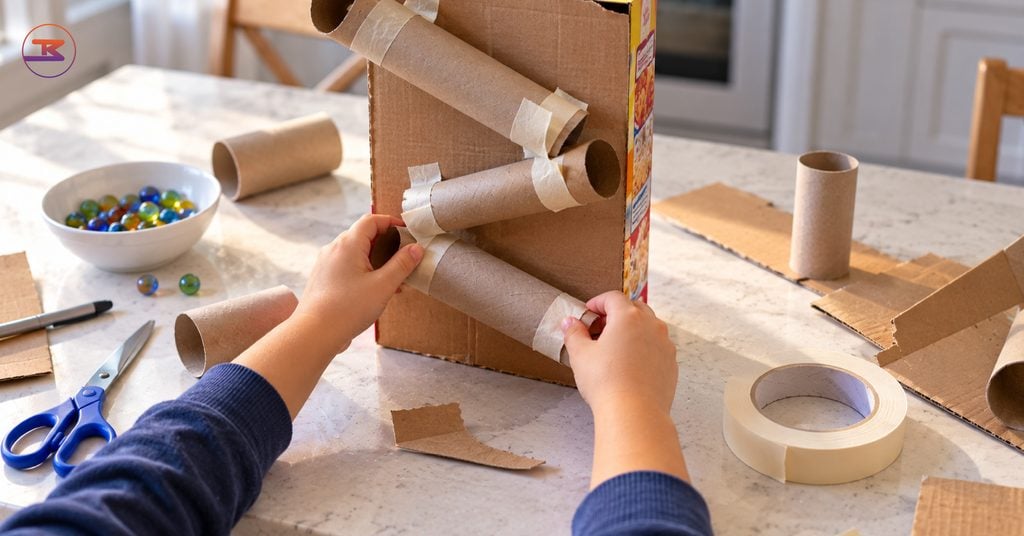
Materials: 4 to 6 paper towel or toilet paper tubes, masking tape, scissors, a large cardboard box or the side of a cereal box, a marble, and a cup. Time: about 1 hour.
Cut some tubes in half the long way to make open ramps. Tape the tubes to the cardboard in a zigzag so each one drops the marble into the next. Put the cup at the bottom. Your child drops the marble in at the top and counts how many tries it takes to land in the cup. When the marble flies off a turn, your child moves that tube or adds a tape wall, then tests again. Keep marbles away from toddlers in the house; they are a choking hazard.
How many pennies can a foil boat hold?
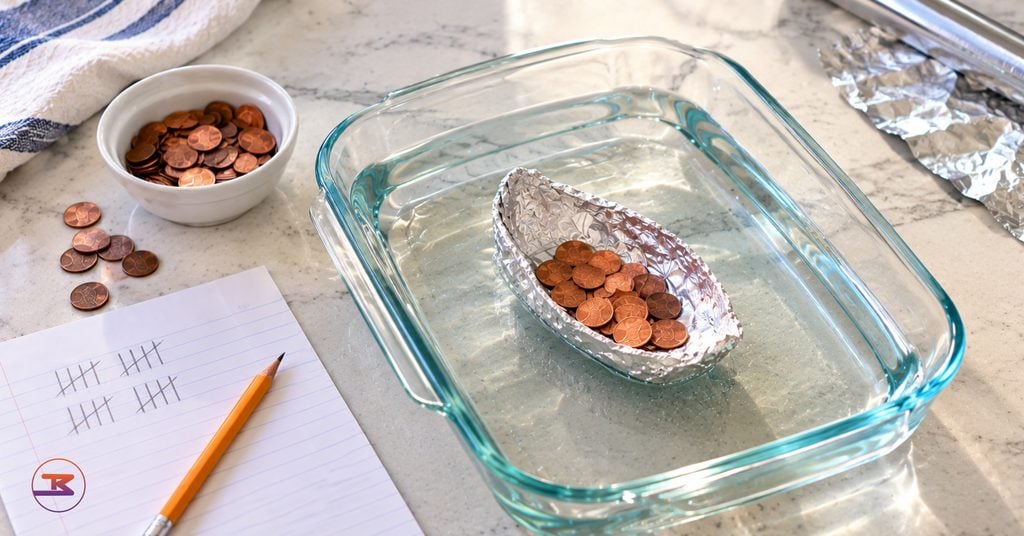
Materials: a 12-inch square of aluminum foil, a baking dish or sink filled with water, and a jar of pennies. Time: about 45 minutes.
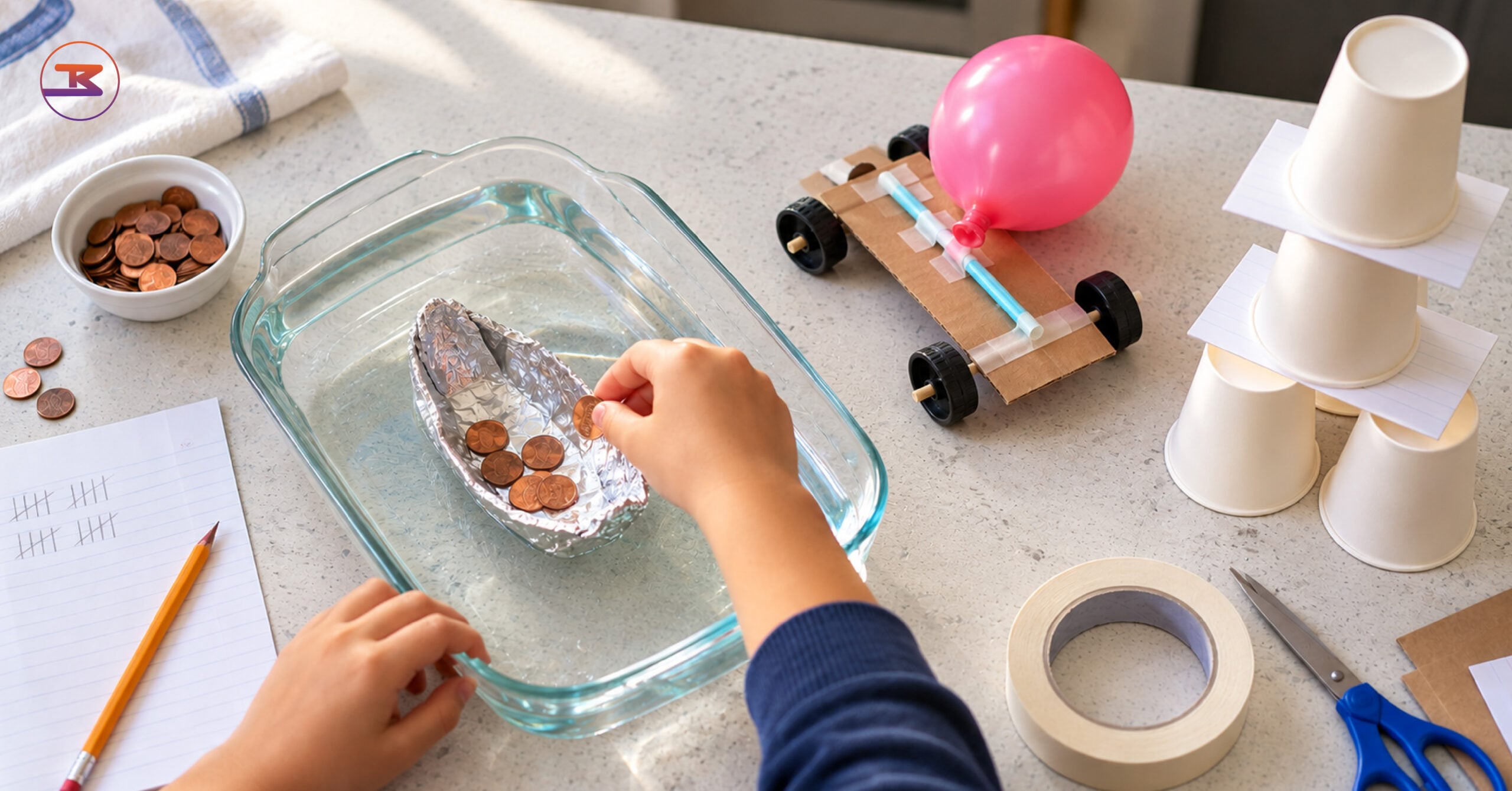
Your child shapes the foil into a boat, sets it on the water, and adds pennies one at a time until it sinks. Write the number down. Then hand over a fresh square of foil and ask one question: can you make a boat that holds more? A wider, flatter boat pushes aside more water, so it carries more pennies. Let your child discover that by building, not by being told. Three rounds with a tally sheet turn a sinking boat into a small experiment with data.
How tall can a paper-cup tower get?
Materials: 30 paper or plastic cups and 10 index cards. Time: about 30 minutes.
Your child stacks cups as high as possible, then tries again with index cards as floors between layers. Measure each tower with a tape measure, or count the layers. This is one of the quickest fall break activities to set up, and it works well as a warm-up before a longer build. When a tower falls, ask where it started to lean, not why it fell.
Which fall break activities work for grades 3 to 5?
For grades 3 to 5, the best fall break activities add measuring and a plan on paper, then end with a test your child repeats after one change. Children this age can sketch a design first, so ask for a quick drawing before any tape comes out.
How strong can a popsicle-stick bridge get?
Materials: 40 to 60 popsicle sticks, white school glue or a low-temperature glue gun used with an adult, two stacks of books, a paper cup, and pennies. Time: about 2 hours, plus drying time.
Your child builds a bridge long enough to span a 6-inch gap between two stacks of books. Once the glue dries, hang the paper cup from the middle of the bridge and add pennies until it breaks. Count the pennies. For the second bridge, suggest one rule: every section has to be a triangle. Triangles hold their shape under load, and your child sees the difference in the penny count. Record both numbers side by side.
How far can a balloon-powered car go?
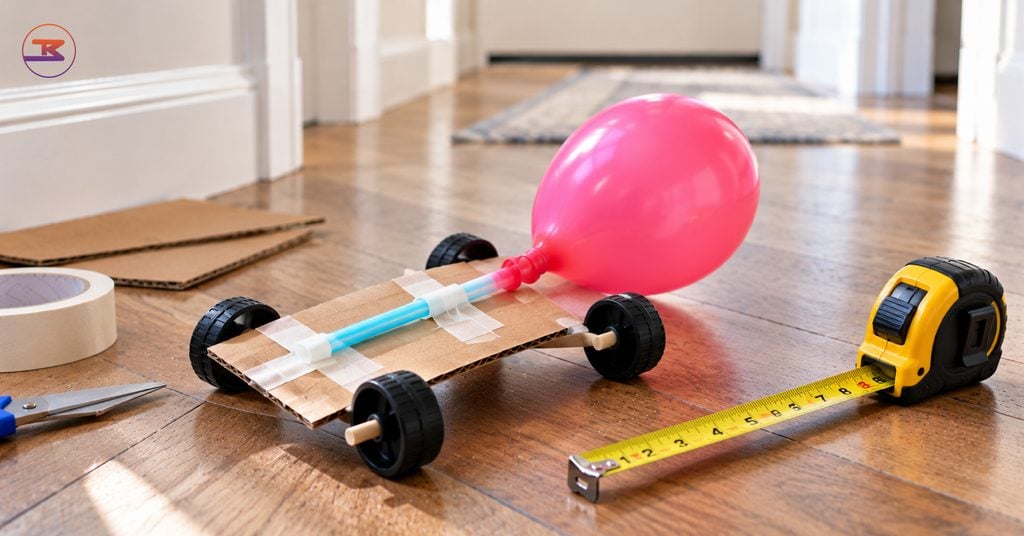
Materials: a piece of cardboard about the size of a cereal box front, 2 plastic straws, 2 wooden skewers, 4 bottle caps, a balloon, and tape. Time: about 2 hours.
Tape the straws across the cardboard as axle holders, slide the skewers through, and push a bottle cap onto each end as a wheel. Tape the balloon to a third straw pointing off the back. Your child blows up the balloon through the straw, sets the car down, and lets go. Measure how far it rolls with a tape measure. Then change one thing at a time: bigger wheels, a lighter body, or a longer straw. These fall break activities work best when your child writes down what changed and the new distance each time. Check for latex allergies before you use balloons.
Which paper airplane flies farthest?
Materials: printer paper, a tape measure, and painter’s tape to mark a starting line. Time: about 90 minutes.
Your child folds three different designs, throws each one five times from the same line, and writes every distance in a simple table. Then they pick the best design and change one fold. A table with 15 numbers in it is real data, and your child built every number in it. Of all the fall break activities in this grade band, this one needs the least setup and the most floor space, so a hallway or a backyard works best.
Which fall break activities work for grades 6 to 8?
For grades 6 to 8, the best fall break activities give your child a problem with limits, such as a budget, a rule, or a target number, and let them argue their way to a design. Middle schoolers can run these fall break activities with very little help, so your job shifts from helper to tester and audience.
How does your child build a simple game in Scratch?
Materials: a computer with a web browser. Time: about 3 hours.
Scratch is a block-based coding tool from the Lifelong Kindergarten Group at the MIT Media Lab. It is provided free of charge and designed especially for ages 8 to 16 (Scratch, About Scratch). Your child snaps code blocks together instead of typing commands. Set one clear target: a game where a character catches falling objects and a score counter goes up by one for each catch. A working score counter means your child has used a variable, an event, and a loop. When the score does not change, your child finds the broken block and fixes it. That debugging step is the real lesson.
If Scratch sticks, Big Brainbox’s coding classes start from the same block-based coding and move toward typed code as your child’s skills grow.
Can your child protect an egg from a fall?
Materials: raw eggs, and a “budget” of 10 straws, 1 meter of tape, 2 sheets of paper, and 4 cotton balls. Time: about 2 hours.
Your child designs a capsule from only the budget materials, then drops it from a set height, such as shoulder height on a driveway or from the bottom step of a staircase. Drop from a safe spot an adult chooses, never from a roof or an open upstairs window. If the egg cracks, your child gets one more budget to build a second capsule. The limit makes this harder than it sounds, and it makes the second design better than the first.
How do you build a five-step chain reaction?
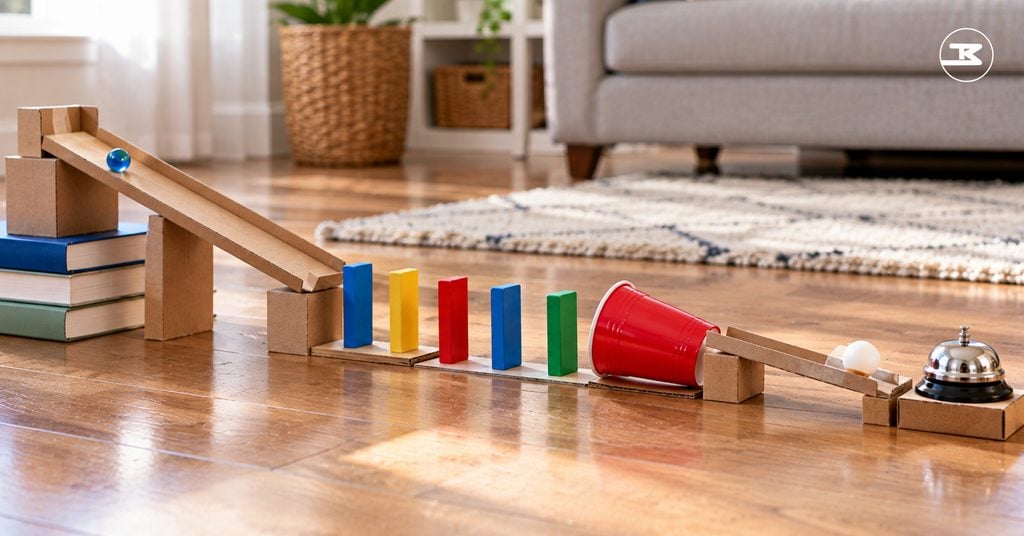
Materials: dominoes or books, toy cars, a marble, string, a cup, and anything from the recycling bin. Time: about 3 hours.
Your child builds a machine where one action sets off the next, five times in a row: a marble rolls down a ramp, knocks a domino line, tips a cup, and so on. The goal is a final step that does one small job, such as ringing a bell or dropping a ball into a bowl. Expect it to fail at the same step over and over. Each failed run tells your child exactly which link to rebuild. Among fall break activities for this age, this one takes the most patience and gives the biggest moment when it finally works.
How do you run a build day without doing it for your child?
You run a build day by handing over the materials, asking questions instead of giving fixes, and letting the first try fail. Your child owns the build; you own the setup and the cleanup.
A parent’s job during a build is to ask, not to fix. When a design fails, ask what happened and what your child wants to try next. Then step back. A child who fixes their own bridge learns more from the second try than from watching an adult fix the first one.
Four habits keep fall break activities in your child’s hands.
- Set up before you invite. Put the materials on the table first. A child who walks up to a ready table starts building faster than one who waits while you hunt for tape.
- Ask three questions, in this order. What are you trying to make it do? What happened when you tested it? What will you change? These three questions work for all nine fall break activities in this post.
- Make one rebuild the rule. The first version is a test, not the finish. Your child decides what to change, but the second version is part of the activity, not a bonus.
- Help with tools, not ideas. Cut the tough cardboard or run the glue gun when your child asks, then hand the build straight back.
The hard part is watching a build fail and saying nothing. A child who rebuilds a bridge after it breaks is practicing something a report card does not show: getting it wrong, figuring out why, and trying again while nothing important rides on the result. Fall break activities at home are one of the few places that practice costs nothing. A cracked egg or a sunken foil boat costs a few cents.
When your child shows you the finished build, ask them to explain it rather than praising it. “Show me how it works” gets a better answer than “Great job.” Those explanations also make the best photos for grandparents and the best stories at dinner, which keeps fall break activities feeling like a win instead of a chore.
How do you plan the whole break around one build a day?
Plan one build per day, pick builds from your child’s grade band, and give every day the same simple shape: plan, build, test, rebuild, show. A predictable rhythm keeps fall break activities from turning into a negotiation every morning.
A build day has five parts. The child sketches a plan, builds a first version, tests it, rebuilds once, and then shows someone how it works. The whole cycle fits in an afternoon and leaves the morning free.
A sample day for a fourth grader building the balloon car looks like this:
- After breakfast (15 minutes): sketch the car and list the materials.
- Late morning (45 minutes): build the first version.
- Before lunch (20 minutes): test it three times and write down each distance.
- After lunch (40 minutes): change one thing and test again.
- Before dinner (10 minutes): show the car to a parent, sibling, or grandparent on a video call, and explain what changed.
Mix easy and hard fall break activities across the days. Start with a short build, such as the cup tower or the paper airplanes, so the first day ends with a win. Save the longest build, such as the chain reaction or the Scratch game, for the middle of the break when your child is warmed up. If the break has a day of family plans, skip the build that day instead of squeezing one in.
Siblings in different grade bands can build side by side. A first grader runs the foil boat challenge while a sixth grader builds an egg capsule, and each one tests the other’s design. Shared fall break activities like this cut your setup time in half and give each child an audience.
Keep a single sheet of paper on the fridge with the date, the build, and the best number your child got that day. By the last day, that sheet is a record of what your child made, tested, and improved. Fall break activities leave little behind except cardboard, so that sheet is worth keeping.
When does a fall break camp make more sense than activities at home?
A camp makes more sense when your child wants other kids to build with, wants a teacher who can take a project further than you can, or has outgrown what fits on a kitchen table. Fall break activities at home cover a lot, but they stop where robotics kits, coding instruction, and a room full of fellow builders start.
Three signs point toward a camp:
- Your child finishes every home build in an hour and asks what is next. That child is ready for a harder problem than the recycling bin can supply.
- Your child wants to build with other kids. Comparing designs with peers, and losing the bridge contest to a better design, teaches things a sibling rivalry does not.
- The project needs tools you do not have. Programmable robots, motors, sensors, and a teacher who knows how to use them are not part of a typical home setup. Big Brainbox’s robotics classes are built around exactly those tools.
In Frisco, the Big Brainbox fall break camp is built on the same pattern as the builds in this post: plan, build, test, rebuild, show. Its camp page states that every camper leaves with a project they built themselves, that students test, rebuild, and adapt their designs through trial and error, and that projects are led by certified teachers and aligned with NGSS and CSTA, the national standards frameworks for science and computer science.
As of 28-Sep, 2026, the camp page lists these details:
- Grade groups: STEM Explorers, a play-based track for kindergarten to grade 2, plus three tracks for grades 3 to 8: Applied Sciences, Coding & Game Design, and Robotics & Engineering.
- Two formats: a 3-hour half-day workshop (9 AM to 12 PM or 1 PM to 4 PM), or a full-day immersion from 9 AM to 4 PM, with optional early check-in and extended check-out.
- A day built around projects: each half day runs a project lesson, then project work, with a snack break in between.
- Pricing: $85 for one half day, $145 for one full day, $345 for five half days, and $545 for five full days, with a 10% sibling discount and 5% discounts for veterans, active-duty families, and first responders.
- Practical details: all materials are provided, lunch is not, and parents may watch from designated areas if they tell the camp in advance.
If your child has already worked through a few fall break activities at home, a camp gives them a bigger version of the same loop, with a teacher and a room of other builders. Check this year’s camp weeks on the Big Brainbox fall break camp against your school district’s calendar, register there, and plan your remaining fall break activities at home around the camp days.
Big Brainbox builds its camps around applied education: a child learns an idea by using it to build or solve something real, often inside a story or a game. The marble run and the balloon car in this post are small home versions of that approach.
The camp pairs naturally with the Big Brainbox skill-based learning assessment. Home builds show you what your child does with their hands. The assessment page describes a look at where your child stands across three dimensions, visual, verbal, and written or hands-on work, ending with a written report and a conversation with you. Book it before the break to know what to watch for during fall break activities, or after the break to decide what comes next.
What should you notice by the end of the break?
By the end of the break, notice which build your child went back to without being asked, where they quit, and where they pushed through. Those three things tell you more about your child as a builder than any finished project does.
A few days of fall break activities give you a small, honest look at how your child works. The build they return to on their own shows what pulls them in. The step where they walk away shows where the work got too hard or too dull. The moment they rebuild something a third time shows where their patience lives.
Write those three notes down on the same fridge sheet as the penny counts and distances. They are worth more than cardboard. A child who kept rebuilding the chain reaction is telling you something different from a child who spent the break writing a story for their Scratch game, and both are useful to know.
None of this makes your child an engineer in a week. Children get good at building things the way they get good at piano: by coming back to it many times, weeks apart, with each round a little harder. Fall break activities give your child a first, real piece of competence, such as a bridge that held more pennies because they changed its shape. Big Brainbox’s view is that confidence comes after competence like that, not before it.
If the break shows you a spark, the next step is repetition. Big Brainbox’s STEM enrichment programs are built for that, with projects that get harder level by level, so a child who loved one home build keeps going from where they stopped.
The question to ask at the end of the last build is simple: “What would you change if you built it again?” If your child has an answer, the break was not wasted. What you do with that answer in the weeks after fall break activities end is the part only you can decide.
Sources
1. Texas Education Agency. Science (Science TEKS resources). https://tea.texas.gov/educators/subject-areas/science/science
2. Scratch, Lifelong Kindergarten Group, MIT Media Lab. About Scratch. https://scratch.mit.edu/help/about/