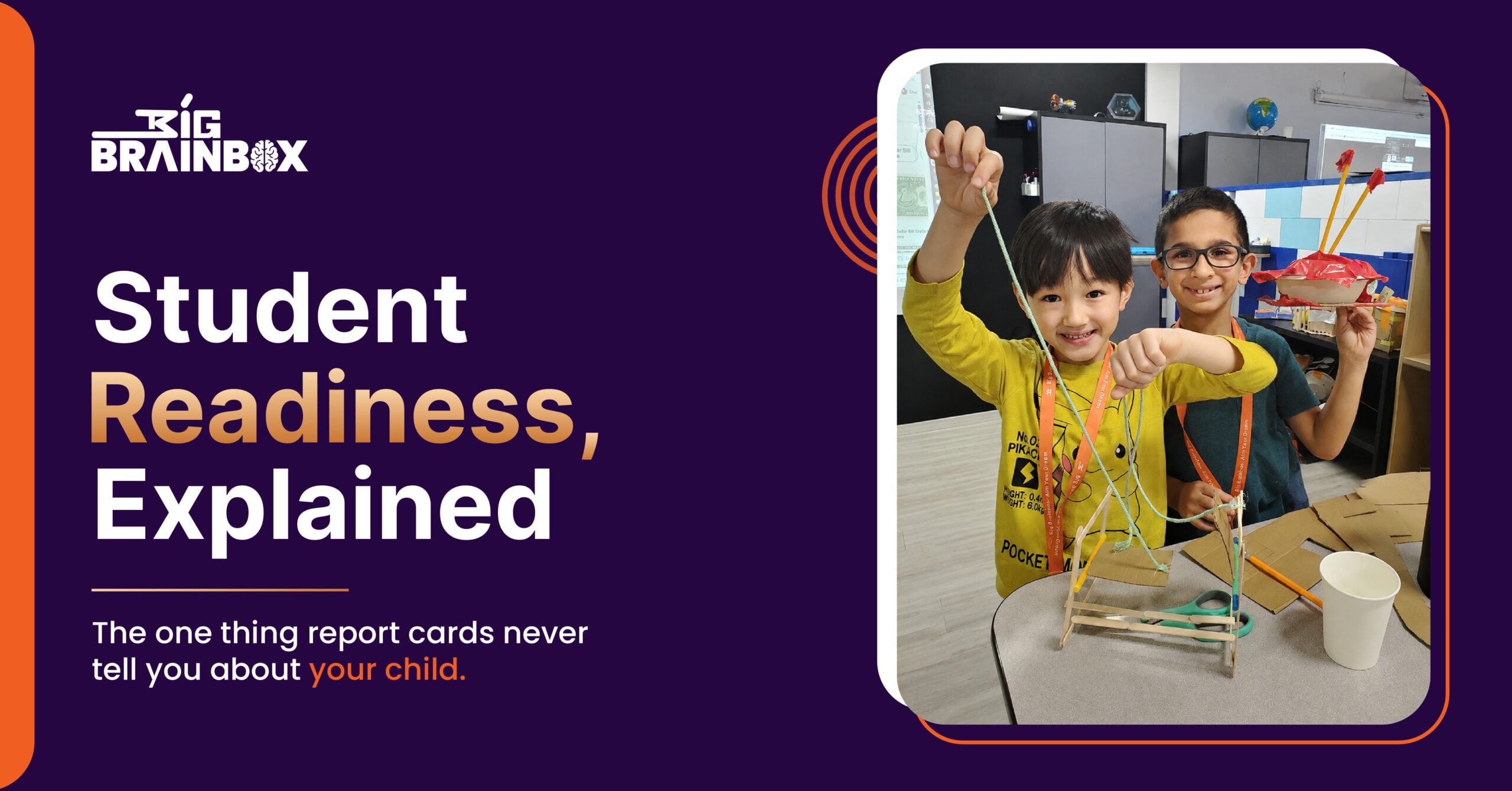
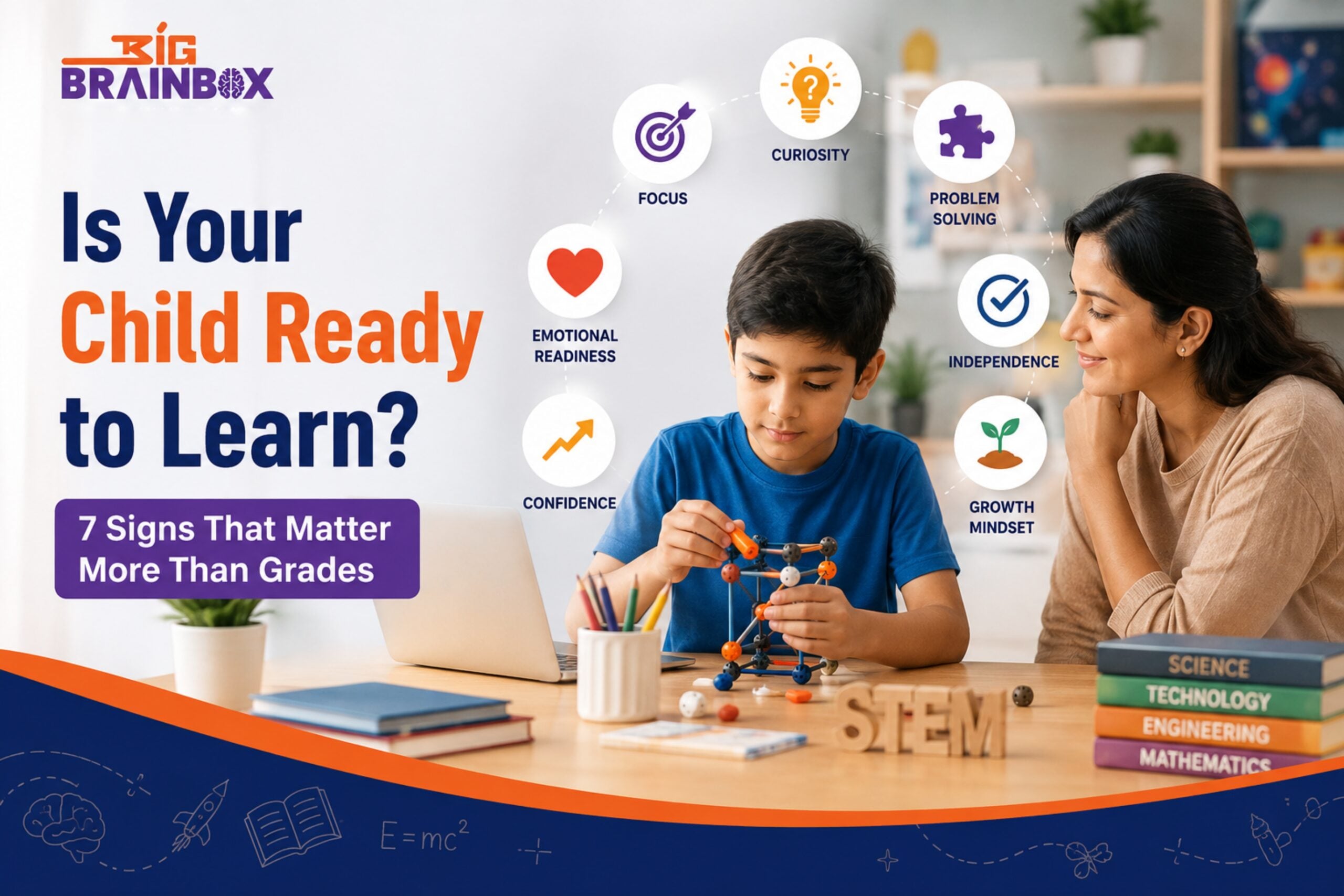
Grades can tell you what a child has learned. Readiness tells you what a child is prepared to learn next.
Many parents look at report cards to measure success. A child bringing home A’s may seem academically strong, while a child struggling with test scores can appear behind. But grades only reveal a small part of the learning picture.
The truth is that long-term academic success depends on more than memorizing information, completing worksheets, or passing exams. A child’s readiness to learn is often a stronger indicator of future growth than any grade printed on a report card.
Learning readiness includes important skills such as focus, curiosity, problem-solving, emotional regulation, and resilience. When these foundational abilities are strong, children are better equipped to absorb new information, adapt to challenges, and continue growing academically.
So how do you know if your child is truly ready to learn?
Here are seven readiness signs that matter far more than grades alone.
Why Learning Readiness Matters
Imagine two students.
The first student earns excellent grades but becomes frustrated when work gets difficult and avoids challenges that require extra effort.
The second student struggles with some subjects but asks thoughtful questions, persists through mistakes, and actively looks for solutions.
Over time, the second student often develops stronger learning habits, greater confidence, and higher achievement because the foundation for learning is already in place.
Learning readiness is not about intelligence. It is about having the skills, mindset, and behaviors needed to engage effectively with new learning opportunities.
1. Your Child Can Focus on Tasks for an Age-Appropriate Length of Time
One of the strongest indicators of readiness is sustained attention.
Children who are ready to learn can stay engaged long enough to process information, complete activities, and absorb new concepts.
Signs of healthy focus include:
- Listening to instructions without constant reminders
- Completing assignments with minimal prompting
- Staying engaged in activities they find challenging
- Returning attention after distractions
Focus does not mean sitting perfectly still. It means having the ability to direct attention toward a goal despite interruptions.
If your child struggles to maintain focus in academic and non-academic situations, it may signal a need for additional support in executive functioning skills.
2. Your Child Shows Curiosity and Asks Questions
Curiosity is the engine that drives learning.
Children who are ready to learn want to understand how things work. They naturally ask questions, seek explanations, and show interest in discovering new ideas.
You might hear questions such as:
- Why does that happen?
- How does that work?
- What would happen if we tried this?
- Can you explain that again?
A curious child becomes an active learner rather than a passive receiver of information.
Research consistently shows that curiosity supports deeper engagement, stronger retention, and greater academic motivation.
When children stop asking questions, learning can become a requirement rather than an adventure.
3. Your Child Can Follow Multi-Step Directions
Learning often requires children to process and remember more than one instruction at a time.
For example:
- Open your notebook.
- Turn to page twenty.
- Complete questions one through five.
Children who are ready to learn can manage these sequences without becoming overwhelmed.
Signs include:
- Following classroom routines independently
- Remembering instructions after hearing them once
- Completing tasks in the correct order
- Demonstrating organizational skills
Difficulty with multi step directions may indicate challenges with working memory, information processing, or executive functioning abilities.
4. Your Child Recovers from Mistakes Instead of Giving Up
Mistakes are essential to learning.
Children who view mistakes as opportunities for growth are more likely to succeed in school and throughout life.
Look for behaviors such as:
- Trying again after making an error
- Asking for help when needed
- Accepting constructive feedback
- Showing persistence during difficult tasks
Many high-achieving students struggle when faced with challenging work because they have become focused on being correct rather than learning.
Readiness means understanding that growth comes from effort, practice, and problem-solving.
If your child often says:
- “I’m not good at this.”
- “I can’t do it.”
- “I’m just bad at math.”
They may need support developing resilience and a growth mindset.
5. Your Child Demonstrates Emotional Readiness for Learning
Learning is deeply connected to emotional well-being.
A child who is overwhelmed, anxious, frustrated, or emotionally dysregulated often struggles to absorb information effectively.
Emotionally ready learners can:
- Handle small setbacks
- Manage disappointment
- Ask for help appropriately
- Transition between activities smoothly
- Work with peers productively
This does not mean children never become upset. It means they can recover and re-engage with learning after challenges occur.
Emotional readiness often plays a bigger role in academic success than parents realize.
6. Your Child Takes Initiative Without Constant Reminders
Independent learning is a powerful readiness indicator.
Children who are ready to learn begin developing ownership of their responsibilities.
Examples include:
- Starting homework without repeated prompts
- Organizing materials independently
- Seeking answers before asking for help
- Managing simple responsibilities consistently
These behaviors reflect developing executive function skills that support success throughout elementary, middle, and high school.
Independence does not appear overnight. It develops gradually through practice and encouragement.
7. Your Child Applies Knowledge in New Situations
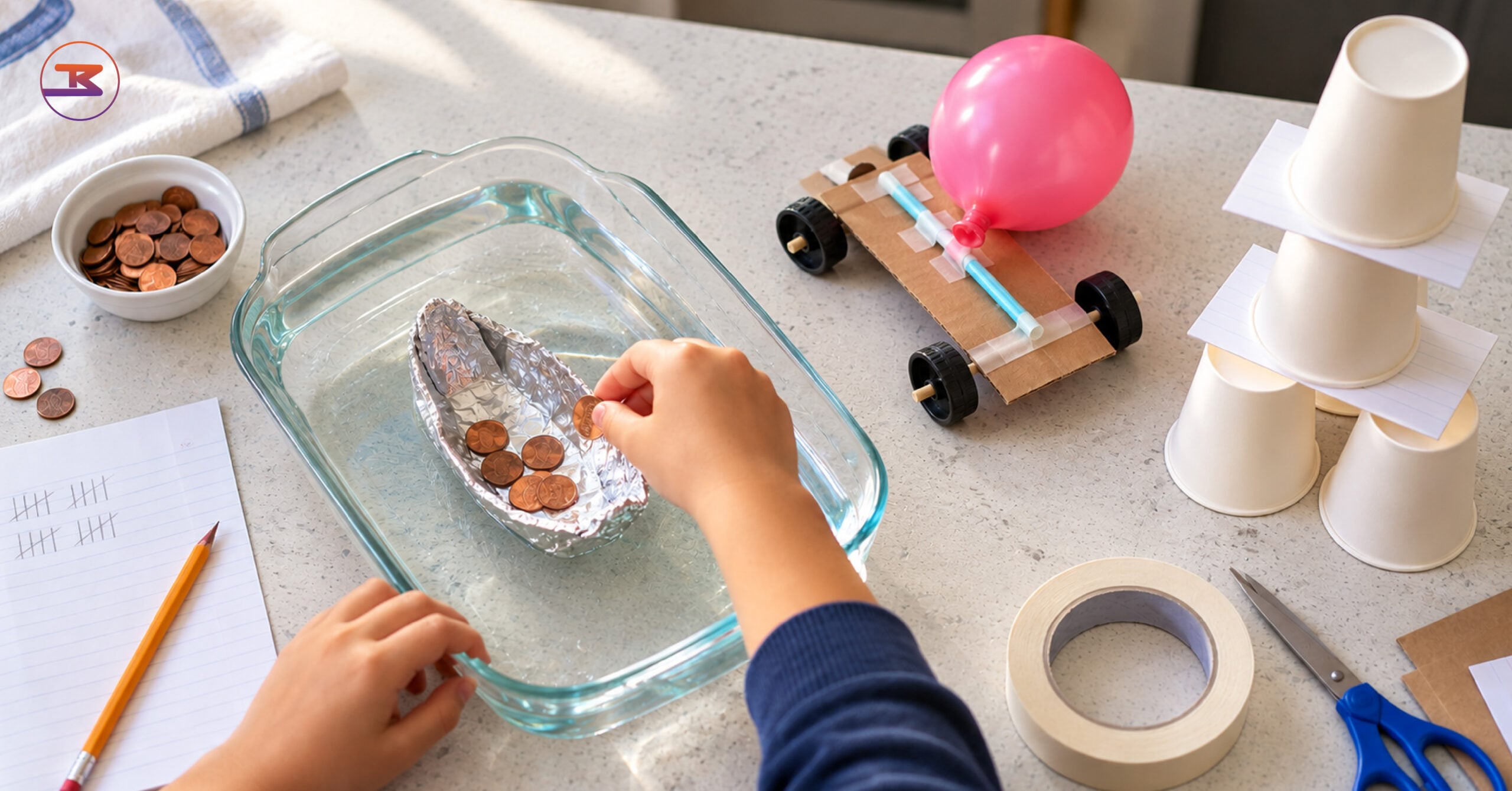
True learning goes beyond memorization.
A child who can transfer knowledge from one situation to another demonstrates deeper understanding and stronger readiness.
Examples include:
- Using math skills while shopping
- Applying science concepts to everyday observations
- Connecting information from different subjects
- Solving unfamiliar problems with previously learned strategies
This ability shows that learning has moved from short-term recall to long-term understanding.
Children who make these connections are often better prepared for future academic challenges because they understand concepts rather than simply remembering facts.
What If Your Child Has Good Grades but Lacks These Skills?
This situation is more common than many parents realize.
Some children achieve strong grades through:
- Memorization
- Extensive parental support
- Test preparation
- Repetition
However, they may still struggle with:
- Critical thinking
- Persistence
- Independence
- Organization
- Confidence
When academic demands increase in later grades, these gaps become more noticeable.
That is why focusing exclusively on report cards can sometimes hide important learning readiness concerns.
What If Your Child Struggles Academically but Shows These Signs?
This can actually be encouraging.
A child who demonstrates:
- Curiosity
- Persistence
- Emotional regulation
- Problem-solving skills
- A willingness to learn
Often has the foundation needed for future academic growth.
With the right support, instruction, and learning strategies, many students can strengthen academic performance while building on these valuable readiness skills.
How Parents Can Support Learning Readiness at Home
You can strengthen readiness skills through everyday experiences.
Encourage Questions
Allow children to explore ideas and ask “why” without rushing to provide answers.
Celebrate Effort
Praise persistence, problem-solving, and growth rather than focusing only on outcomes.
Build Responsibility
Give age appropriate tasks that encourage independence.
Create Routines
Consistent schedules help children develop focus and self-management skills.
Provide Challenges
Allow children to work through manageable difficulties instead of solving every problem for them.
Support Emotional Growth
Help children identify feelings, manage frustration, and develop coping strategies.
Readiness Is the Foundation for Lifelong Learning
A report card offers a snapshot of performance. Learning readiness reveals something much bigger: your child’s capacity to grow, adapt, and succeed in the future.
The most successful learners are not always the children who earn the highest grades today. They are often the children who stay curious, recover from mistakes, embrace challenges, and continue learning even when things become difficult.
If you’re concerned about your child’s academic progress, don’t just ask, “What grades are they getting?”
Ask:
- Can they focus?
- Are they curious?
- Do they persist through challenges?
- Can they work independently?
- Are they emotionally ready to learn?
The answers to these questions may provide a much clearer picture of your child’s future success than any report card ever could.
Ready to Understand Your Child’s Learning Readiness?
At Big Brainbox, our academic skill assessments help identify the foundational learning skills that influence confidence, competence, and classroom success. We help parents understand not just what a child knows, but how a child learns.
Schedule a Learning Readiness Assessment Today and discover the strengths and skill gaps that can shape your child’s educational journey.
Related Big Brainbox Programs