The learning assessment cost in Frisco can be $0 for an academic skills check, and some of the most detailed academic data costs nothing because your child’s school already produces it. Where a learning center charges, the price varies by center, so what the assessment measures matters more than the number on the sign-up page.
This guide covers academic assessments only: the data you already have for free, what a skills assessment should include, and the questions about learning assessment cost to ask before you book.

What does a learning assessment cost in Frisco?
An academic learning assessment in Frisco costs anywhere from nothing to whatever a learning center chooses to charge. There is no standard price. Two kinds of academic data are free: the state test results and classroom records your child’s school already produces, and the skills assessments some learning centers offer at no charge.
| Source | What it shows | Cost to parents |
|---|---|---|
| STAAR results in TEA’s Family Portal | Every question, the skill it tested, and your child’s answer | $0 |
| Report card and teacher conference | How your child works in class over a grading period | $0 |
| Learning center skills assessment | A skill-by-skill picture of one subject, plus what to practice first | Varies by center, from $0 |
Compare options by what they hand you. A useful academic assessment names specific skills, such as “adds fractions with unlike denominators” or “finds the main idea in a two-page article,” and tells you which one to practice first. A single score or a grade level does neither. Any learning assessment cost above $0 should buy something the free sources do not.
What academic data do you already have for free?
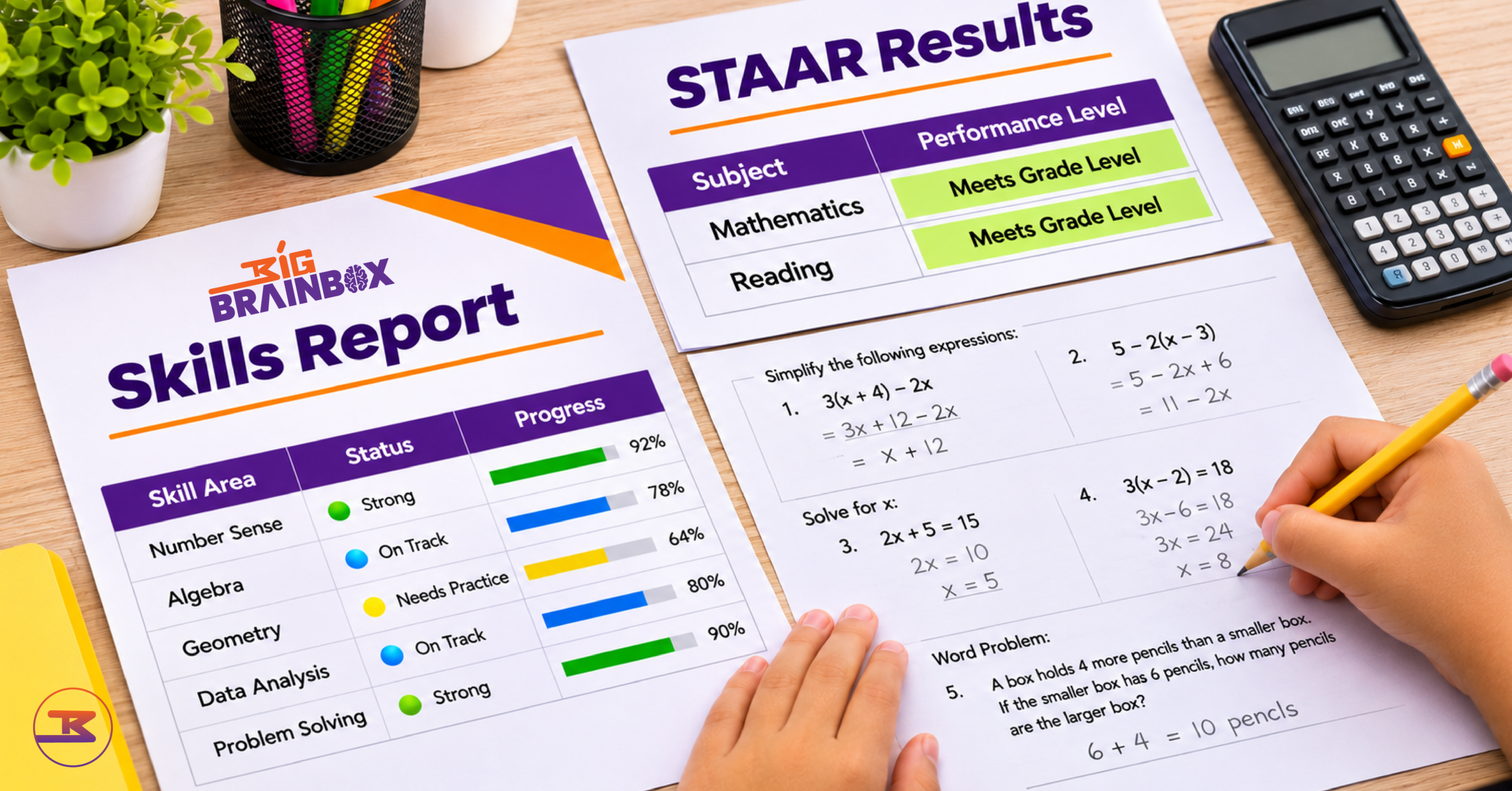
If your child takes STAAR, you already hold one of the most detailed free academic records in Texas. Through TEA’s Family Portal, parents can see their child’s scores, each test question with the TEKS skill it tested, their child’s answer including essay responses, and explanations of correct and incorrect answers. Reading passages and exactly what your child typed are there too.
You reach the portal through your district’s parent portal where it links to it, or at the Texas Assessment website with your child’s unique access code. STAAR covers grades 3 to 8 plus end-of-course exams in high school. Texas is also changing how STAAR works; our guide to STAAR test changes explains what that means for these results.
Use the portal like a map. List the questions your child missed, write the skill next to each one, and look for the same skill missed more than once. A skill missed three times tells you more than the overall score.
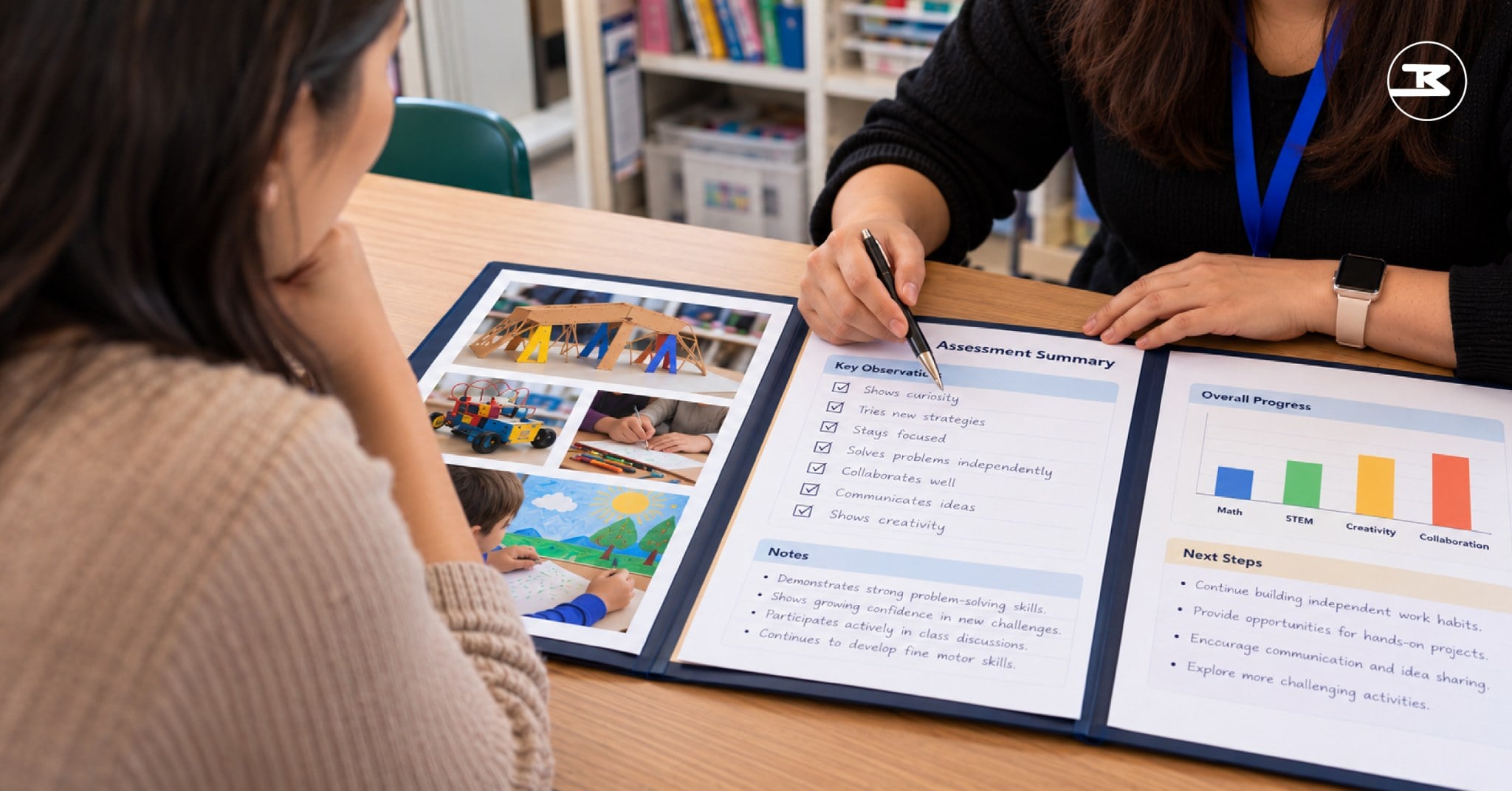
Report cards and a parent-teacher conference add the classroom view across months instead of one test day. Bring your missed-skill list to the conference and ask whether the same gaps show up in class. Together, these cost nothing and answer much of what you would otherwise pay a learning assessment cost to learn.
How do you read your child’s STAAR results in 20 minutes?
Read STAAR results by skill, not by score. Open the Family Portal, go through the questions your child missed one at a time, and write down the skill each one tested. In about 20 minutes you have a list of specific skills to practice, with no learning assessment cost at all.
- Log in through your district’s parent portal, or at the Texas Assessment website with your child’s access code.
- Open one subject at a time, starting with the one that worries you most.
- Open each missed question. Note the TEKS student expectation it tested, and read the rationale for the right and wrong answers.
- In reading and writing, read the passage and your child’s typed response. Check whether the answer missed the question itself or missed the evidence for it.
- Write a one-line skill list, such as “multi-step word problems with fractions” or “finds evidence in a nonfiction passage,” and star any skill missed twice.
Two cautions. A single missed question can be a careless slip, so look for patterns rather than one-off misses. And STAAR captures one spring test day; a skill your child has learned since then will still show as missed. Treat the list as a starting point to check with the teacher, not a final word.
Doing this before you book anything also shows what a paid assessment would need to add, which is the fairest way to judge any learning assessment cost.
What should an academic skills assessment include?
A good academic skills assessment works in one subject at a time and has your child solve real problems, not only pick answers. It ends with a written report that names specific skills, a conversation with you, and one clear thing to practice first. If an assessment ends with only a score, the learning assessment cost bought a number, not a plan.
Look for these five things:
- Subject tasks your child actually works through, such as multi-step math problems or a passage your child reads and explains out loud.
- A written report that names skills, not just a grade level or a percentile.
- A conversation with you to walk through the results.
- A first step: the one skill to practice over the next two to four weeks.
- No pass or fail. Your child should leave knowing what to work on, not feeling graded.
Which questions should you ask before you book?
Ask every provider the same five questions, and get the answers in writing:
- What is the full learning assessment cost, and does it include the report and the conversation?
- Do I have to enroll in anything afterward?
- How long does it take per subject?
- When will I get the written report?
- Can I see a sample report with names removed?

What does an academic skills assessment look like in each subject?
An academic skills assessment looks different in each subject because each subject breaks into different skills. In math it tracks how a child works a problem. In reading it tracks how a child finds and explains evidence. In science and social studies it tracks how a child uses information, not only how well they recall it. In every subject, the output should be a list of named skills, because that list is what a learning assessment cost should buy.
What should a math assessment show?
A math assessment should watch the work, not just mark answers. A fourth grader who gets 3/4 + 1/8 wrong may not know how to find a common denominator, or may know how and slip on the adding. Only the written work shows which. Expect tasks that step down from grade-level problems to earlier skills until the gap appears, for example from fraction word problems in grade 5 back to equivalent fractions from grade 3.
What should a reading and writing assessment show?
A reading assessment should have your child read a passage and talk or write about it. A question like “What is the author’s main point, and which sentence proves it?” shows whether a child can find evidence, which a multiple-choice score hides. For writing, a short response to a prompt shows sentence control, organization, and whether the child answers the question asked.
What should a science assessment show?
A science assessment should mix vocabulary with reasoning. Can a sixth grader read a simple data table from a plant-growth experiment and say what changed and why? A child who knows the word “variable” but cannot spot one in an experiment has a different gap from a child who cannot read the table.
What should a social studies assessment show?
A social studies assessment should test maps, timelines, and sources, not only dates. A seventh grader studying Texas history who can place events on a timeline but cannot explain why one led to another has a cause-and-effect gap. That same skill carries over into science and reading.
Whatever the subject, ask how the learning assessment cost breaks down per subject, since some providers price each subject separately.
When is it worth paying for an academic assessment?
Paying for an academic assessment is worth it when the free data cannot answer your question. That happens when your child has no recent STAAR history, when grades and test results disagree, or when you need a skill-by-skill picture sooner than the next report card. In those cases, the learning assessment cost buys information you cannot get for free.
- Your child is new to Texas or to Frisco, with no STAAR results to read.
- Your child is in kindergarten through grade 2, before STAAR testing starts in grade 3.
- Grades and test results disagree, such as straight A’s next to a weak STAAR math result.
- Your child has been homeschooled or comes from a school without state testing.
- Your child is ahead of grade level, and you want to know how far before choosing enrichment or an advanced class.
- It is summer, and the next report card is months away.
When none of those apply, start with the free data. Read the Family Portal, talk with the teacher, and only then decide whether any learning assessment cost is worth paying. If a free skills assessment is available nearby, compare its sample report with a paid one before you spend anything. Ask, too, whether the learning assessment cost covers a second check later; one snapshot shows a starting point, and only a second one shows progress.
To compare two paid options, line them up on the same four points: price per subject, whether the written report and the parent conversation are included, whether a later check is included, and whether enrollment is required. Two offers with the same learning assessment cost can deliver very different things, and the best-value learning assessment cost is the one whose report you will actually use.
How should you prepare for an academic assessment?
Prepare by gathering what you already know, not by drilling your child. Bring the missed-skill list from the Family Portal, two or three pieces of recent graded work, and any comments from the teacher. Preparing this way costs nothing and makes any learning assessment cost go further, because the assessor starts from your evidence instead of from zero.
Tell your child plainly what the session is: a check to find what to practice next, with no grade and nothing to pass. Children who think they are being graded often rush or freeze, and then the results show nerves instead of skills. Book a time when your child is usually alert, not straight after a full school day if you can avoid it.
Afterward, ask for the report in writing and read it before the conversation, so you arrive with questions. The two most useful are “Which skill should we start with?” and “What would progress on that skill look like in four weeks?”
What does the free Big Brainbox skills assessment include?
The Big Brainbox skills assessment in Frisco costs $0, with no obligation to enroll in tutoring afterward (as of 06-Nov-2026). It covers a subject you choose, takes 45–60 minutes per subject, and ends with a written report within 48 hours and a one-on-one parent consultation.
Academic subjects include math, English language arts, general science, and social studies, and the “Academics Only” option covers up to two subjects. Sessions run online or in person at the Frisco campus. There are no grades and no pass or fail (all as of 06-Nov-2026).
It measures academic skills in the subject you pick: what your child knows, where the gaps are, and what to work on next. Bring your missed-skill list from the Family Portal so you can set it next to the written report. Big Brainbox works alongside your child’s school, never in place of it.
If your question is “where is my child in this subject, and what do we practice next?”, you can book the Big Brainbox skills assessment for the subject that worries you most. For the habits to build after the report, our guide to college readiness skills covers what grades alone do not show.

How do you turn an assessment report into a four-week plan?
Turn an assessment report into a plan by picking one skill, practicing it in short sessions three times a week, and checking it again after four weeks. One skill at a time shows whether the practice is working; five skills at once shows nothing. A report that never leads to a plan like this has not earned its learning assessment cost, even when that cost is $0.
| Week | Focus | Example: grade 4 fractions |
|---|---|---|
| 1 | Rebuild the idea with materials | Fold paper strips into halves, fourths, and eighths and line them up |
| 2 | Connect materials to numbers | Write the matching fraction on each strip and compare them |
| 3 | Practice the skill on its own | 10-minute sets of adding fractions with unlike denominators, three times a week |
| 4 | Check | Five problems like the ones missed on the report, worked on paper |
Keep each session to about 20 minutes. Use real materials where you can: measuring cups for fractions, a recipe for ratios, a newspaper article for main idea. At the end of week 4, compare the check problems with the original report. If the skill holds, move to the next one on the list. If it does not, go back to week 1 with a different material.
Share the plan with your child’s teacher, so practice at home lines up with what happens in class. That follow-through, more than any learning assessment cost, decides whether a report turns into progress.
What can no single assessment tell you?
No single assessment tells you everything about how a child learns. A STAAR result shows one test day. A report card shows one grading period. A skills assessment shows one subject in depth. Each one is a single marker, so read them side by side with the work you see at home.
So the learning assessment cost that matters most is the cost of a plan nobody uses. A free report you act on this month does more than a paid one filed in a drawer. Our guide to student readiness covers what report cards and scores leave out.
How well any assessment at age 8 or 10 predicts how a child does years later is still an open question. Use a result to choose the next step, not to label a child.
Keep every report, STAAR skill list, and four-week check in one dated folder. Over a school year, that folder becomes the most useful record you have. It shows which skills moved and which keep coming back, and it costs nothing beyond whatever learning assessment cost you chose to pay.
How often should you reassess?
Reassess a single skill when its practice plan ends, usually after four to eight weeks, and reassess a whole subject once or twice a school year. Testing more often than that measures day-to-day noise, not growth. If you pay, each check also adds to the learning assessment cost, so match how often you test to how often you can act on the results.

Sources
- Texas Education Agency. (2025). Spring 2025 STAAR information: Reporting timelines and resources [Presentation to superintendents; section “Spring 2025 Results for Families”]. Austin, TX: TEA. PDF