Learning Readiness: 9 Simple Signs Worried Parents Can Spot at Home
Reviewed By: Dr. Jill Hollander
10 minutes
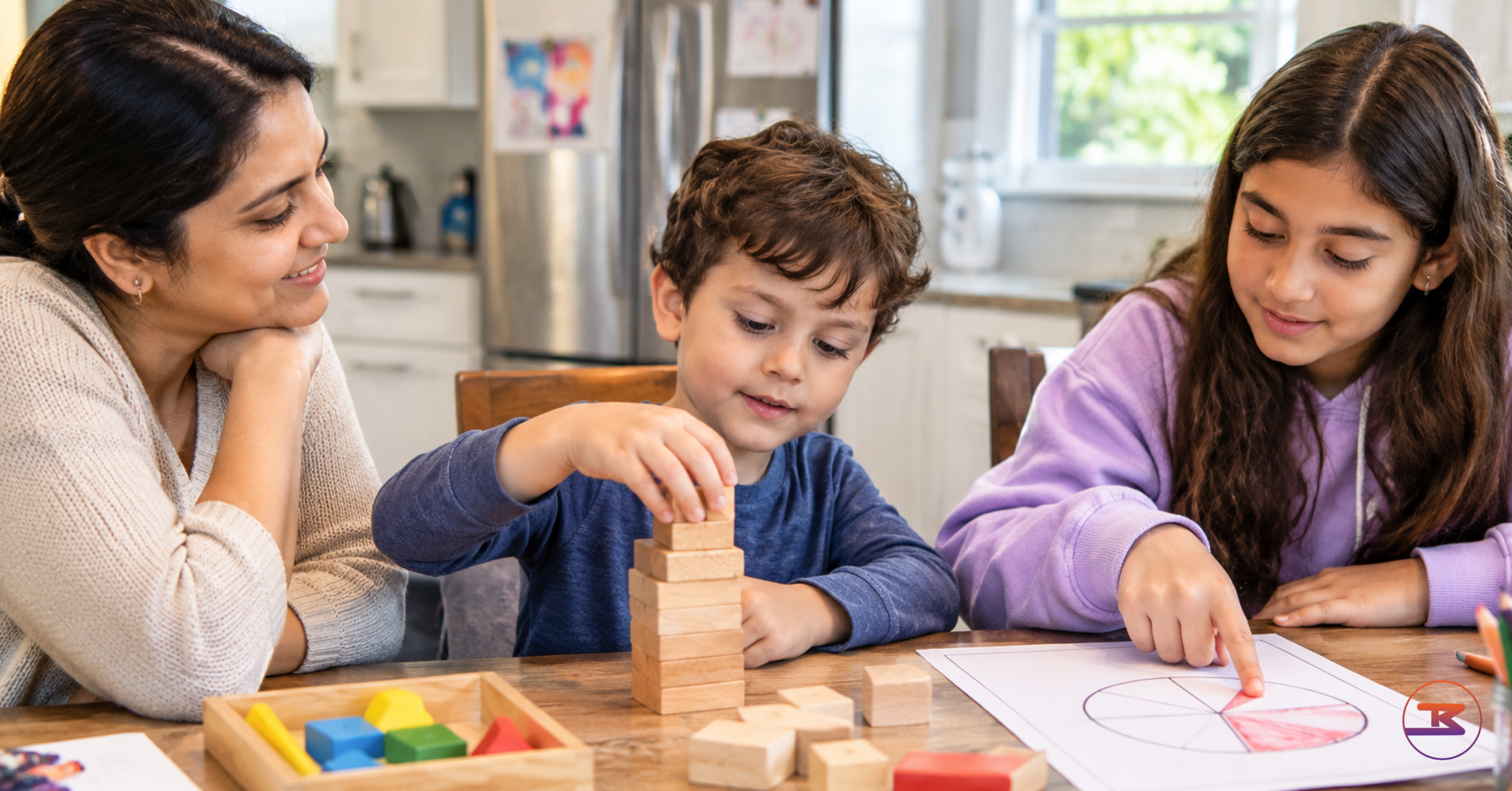
Parent watching two children show learning readiness signs at a kitchen table, one rebuilding blocks and one explaining a fraction drawing
Nine things to watch for at home, from a kindergartner rebuilding a block tower to an 8th grader reworking a missed quiz. Each sign comes with a 20-to-30-minute activity you can try this week, using things already in your kitchen.
Table of Contents
Learning readiness is what your child does when the work turns new or hard: whether they restart after a mistake, hold a set of steps in mind, explain their thinking, and plan ahead. You can see it at home, at the kitchen table, long before it shows up on a report card.
A report card records finished work. Learning readiness shows up in unfinished work, which is why a parent at home often sees it first. Below are nine learning readiness signs, three for each grade band from kindergarten to 8th grade, with what to watch for and what to try.
What is learning readiness, and why doesn’t a report card show it?
Learning readiness is a child’s ability to take on new or harder work: to hold instructions in mind, stay with a problem, explain an answer, and recover from a mistake. A report card cannot show it, because a grade records work that is already finished. Two children with the same B can respond in opposite ways when the next unit gets harder.
Researchers at Harvard’s Center on the Developing Child group three skills under executive function: working memory, which is holding information in mind and using it; inhibitory control, which is pausing before acting; and cognitive flexibility, which is switching gears when demands change. Children are not born with these skills. They build them slowly, from infancy into early adulthood, through activities that get harder over time. Most of the signs on this list draw on one or more of the three.
The signs below are behaviors, not scores. Each one is something you can watch during homework, a board game, or a cooking project, with no test sheet. For the full definition of readiness, our guide to what student readiness is covers it. This post stays with what learning readiness looks like at home, grade by grade. No single sign is a pass or a fail.
Which learning readiness signs show up from kindergarten to 2nd grade?
From kindergarten to 2nd grade, learning readiness shows up in play more than in schoolwork. Watch whether your child rebuilds after something falls apart, carries out a short set of spoken steps, and tests their own guesses. Each sign takes under ten minutes to watch at home.
Does your child rebuild after something falls apart?
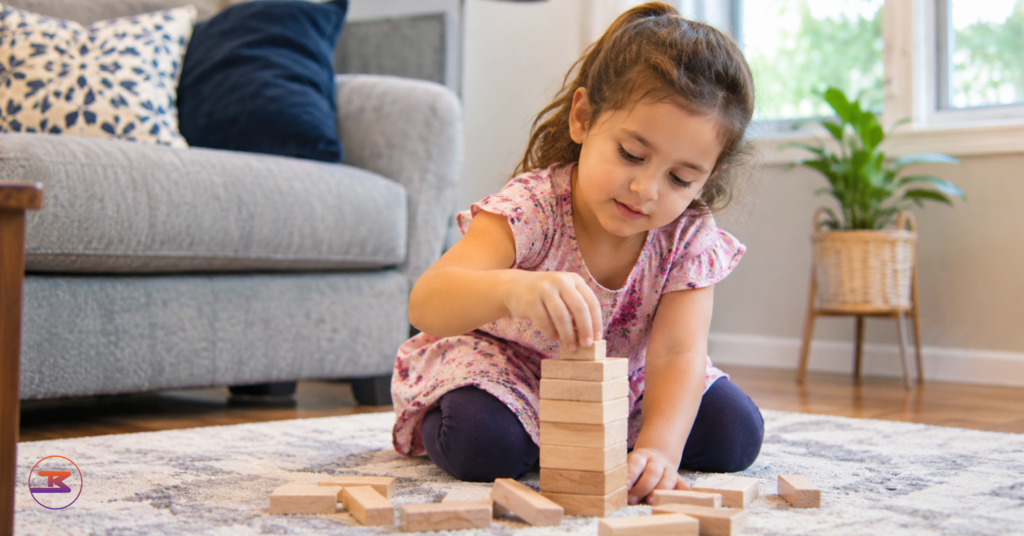
A block tower falls. One child walks away. Another starts restacking, sometimes with a wider base. The restart is the sign, not the tower. A child who restarts is treating a failure as information, and harder schoolwork depends on that habit. Count how often your child restarts before calling you over.
Kindergartner rebuilding a fallen block tower, an early learning readiness sign at home
Can your child carry out a three-step instruction heard once?
Try it while cooking: “Wash your hands, get two eggs from the fridge, and put them by the bowl.” A child who finishes all three steps in order is holding the list in working memory while acting on it. Harvard’s executive function guide names cooking as practice for 3- to 5-year-olds in exactly this: waiting for instructions and holding complicated directions in mind. If your child stops after step one, shorten the list to two steps and build back up.
Does your child test their own guesses?
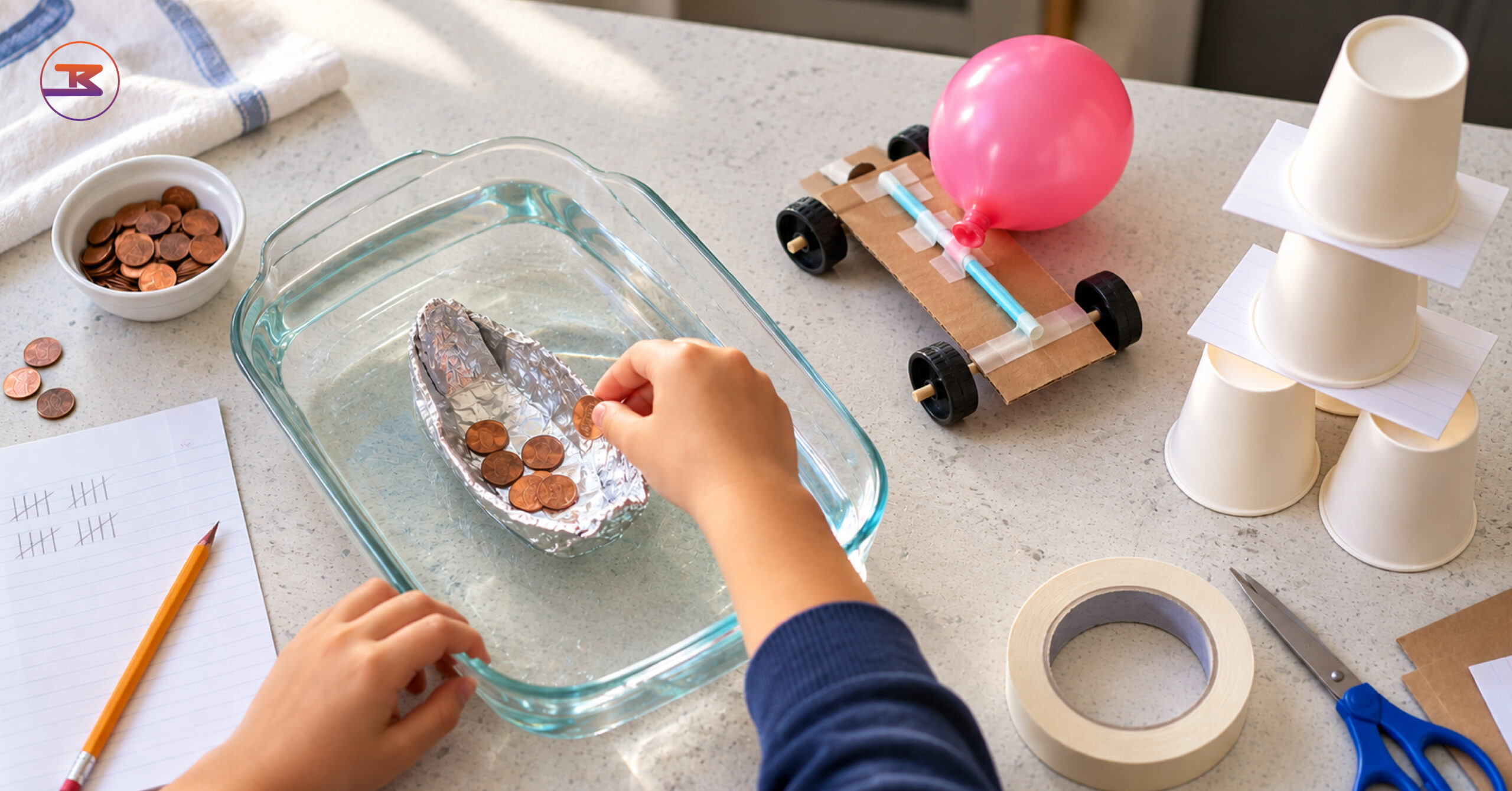
Listen for “what if” and “let’s see.” A 6-year-old who guesses that the heavier toy car will roll farther, then races both cars down a book ramp to check, is running a small experiment. The guess can be wrong. The checking is the sign.
Which learning readiness signs show up in grades 3 to 5?
In grades 3 to 5, learning readiness moves from play into schoolwork. The three signs to watch are whether your child can explain why an answer is right, stays with a hard problem before asking for help, and uses school skills outside school. Each one shows up during ordinary homework.
Can your child explain why an answer is right?
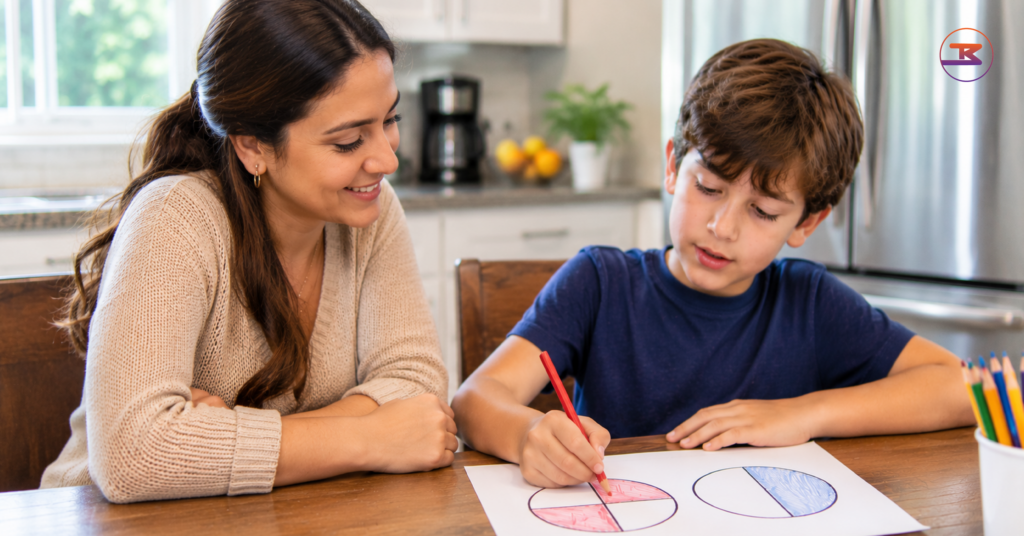
Ask “How do you know?” after a correct answer, not only after a wrong one. A 4th grader who says “3/4 is bigger than 2/3 because I drew both pizzas and the 3/4 slices cover more” understands the idea. A child who says “because the teacher said so” has the answer without the reason. The reason is the learning readiness sign, and it carries into next year’s work.
Fourth grader explaining a fraction drawing to a parent at the kitchen table
Does your child stay with a hard problem before asking for help?
Watch the first few minutes after your child gets stuck. Some children reread the problem, erase, or try a smaller number. Others ask for help straight away. A child who tries one or two approaches first is practising the persistence that harder grades demand. Harvard’s guide describes the adult’s job as helping at first, then stepping back so children manage the task and learn from their mistakes as they become ready.
Does your child use school skills outside school?
A 5th grader who doubles a cookie recipe and works out that 3/4 cup becomes 1 1/2 cups is using fractions without being asked. So is a 3rd grader who reads a bus timetable to tell you when to leave. Transfer like this is one of the clearest learning readiness signs, because the skill has left the worksheet.
Which learning readiness signs show up in grades 6 to 8?
In grades 6 to 8, learning readiness shows up in how a child manages work over days, not minutes. Watch whether your child breaks a project into steps without reminders, presents and defends their work to an adult, and changes approach after a low grade. High school assumes these habits are already in place.
Does your child break a project into steps without reminders?
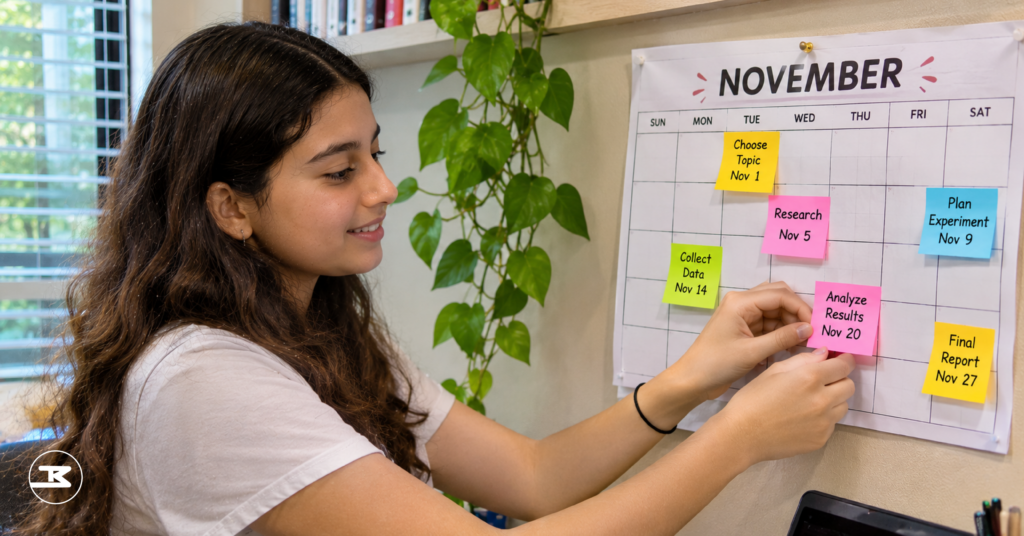
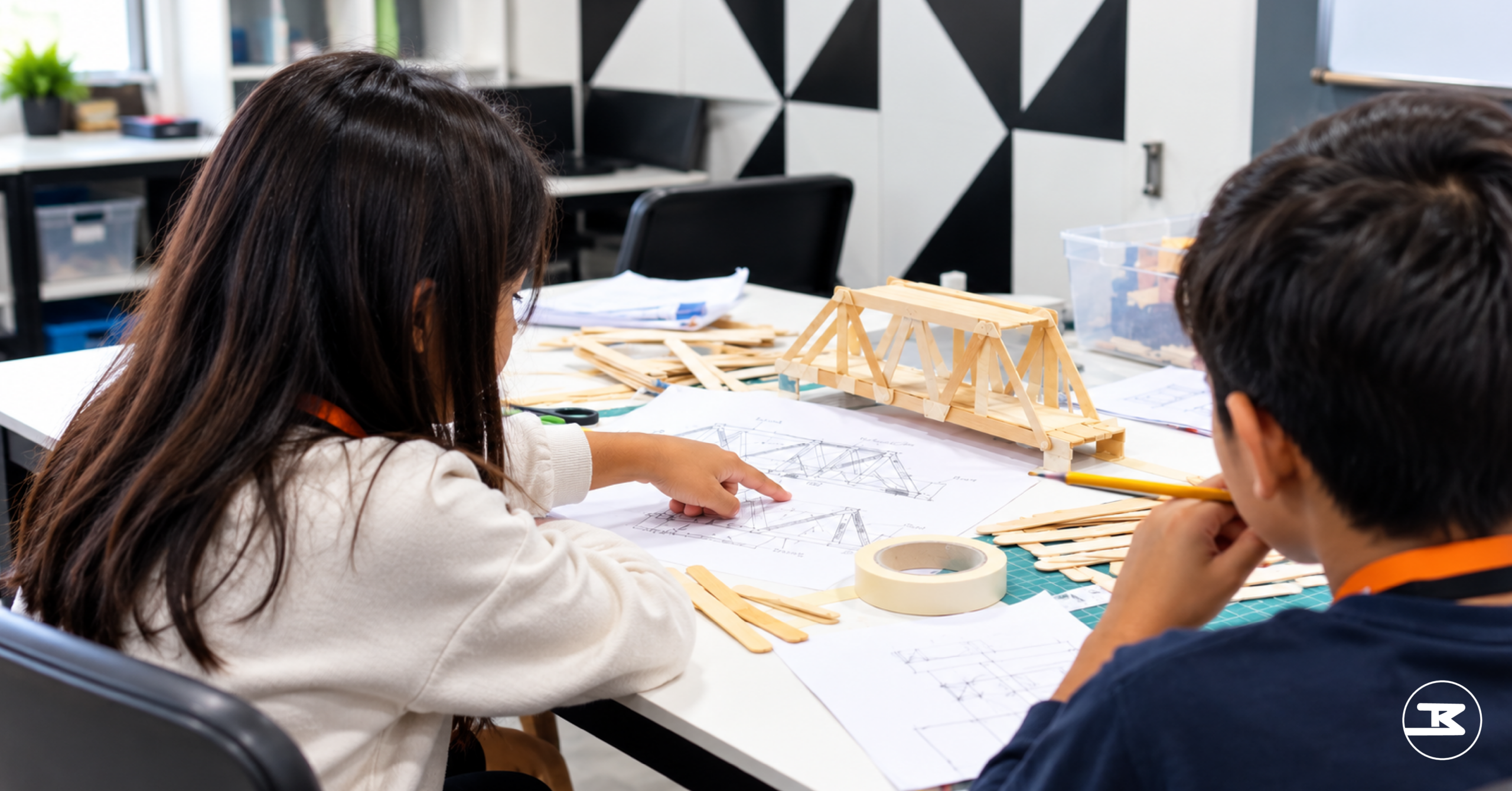
Give your child a science fair date three weeks out and watch the first weekend. A 7th grader who is ready lists the parts (question, materials, test, poster) and puts a date beside each one. Harvard’s guide notes that by high school, students are expected to organise their time largely on their own, keep track of assignments, and see projects through. Its study-skills list starts with breaking a project into manageable pieces. Middle school is where that habit forms.
Middle schooler planning a science project on sticky notes, a learning readiness sign in grades 6 to 8
Can your child present and defend their work to an adult?
Ask your child to walk you through a finished project for three minutes, then ask one hard question: “What would you change?” A child who answers with a reason, rather than going quiet or getting upset, is holding their ground in front of an audience. That skill shows up in class presentations now and later in any room where work has to be explained.
Does your child change approach after a low grade?
A 64 on a math quiz is information. Watch what your 8th grader does next. A child who reworks the missed problems, asks the teacher about one, or changes how they study is showing the sign. A child who says “I’m just bad at math” and stops is showing you where support belongs, not where their ability ends. Harvard’s guide recommends helping teens treat a failure as a lesson, not a final judgement on their ability.
What does it mean when the grades and the signs disagree?
When grades are high and the signs are few, a child may be succeeding on memory and adult help, and both thin out in later grades. When grades are low and the signs are strong, the child already has the habits, and the gap sits in content that can be taught directly. Either way, the disagreement tells you where to look next.
Research on confidence points the same way. A 2003 review of self-esteem research by Baumeister, Campbell, Krueger and Vohs found that high self-esteem is partly the result of good school performance rather than its cause, and that efforts to boost pupils’ self-esteem had not been shown to improve their performance. Confidence follows competence. A child who builds learning readiness first has something solid for confidence to stand on.
So read the report card and the signs together. A grade records finished work on one channel. The signs show what your child does with unfinished work. Neither one alone is the full picture of learning readiness.
How can you build these signs at home this week?
You build learning readiness at home by giving your child small problems that can fail safely, then stepping back. Praise the restart and the explanation, not only the result. Each activity below takes 20 to 30 minutes and uses things already in most homes.
Kindergarten to 2nd grade: cook one simple recipe together. Read three steps aloud once, then let your child carry them out in order. You need one bowl, one recipe card, and 20 minutes.
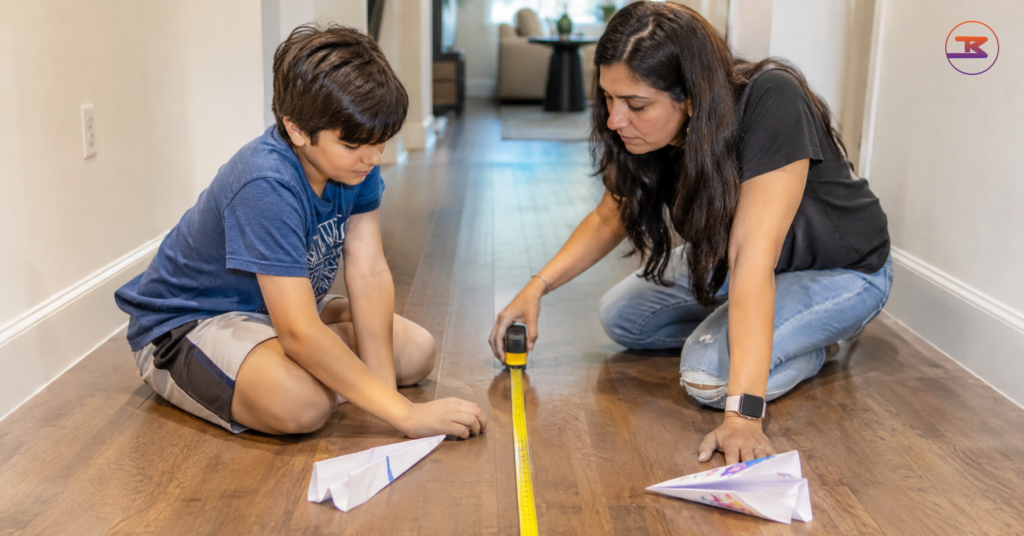
Grades 3 to 5: run a paper airplane test. Fold two designs, fly each one three times, and measure every flight with a tape measure. Then ask your child which design won and why. You need printer paper, a tape measure, and 30 minutes.
Grades 6 to 8: hand over Saturday dinner. Your child writes the shopping list, the timeline, and who does each step, then presents the plan to you on Friday. You need a notepad and 30 minutes of planning.
Let each one go wrong. A crashed airplane or a forgotten ingredient costs nothing at home, and the restart is the part that builds the habit.
Parent and child measuring paper airplane flights with a tape measure in a hallway
When is it worth getting a second read on learning readiness?
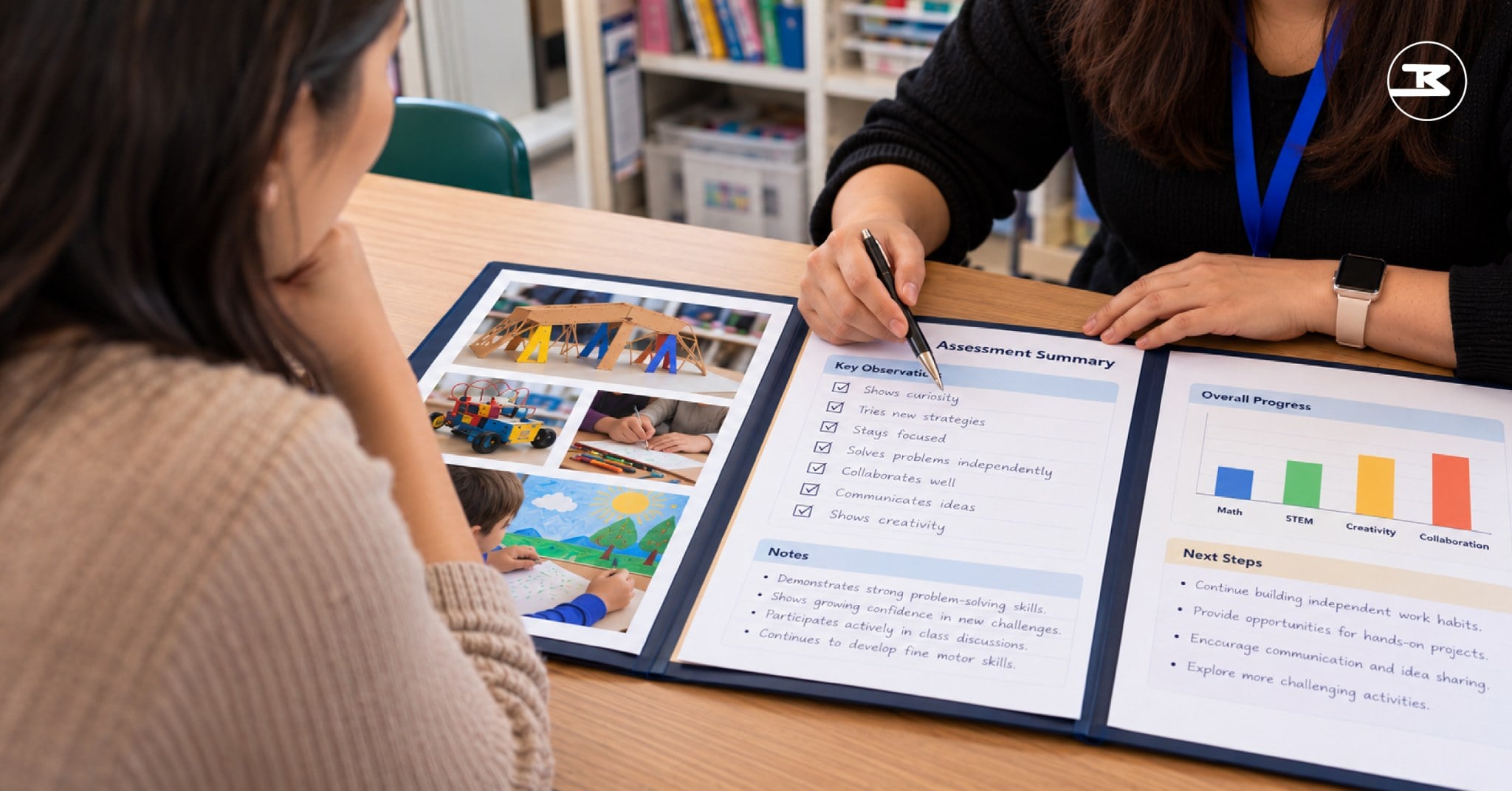
A second read is worth getting when what you see at home and what the report card says point in different directions for more than one grading period. A parent sees one channel: homework and projects at home. A structured read looks across several subjects and tasks at once and puts what it finds in writing.
At Big Brainbox in Frisco, the Skill-Based Learning Assessment gives families that second read. Your child completes tasks in the subject you choose, and you receive a written report and a one-on-one parent consultation to go through it. As of 30-Oct-2026, the assessment page lists it as free, 45 to 60 minutes per subject, with the written report within 48 hours and no obligation to enroll. It has no grades and no pass or fail.
The report shows where your child stands in the areas assessed and what to work on next. It does not predict where your child will end up. That direction stays theirs to choose, and learning readiness is what lets them choose it with something real behind them.
Big Brainbox is a readiness education center in Frisco, Texas, working with students from K through 12th grade. Our instructors and curriculum team write these posts from what happens in the room: what a child builds, where a child stalls, and what changes when the work is real. We publish what we observe and cite what we borrow.