College Readiness Roadmap: 5 Stages to Replace Junior Year Panic With a Calm Plan
Reviewed By: Dr. Jill Hollander
9 minutes
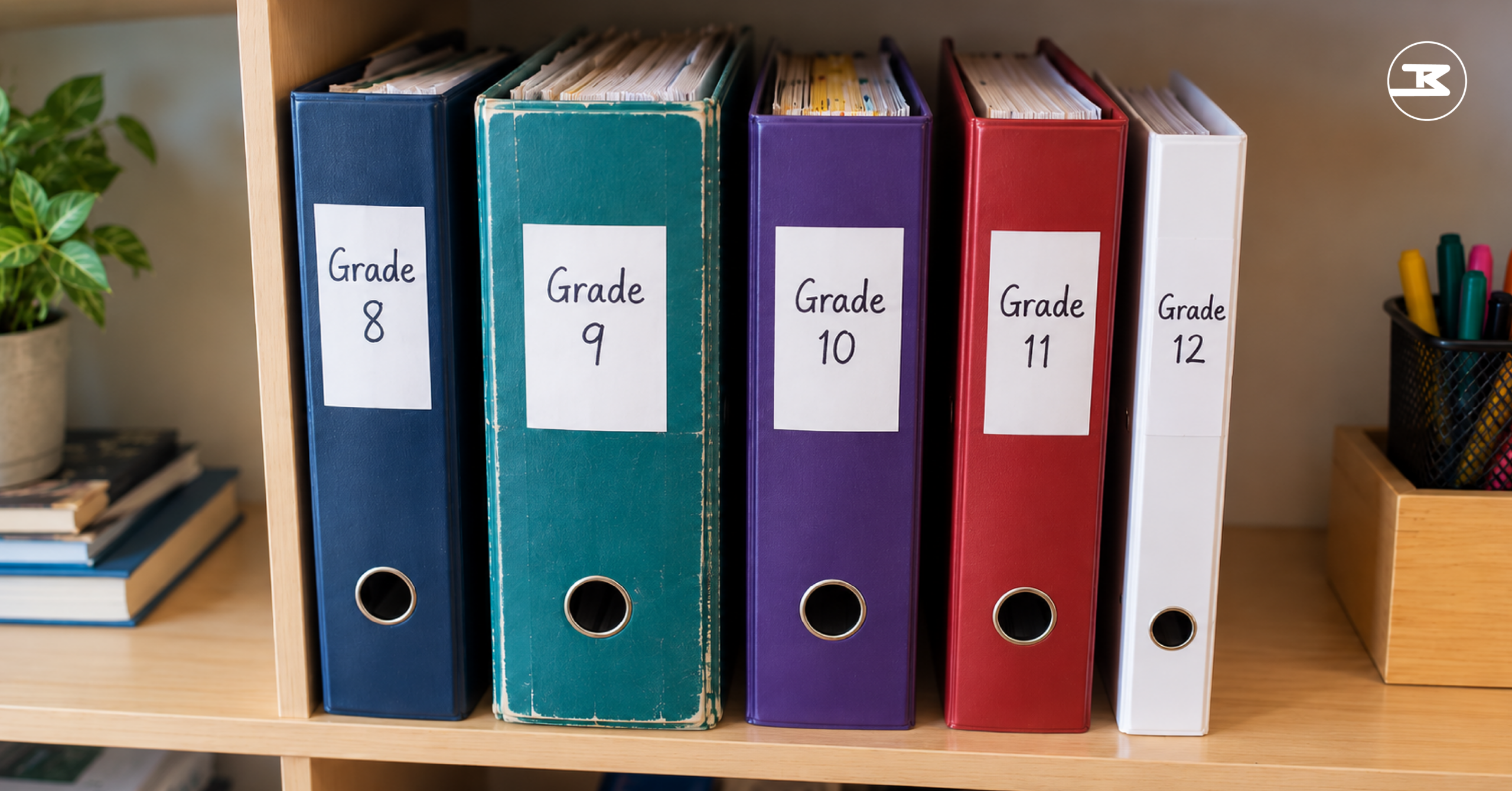
Five binders labeled grade 8 through grade 12 on a shelf showing college readiness built year by year
Most families start thinking about college in junior year, two years after the record that matters most began. This roadmap shows what research says about grades and test scores, how Texas checks readiness, and what to build from middle school to senior year.
Table of Contents
College readiness is built mostly through the high school transcript, starting the first semester of ninth grade, not through a test taken in junior year. Research on more than 55,000 students found high school grades five times stronger than ACT scores at predicting who finishes college.
That changes the plan. This roadmap answers seven questions: what college readiness means, grades versus test scores, why ninth grade counts, how Texas measures it, what to build in each grade, what to do if your child is behind or young, and what no roadmap can promise.
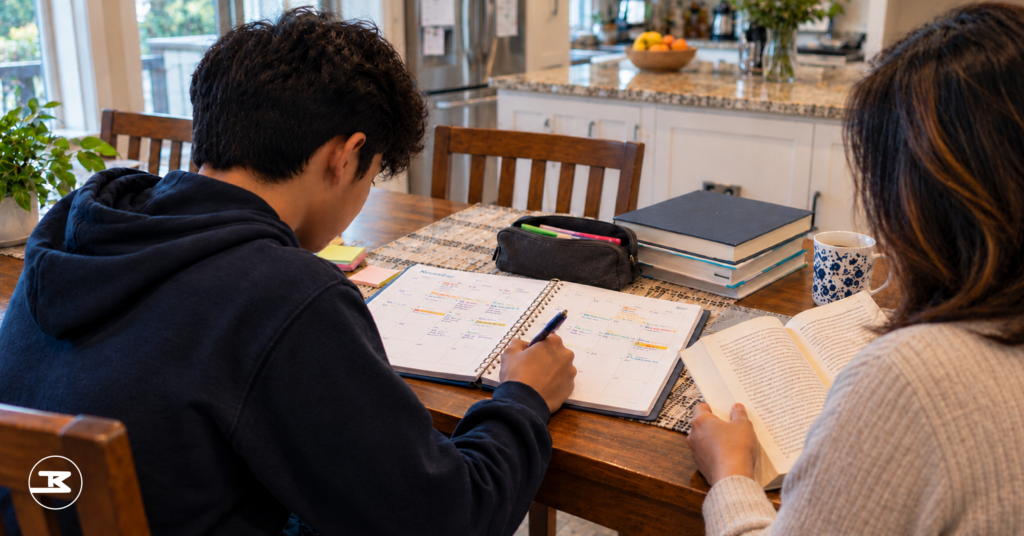
High school student marking semester due dates in a planner as part of a college readiness plan
What does college readiness actually mean?
College readiness means a student can take entry-level college courses and pass them without first taking remedial classes. It has two parts: academic skill in reading, writing, and math, and the habits that keep a student working when no one checks, such as planning, asking for help, and recovering from a bad grade.
Families tend to measure the first part and assume the second. A student with strong scores who has never managed a deadline alone meets that gap in the first month of college, at full speed. The roadmap below builds both parts in the years when a mistake costs little.
Why do grades capture both parts?
A semester grade records months of showing up, turning work in, and recovering from a weak quiz. A test score records one morning. That difference is why the research in the next section matters for every grade on this roadmap.
Which matters more for college readiness: grades or test scores?
High school grades predict college completion far better than test scores. A 2020 study of 55,084 Chicago graduates who went straight to four-year colleges found grades five times stronger than ACT scores at predicting who graduated. The link between grades and graduation held steady across high schools, while the link for ACT scores changed from school to school.
The study, by Allensworth and Clark in Educational Researcher, found that students with high school GPAs under 1.5 had about a 20% chance of finishing college. Students with GPAs of 3.75 or higher had about an 80% chance, after accounting for background and college characteristics.
Colleges say the same thing about admission. NACAC’s report on its 2019 State of College Admission survey lists grades in high school courses and grades in college-prep courses as the top two factors, followed by the strength of the curriculum and then admission test scores.
What does that mean for test prep?
Test scores still open doors, so plan them, but plan them second. A single, well-timed testing effort in junior year fits college readiness better than years of test practice that crowd out the coursework a transcript records.
Why is ninth grade the year that counts?
Ninth grade is when the transcript starts, and freshman grades predict what happens next better than test scores do. A Chicago study found that ninth graders who earned enough credits and failed no more than one semester of a core class were 3.5 times more likely to graduate high school on time than freshmen who fell behind.
That research, The On-Track Indicator as a Predictor of High School Graduation by Allensworth and Easton, found the freshman measure predicted graduation better than students’ earlier test scores or backgrounds. Some students with high test scores failed to graduate, and many with low scores graduated.
The study measured high school graduation, not college. It still matters for college readiness, because a student who stumbles in ninth grade starts the college transcript with a hole to climb out of. The first semester of freshman year is the first line of the transcript colleges read.
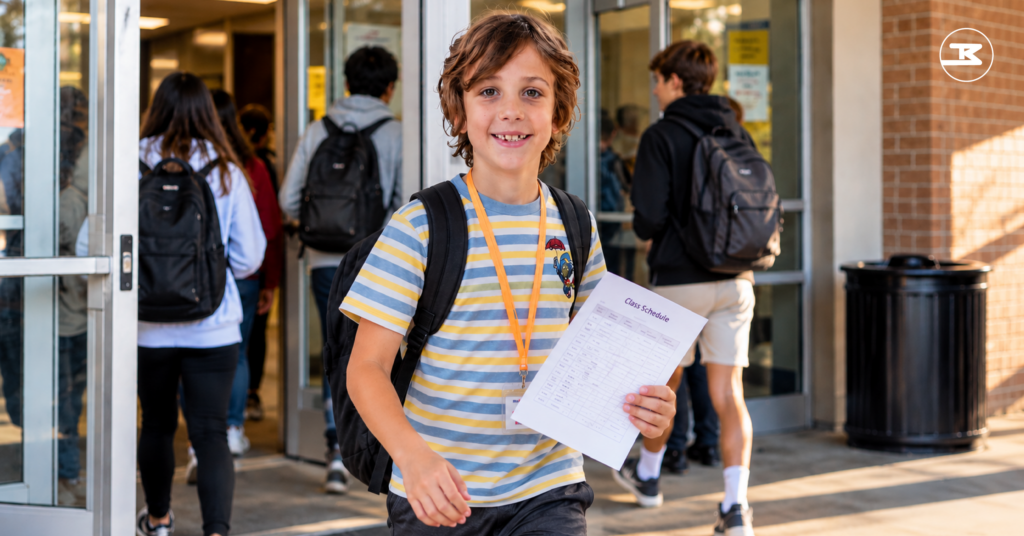
Ninth grader leaving school on the first day holding a printed class schedule
How does Texas measure college readiness?
Texas requires students entering a public college or university to show college readiness in reading, writing, and math before taking credit-bearing courses. Students show it with qualifying SAT or ACT scores, certain STAAR end-of-course scores, a high school college-prep course, or the Texas Success Initiative Assessment, called TSIA2. Students who fall short are placed in support courses first.
Spring ISD’s TSI page lists the exemption routes, including the STAAR English III and Algebra II end-of-course tests and the college-prep course. Fort Bend ISD’s TSI guide lists the score lines. A student is exempt from TSIA2 with at least 480 on SAT Evidence-Based Reading and Writing and 530 on SAT Math, or a 40 combined ACT English and Reading score and a 22 on ACT Math. A student can be exempt in one subject and test in the other.
Students who want dual-credit courses in high school may need to meet those same lines earlier. That makes the TSI a college readiness checkpoint that can arrive in tenth or eleventh grade, not only after graduation.
Which grade should plan around the TSI?
Ask your child’s high school counselor in ninth grade which dual-credit courses the campus offers and when students take TSIA2. A tenth grader who knows the math line is 530 on the SAT, or the TSIA2 equivalent, has two years to build toward it in regular coursework rather than in a cram season.
What should your child build in each grade?
Each stage of college readiness builds one layer the next stage needs. Middle school builds study habits and math footing, ninth grade starts the record, tenth grade adds depth, eleventh grade adds testing and teacher relationships, and twelfth grade carries out a plan made earlier.
Grades 6–8: what does the foundation look like?
Build the habits the transcript will record later. A middle schooler who keeps a weekly planner, turns in work without reminders, and stays caught up in math enters ninth grade with the hardest part already in place. Pick one or two interests to go deep on, such as a robotics team or a coding class with real projects, instead of sampling ten.
Grade 9: how does a student start the record?
College readiness in ninth grade looks like a clean first semester: every assignment turned in, no failed core class, and one teacher who knows your child by name. Choose courses that stretch without swamping, because a ninth grader who overloads and fails a class pays for it on every application.
Grade 10: where does depth come from?
Use the year with no major deadlines to go deeper. Move from member to a role with responsibility in one activity, add an advanced course in a subject of real strength, and take the PSAT as practice with nothing riding on it. Ask the counselor about dual credit and the TSI timeline now.
Grade 11: what gets added?
Junior year adds testing and recommendations to the college readiness record that already exists. Plan one focused SAT or ACT effort with a retake date in reserve, keep grades steady in the hardest courseload your child can carry, and build working relationships with two teachers who could write letters.
Grade 12: what is left to do?
Senior year carries out the plan. Finalize a balanced list of schools, write essays in your child’s own voice, track every deadline and financial aid form, and keep grades steady through spring. College readiness built over four years makes senior fall busy, not frantic.
What if your child is behind, or still young?
A student behind on the roadmap starts with this semester’s grades, because the current term is the one part of the record still open. A young child needs none of the roadmap’s milestones yet, only the habits underneath them: reading, finishing work, and recovering from mistakes.
What does catching up look like in high school?
Rebuild college readiness in order: first the habits that produce grades, then the grades, then one activity done well. A rising grade line from ninth to eleventh grade shows a reader a student who changed course. Put test prep into a single planned effort instead of spreading it across every weekend.
What does a young child need?
A third grader needs no college list. Read together every night, let your child finish projects that take more than one sitting, and let small failures happen where they cost nothing. Those are the college readiness habits a transcript records years later.
How do you find out where your child stands now?
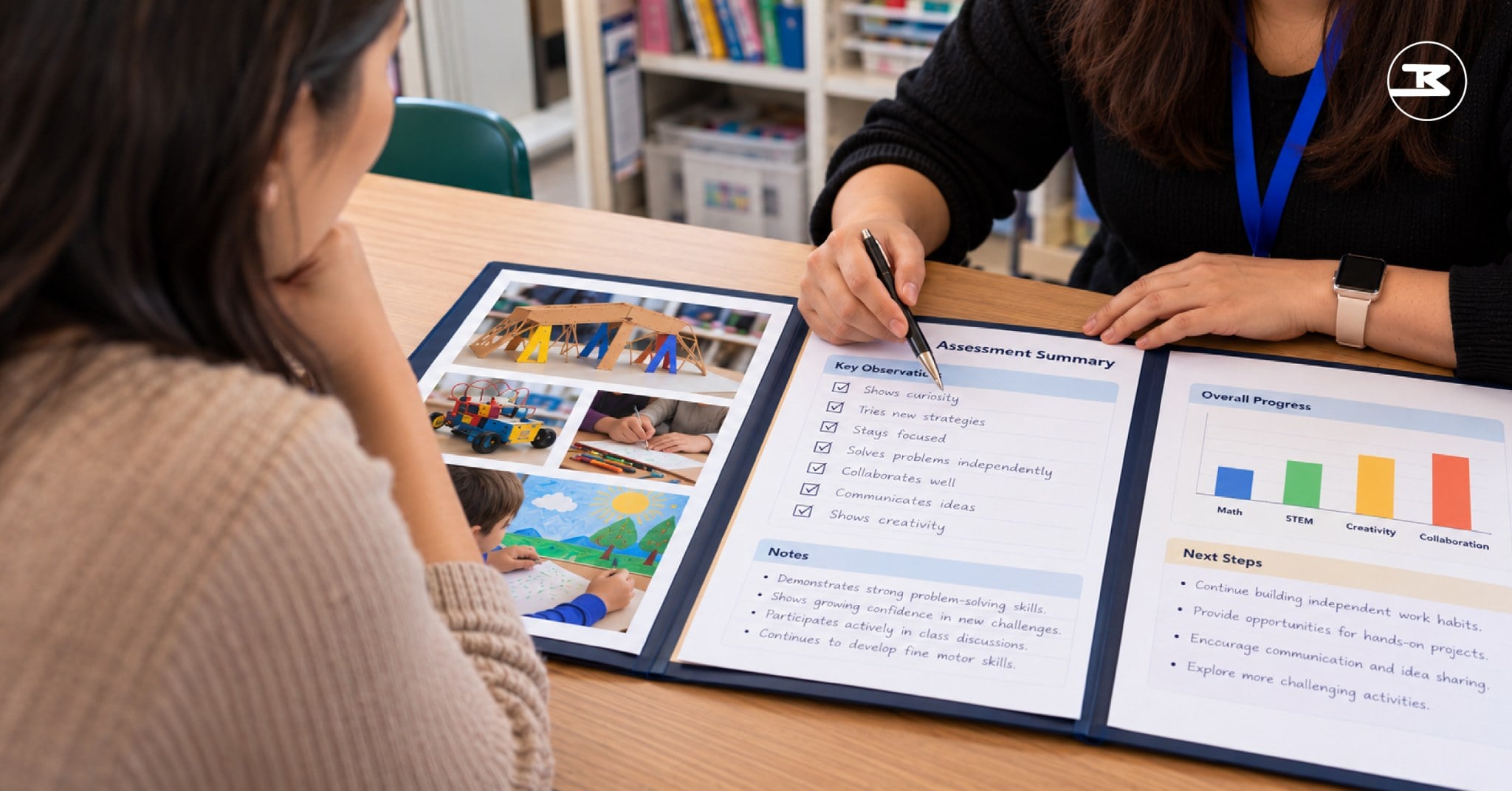
Start with what you can see this semester, then fill in what you cannot. The Big Brainbox skill-based learning assessment gives a subject-by-subject picture of where your child’s skills are now, so the next step on the roadmap is a choice rather than a guess. As of 21-Oct-2026, its page lists 45–60 minutes per subject, a written report within 48 hours, a parent consultation, no pass or fail result, and a cost of $0.
Read that report beside the report card and the teacher’s comments, not in place of them. College readiness is never one number, and no single assessment, ours included, replaces the record your child builds in class.
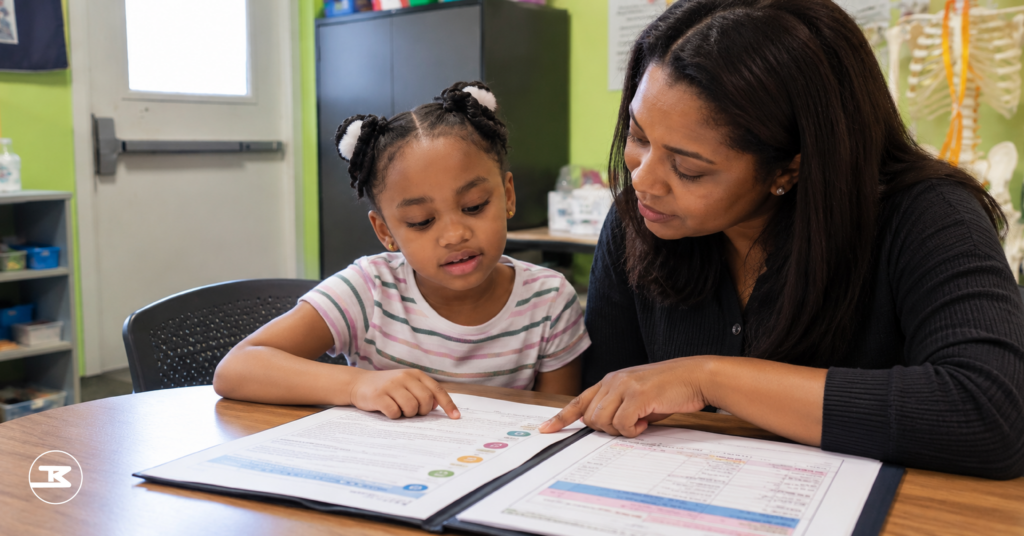
Parent and middle schooler reviewing a report card beside a written skills report at a desk
What can no college readiness roadmap promise?
No roadmap can promise an admission, a scholarship, or a specific college. A roadmap makes a student ready to choose, and the strongest version of college readiness is a student who arrives at the choice with real options and the skills to use whichever one they pick.
Where students land is a wide field: scientists, nurses, engineers, teachers, founders, tradespeople, and people who lead others. College readiness widens that field. It does not pick a spot in it for your child.
Some questions stay open, and we say so. Nobody has established how strongly a profile built in middle school predicts where a student lands as an adult. The research above tracks grades into college graduation, which is a shorter road. What happens after that belongs to your child.
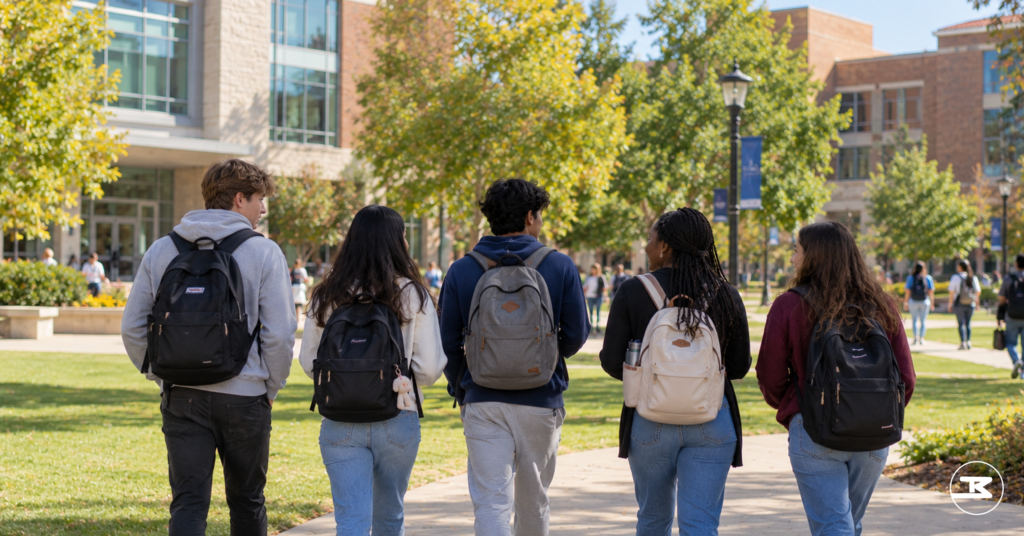
Older teenagers seen from behind walking across a college campus toward different buildings
Big Brainbox is a readiness education center in Frisco, Texas, working with students from K through 12th grade. Our instructors and curriculum team write these posts from what happens in the room: what a child builds, where a child stalls, and what changes when the work is real. We publish what we observe and cite what we borrow.